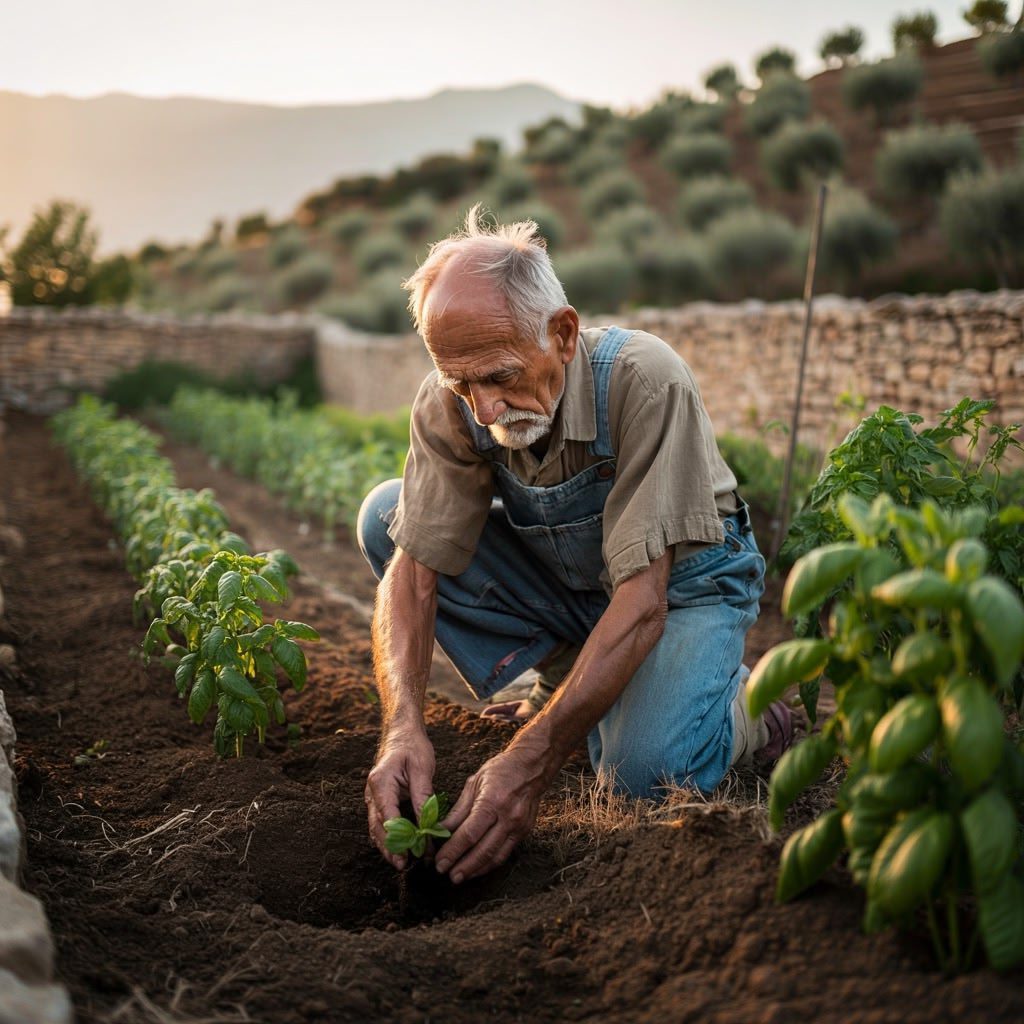
The weathered hands that taught you to plant by the moon phases carried secrets spanning two millennia. Every time your grandfather showed you how to rotate crops or explained why certain plants grow better together, he was unknowingly passing down agricultural wisdom that once fed the mighty Roman Empire.
This revelation transforms everything you thought you knew about traditional farming. Those “old-fashioned” techniques weren’t just family traditions—they were sophisticated agricultural innovations that helped Rome dominate the ancient world for centuries. The same methods that sustained legions marching across continents quietly survived in farmyards and kitchen gardens, passed from one generation to the next through whispered instructions and patient demonstrations.
Understanding this connection doesn’t just satisfy historical curiosity. It reveals why these time-tested approaches remain remarkably effective in our modern quest for sustainable agriculture. The Romans weren’t just conquerors; they were agricultural scientists whose discoveries about soil health, plant relationships, and seasonal timing created a foundation that still supports productive farming today.
The Hidden Roman Blueprint in Your Backyard
Picture this scenario: you’re walking through a traditional family garden where tomatoes grow alongside basil, corn stands tall next to climbing beans, and different sections house different crops each season. What you’re witnessing isn’t just practical gardening—it’s a living testament to Roman agricultural engineering that shaped how humans approach food production.
The Romans approached farming with the same systematic thinking they applied to building roads and aqueducts. They observed, experimented, and documented what worked, creating agricultural principles that proved so effective they became embedded in farming culture across their vast empire. When Rome fell, its armies departed, but the farming methods remained, quietly integrating into local traditions and family knowledge.
The genius lay in their holistic approach. Rather than viewing farming as simply putting seeds in ground, Romans understood agriculture as a complex system where soil health, plant relationships, timing, and environmental factors all played crucial roles. This comprehensive perspective explains why their methods produced such lasting results.
Consider how Roman agricultural wisdom manifests in traditional farming practices. The careful attention to soil preparation, the strategic timing of planting and harvesting, the understanding of which plants support each other’s growth—these weren’t random discoveries by individual farmers. They represented accumulated knowledge from a civilization that needed to feed millions of people across diverse climates and terrains.

Crop Rotation: The Roman Revolution That Never Ended
The most enduring gift from Roman agriculture might be the practice of crop rotation, though most people who use this method today have no idea they’re following Roman agricultural science. This systematic approach to alternating different crops in the same field wasn’t just about preventing soil depletion—it was about creating a regenerative cycle that actually improved growing conditions over time.
Romans discovered that certain plants could restore what others consumed. They observed how legumes seemed to enrich soil for subsequent grain crops, and how leaving fields fallow periodically resulted in better harvests. This knowledge became so fundamental that it shaped agricultural practices throughout their territories, creating a standardized approach to sustainable farming that persisted long after the empire’s collapse.
Traditional farming families unknowingly preserved this Roman innovation. When your grandfather insisted on rotating where he planted corn, beans, and other crops, he was applying principles that Roman agricultural writers documented in detail. The practice survived because it worked, generation after generation proving its value through improved yields and healthier soil.
The Roman three-field system, where farmland was divided into sections for different purposes each season, became the template for agricultural rotation across Europe. This method spread through conquered territories and evolved into regional variations, but the core principle remained unchanged: systematic rotation produces better results than random planting patterns.
Imagine if you could trace your family’s farming practices back through the centuries. You’d likely find that many techniques passed down as “common sense” actually originated from Roman agricultural manuals. The knowledge traveled along trade routes, through monastic communities, and within farming families, adapting to local conditions while maintaining its fundamental effectiveness.
Companion Planting: Ancient Roman Garden Partnerships
The practice of growing certain plants together for mutual benefit didn’t emerge from modern organic gardening movements—it represents thousands of years of agricultural observation that Romans refined into systematic companion planting strategies. This approach recognized that plants, like people, could form beneficial partnerships that enhanced each other’s success.
Romans noticed that some plant combinations produced better results than individual crops grown in isolation. They observed how certain plants seemed to protect others from pests, how some combinations improved soil conditions, and how strategic plant partnerships could maximize limited growing space. These observations became formalized growing practices that spread throughout the empire.
Traditional farming families preserved these relationships without understanding the underlying science. When experienced gardeners plant marigolds near tomatoes or grow herbs alongside vegetables, they’re applying Roman agricultural wisdom that recognized beneficial plant interactions centuries before modern science could explain why these combinations work.
The Roman approach to companion planting reflected their systematic thinking about agriculture. Rather than leaving plant combinations to chance, they developed intentional strategies for pairing crops that would support each other’s growth. This knowledge became embedded in farming traditions as practical wisdom passed from experienced growers to newcomers.
Consider how this ancient wisdom appears in modern sustainable agriculture. The principles that guided Roman companion planting—understanding plant relationships, maximizing growing space, creating natural pest management systems—remain fundamental to effective gardening and small-scale farming today.

Seasonal Timing: Roman Agricultural Calendars Live On
The careful attention to seasonal timing that characterizes traditional farming represents another lasting contribution from Roman agricultural science. Romans developed sophisticated understanding of how seasonal changes affected plant growth, soil conditions, and harvest timing, creating agricultural calendars that guided farming activities throughout the year.
This temporal approach to agriculture reflected Roman organizational thinking applied to farming. They recognized that successful agriculture required precise timing, understanding when to plant, when to cultivate, and when to harvest for optimal results. This knowledge became encoded in seasonal farming practices that survived as traditional wisdom.
Family farming traditions carry forward Roman seasonal insights. When older farmers speak about the right time to plant or harvest based on weather patterns and seasonal cues, they’re drawing on accumulated knowledge that includes Roman discoveries about agricultural timing. This temporal wisdom proved so valuable that it became embedded in farming culture across regions.
The Roman agricultural calendar influenced farming practices throughout their empire, creating standardized approaches to seasonal farming that adapted to local conditions while maintaining core timing principles. This knowledge survived because it consistently produced better results than random timing or guesswork.
Picture how this seasonal awareness manifests in traditional farming communities. The careful observation of natural signs, the systematic approach to seasonal tasks, the understanding of how weather patterns affect crop success—these practices reflect Roman agricultural innovation adapted to local conditions and preserved through family traditions.
Soil Health: The Roman Foundation of Fertile Ground
Perhaps no aspect of Roman agricultural wisdom proved more enduring than their understanding of soil health and fertility management. Romans recognized that productive farming required healthy soil, and they developed systematic approaches to building and maintaining soil fertility that became fundamental to traditional farming practices.
The Roman approach to soil management went beyond simple fertilization. They understood soil as a living system that required careful attention to structure, nutrients, and biological activity. This holistic perspective on soil health created management practices that sustained productive farming over generations.
Traditional farming methods preserved Roman soil wisdom. The emphasis on composting, the careful management of organic matter, the understanding of how different practices affect soil health—these approaches trace back to Roman agricultural innovation that recognized soil as the foundation of successful farming.
Romans developed techniques for improving soil fertility that became standard practices in traditional agriculture. Their methods for incorporating organic matter, managing soil structure, and maintaining biological activity created a foundation for sustainable farming that proved remarkably durable across centuries.
Consider how Roman soil management principles appear in modern sustainable agriculture. The focus on building soil health through organic matter, the understanding of soil biology, the systematic approach to fertility management—these concepts represent Roman agricultural wisdom that remains relevant for contemporary farming challenges.

Water Management: Roman Irrigation Wisdom
The sophisticated water management systems that Romans developed for their cities also influenced their agricultural practices, creating irrigation and water conservation techniques that became embedded in traditional farming methods. Their understanding of water as a precious resource requiring careful management shaped agricultural approaches that emphasized efficiency and conservation.
Roman agricultural water management reflected their engineering expertise applied to farming challenges. They developed methods for directing water where needed, conserving moisture during dry periods, and managing drainage to prevent waterlogging. These techniques became part of traditional farming knowledge that survived long after Roman aqueducts fell into disrepair.
Family farming traditions carried forward Roman water wisdom. The careful attention to irrigation timing, the techniques for conserving soil moisture, the understanding of drainage requirements—these practices represent Roman agricultural innovation adapted to local conditions and preserved through generations of farming experience.
The Roman approach to agricultural water management created principles that remained relevant across different climates and growing conditions. Their methods for maximizing water efficiency while maintaining crop productivity became fundamental to traditional farming in regions where water availability challenged agricultural success.
Imagine how this water management wisdom appears in traditional farming communities. The strategic use of available water resources, the careful timing of irrigation, the techniques for maintaining soil moisture—these practices reflect Roman agricultural engineering adapted to local needs and preserved as practical farming knowledge.
The Living Legacy in Modern Sustainable Agriculture
The convergence of ancient Roman agricultural wisdom with modern sustainable farming represents more than historical coincidence—it demonstrates the enduring value of systematic, holistic approaches to food production. Contemporary farmers rediscovering traditional methods often find themselves applying Roman agricultural principles without realizing their historical origins.
This connection between ancient and modern agricultural thinking reveals why traditional farming methods proved so durable. The Roman approach to agriculture addressed fundamental challenges that remain relevant today: maintaining soil health, managing plant relationships, optimizing water use, and creating sustainable production systems.
Modern sustainable agriculture validates Roman agricultural wisdom. The emphasis on soil health, biodiversity, natural pest management, and regenerative practices reflects the same holistic thinking that made Roman agriculture successful across diverse conditions and over extended periods.
The practical application of these ancient principles in contemporary farming demonstrates their continued relevance. Whether in small backyard gardens or larger agricultural operations, the systematic approaches that Romans developed for crop rotation, companion planting, and soil management continue producing positive results.
Consider how this historical perspective enriches modern farming efforts. Understanding the Roman origins of traditional agricultural practices provides deeper insight into why these methods work and how they can be adapted to contemporary challenges while maintaining their fundamental effectiveness.
Preserving Agricultural Wisdom for Future Generations
The recognition that traditional farming methods carry forward Roman agricultural innovation creates new appreciation for the knowledge passed down through farming families. This historical connection transforms simple farming techniques into living links to one of history’s most successful agricultural systems.
The preservation of this agricultural heritage requires understanding its historical significance while adapting its principles to contemporary needs. The same systematic thinking that made Roman agriculture successful can inform modern approaches to sustainable food production, creating continuity between ancient wisdom and current challenges.
Family farming traditions deserve recognition as repositories of historical knowledge. The techniques that seemed like simple common sense actually represent sophisticated agricultural science developed over centuries and refined through countless growing seasons. This perspective adds depth and meaning to traditional farming practices.
The challenge lies in maintaining this knowledge while adapting it to modern conditions. The principles that guided Roman agriculture—systematic observation, holistic thinking, long-term sustainability—remain relevant for contemporary farming, but their application must consider current environmental and social contexts.
Picture how this understanding might influence future agricultural development. Recognizing the historical depth of traditional farming methods could inspire more thoughtful approaches to agricultural innovation, building on proven principles while addressing contemporary challenges.
Embracing Your Agricultural Heritage
The next time you plant a garden or observe traditional farming practices, remember that you’re witnessing the continuation of agricultural wisdom that helped sustain one of history’s greatest civilizations. The hands that taught you to work with soil and plants carried forward knowledge that once fed the Roman Empire and continues nurturing communities today.
This historical perspective transforms routine farming activities into meaningful connections with the past. Understanding the Roman origins of traditional agricultural practices adds depth to gardening and farming experiences, creating appreciation for the sophisticated thinking behind seemingly simple techniques.
Your agricultural heritage connects you to centuries of farming wisdom. Whether you’re planning a backyard garden or considering larger agricultural projects, you can draw on principles that proved their worth across millennia while adapting them to contemporary needs and conditions.
The recognition that traditional farming methods represent preserved Roman agricultural science should inspire confidence in these time-tested approaches. The techniques that survived because they worked continue offering value for modern food production challenges, providing proven alternatives to industrial agricultural methods.
Consider how this knowledge might influence your approach to growing food or supporting sustainable agriculture. Understanding the historical foundation of traditional farming methods can inform decisions about gardening, food production, and agricultural practices that honor both ancient wisdom and contemporary needs.
The weathered wisdom passed down through generations of farmers carries more than practical knowledge—it preserves a connection to agricultural innovation that shaped civilization itself. By understanding and applying these principles, you become part of an unbroken chain of agricultural wisdom that stretches from Roman fields to modern gardens, proving that the best innovations truly stand the test of time.
What farming wisdom has been passed down in your family? How might understanding its Roman origins change how you view these traditional practices? The answers to these questions could transform your relationship with the soil and help preserve agricultural knowledge for future generations who will continue this remarkable legacy.


