The most knowledgeable wine experts in history never owned a vineyard, held a sommelier certificate, or commanded respect in polite society. They were enslaved workers in ancient Roman vineyards who possessed an intimate understanding of winemaking that would humble today’s most celebrated vintners.
This isn’t romanticizing slavery or diminishing the horror of human bondage. Rather, it’s recognizing a profound truth about knowledge acquisition that modern wine culture has largely forgotten: true mastery comes from complete immersion in every aspect of a craft, from the mundane to the mystical.
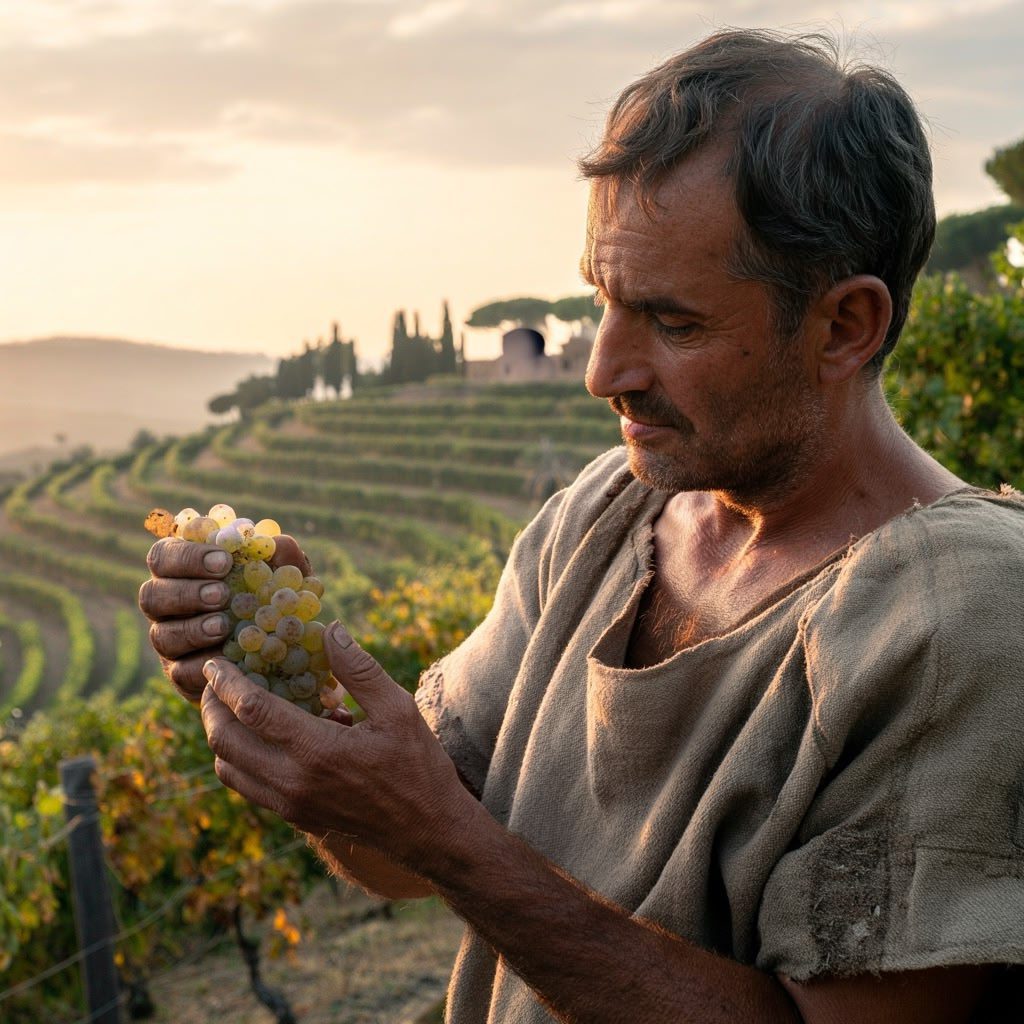
While contemporary wine experts sample hundreds of bottles and memorize vintage charts, ancient Roman vineyard workers lived and breathed every moment of the winemaking process. They felt the soil between their fingers daily, watched the same vines through countless seasons, and understood the subtle language that plants speak to those who truly listen.
The Lost Art of Total Wine Immersion
Modern winemaking has become increasingly segmented and specialized. The vineyard manager rarely makes wine, the winemaker seldom tends vines, and the sommelier typically knows little about either process. Each expert occupies their specialized domain, creating impressive depth within narrow parameters while losing sight of the holistic picture.
In contrast, Roman vineyard slaves experienced every phase of wine production as an integrated whole. They pruned vines in winter, guided growth in spring, monitored ripening through summer, and participated in harvest and fermentation. This wasn’t just work—it was a complete education in the language of wine that unfolded across years and decades.
Consider the depth of knowledge this total immersion created. These workers understood how morning frost affected bud break, how afternoon wind patterns influenced grape development, and how soil moisture weeks before harvest impacted final wine character. They possessed what we might call “seasonal intelligence”—an intuitive understanding of timing and natural rhythms that no textbook or tasting room experience can replicate.
This comprehensive involvement meant that Roman vineyard workers developed an almost supernatural ability to predict wine quality months before grapes were even picked. They could sense subtle changes in vine health, soil condition, and weather patterns that foreshadowed the character of wines that wouldn’t exist for months.

The Wisdom of Working the Same Land Across Generations
Perhaps the most striking difference between ancient and modern wine knowledge lies in the concept of place-based wisdom. Roman estate workers often spent their entire lives on the same property, developing an intimate relationship with specific plots of land that modern viticulturists can barely imagine.
Picture this scenario: imagine working the same hillside vineyard for twenty years, watching the same vines mature, observing how different weather patterns affect identical grape clusters, and learning the micro-variations in soil composition across just a few acres. This isn’t theoretical knowledge—it’s embodied understanding that comes from thousands of small observations accumulated over time.
This generational continuity created knowledge that transcended individual experience. Veteran workers mentored newcomers, passing along subtle observations about vine behavior, soil characteristics, and winemaking techniques that had been refined through direct observation rather than academic study.
Modern wine regions change hands frequently, vineyard managers move between properties, and winemakers build careers by working with different grapes in various locations. While this creates breadth of experience, it rarely allows for the deep, place-specific wisdom that characterized ancient Roman viticulture.
The Language of the Land
Roman vineyard workers developed what we might call “terroir literacy”—the ability to read landscape and climate like a familiar book. They understood how morning sun angles affected eastern slopes differently in March versus September, how underground water movements influenced vine stress patterns, and how prevailing wind directions during flowering impacted cluster development.
This wasn’t mystical thinking but practical intelligence born from constant observation. Workers learned to predict harvest timing by watching bird behavior, gauge soil moisture by observing weed growth patterns, and assess vine health through subtle changes in leaf color that preceded obvious symptoms by weeks.
Such knowledge couldn’t be rushed or replicated through intensive study. It required the kind of sustained attention that only comes from having no choice but to be present with the land through every season, every weather pattern, every subtle shift in the natural world.

Ancient Techniques That Modern Wine Has Forgotten
The daily involvement of Roman vineyard workers in every aspect of production led to innovations and refinements that many modern winemakers would find surprising. These weren’t theoretical improvements but practical solutions developed through direct experience with real problems.
Roman workers understood fermentation management at a cellular level because they were present throughout the entire process, stirring must, monitoring temperature changes, and observing how different interventions affected wine development. They couldn’t rely on laboratory analysis or temperature controllers—they had to develop sensory skills and intuitive timing that modern technology has largely replaced.
This hands-on involvement led to sophisticated understanding of natural wine stabilization techniques, indigenous yeast management, and flavor development processes that contemporary winemakers are only beginning to rediscover through the natural wine movement.
The Art of Minimal Intervention
Without access to modern additives, filtration systems, or chemical treatments, Roman workers had to master the art of guiding natural processes rather than controlling them. They learned to work with indigenous yeasts, manage oxidation through timing and technique, and achieve wine stability through patience and observation rather than intervention.
This necessity bred a different relationship with winemaking—one based on partnership with natural processes rather than domination over them. Workers developed extraordinary sensitivity to the subtle signs that indicated when to act and when to wait, skills that required constant attention and accumulated experience.
Many techniques that modern natural winemakers struggle to master were simply standard practice for Roman vineyard workers. They understood extended skin contact, natural clarification processes, and minimal-sulfur winemaking not as philosophical choices but as practical necessities that they had refined through daily experience.
Seasonal Rhythms and Deep Time Awareness
Perhaps the most profound difference between ancient and modern wine knowledge lies in the concept of time awareness. Roman vineyard workers experienced wine production within natural rhythms that extended far beyond the annual vintage cycle.
They understood vine development across decades, watching young plantings mature into full production and observing how vineyard characteristics changed as root systems deepened and canopy architecture evolved. This long-term perspective created wisdom about vine potential, site expression, and quality development that required patience and sustained observation.
Consider how this extended timeline affected their understanding of wine quality. Rather than judging wines immediately after harvest or within their first few years, these workers observed how different winemaking decisions influenced wine development over many years. They learned which techniques produced wines that aged gracefully and which created impressive youth that faded quickly.
This temporal perspective also influenced their approach to vineyard management. They made pruning and training decisions based on decades of observation about how different approaches affected long-term vine health and wine quality. Their choices reflected accumulated wisdom about sustainable practices that maintained vineyard productivity across generations.
The Rhythm of Natural Cycles
Working within natural rhythms also meant understanding the interconnections between vineyard work, lunar cycles, seasonal weather patterns, and broader ecological relationships. Roman workers developed timing strategies for various vineyard operations based on observable natural phenomena rather than calendar dates or technological measurements.
They learned to read landscape signs that indicated optimal timing for pruning, harvesting, and cellar operations. This wasn’t superstition but practical wisdom based on repeated observation of how natural cycles influenced vine behavior and wine development.
Modern winemaking has largely abandoned this cyclical awareness in favor of precise measurement and technological control. While this has improved consistency and reduced risk, it has also separated winemakers from the natural intelligence that guided wine production for millennia.

Practical Wisdom for Modern Wine Enthusiasts
The knowledge possessed by Roman vineyard workers offers valuable lessons for contemporary wine lovers who want to deepen their understanding and appreciation. While we cannot replicate their circumstances, we can adopt some of their approaches to learning and observation.
The key insight is that wine knowledge comes from sustained attention rather than broad sampling. Instead of tasting dozens of different wines each month, consider focusing intensively on wines from a specific region, producer, or vineyard over an extended period. Watch how the same wines evolve across seasons and years, developing the kind of deep familiarity that reveals subtle characteristics and changes.
This approach mirrors the Roman workers’ place-based wisdom. By developing intimate knowledge of specific wines and regions, you begin to understand the deeper patterns and relationships that create wine character. You learn to recognize a producer’s style across different vintages, understand how weather variations affect specific vineyard sites, and appreciate the subtle evolution that occurs as wines age.
Developing Sensory Intelligence
Roman workers developed extraordinary sensory skills through constant practice and attention. Modern wine enthusiasts can cultivate similar abilities by approaching tasting as a skill that requires patient development rather than immediate expertise.
Focus on developing specific sensory memories by tasting the same wines multiple times under different conditions. Learn to recognize how temperature, glassware, food pairings, and even time of day affect wine perception. This kind of controlled experimentation develops the sensory precision that Roman workers acquired through daily exposure to wine at every stage of production.
Pay attention to wine evolution within individual bottles and across time. Notice how wines change as they breathe, how they develop over hours or days after opening, and how the same wine tastes different in various seasons. This temporal awareness connects you to the cyclical thinking that characterized ancient wine wisdom.
Reclaiming Lost Wine Wisdom in the Modern World
The knowledge gap between ancient vineyard workers and contemporary wine experts reveals something profound about how we learn and what we value. Roman slaves possessed deep, integrated wisdom born from necessity and sustained attention, while modern experts often have broad but fragmented knowledge acquired through formal education and professional advancement.
This isn’t an argument against modern wine education or technology, but rather a recognition that something valuable has been lost in our pursuit of efficiency and specialization. The holistic understanding that characterized ancient winemaking offers insights that can enrich contemporary wine culture.
The path forward involves combining the best of both approaches—using modern tools and knowledge while recovering the sustained attention, place-based wisdom, and natural rhythm awareness that created such profound understanding in ancient times.
For wine enthusiasts, this means approaching wine study as a long-term practice rather than a quest for immediate expertise. It means choosing depth over breadth, developing personal relationships with specific wines and regions, and cultivating the patience to observe subtle changes and developments over time.
The Value of Beginner’s Mind
Perhaps the most important lesson from Roman vineyard workers is the value of approaching wine with humility and openness to learning. Despite their extensive knowledge, these workers remained students of their craft, constantly observing and adjusting their understanding based on new experiences.
Modern wine culture often emphasizes expert opinions, numerical ratings, and definitive judgments. While these have value, they can also create barriers to the kind of personal discovery and ongoing learning that characterized ancient wine wisdom.
The Roman approach suggests that the best wine knowledge comes from sustained curiosity, careful observation, and willingness to let wines teach you rather than imposing preconceived ideas about what they should be or how they should taste.
Embracing Ancient Wisdom in Contemporary Wine Culture
The story of Roman vineyard workers reminds us that true wine wisdom isn’t found in tasting notes, vintage charts, or expert ratings. It lives in the accumulated understanding that comes from sustained attention, direct experience, and humble observation of natural processes that extend far beyond human control.
While we cannot return to the conditions that created such profound knowledge in ancient times, we can adopt the approaches and attitudes that made it possible. We can choose depth over breadth, patience over speed, and personal discovery over received opinion.
The next time you taste wine, imagine the hands that tended those vines, the eyes that watched the grapes ripen, and the accumulated wisdom of generations who understood wine as a living expression of place and time. This perspective doesn’t diminish modern winemaking achievements but rather places them within a larger context of human relationship with the land and its gifts.
True wine appreciation begins when we recognize that every bottle contains not just fermented grape juice, but thousands of years of human observation, experimentation, and wisdom. The Roman vineyard workers who knew more than today’s masters understood this intuitively—and their knowledge lives on in every glass for those willing to look beyond the surface and listen to what wine is really trying to teach us.
What aspects of ancient wine wisdom resonate most with your own wine journey? How might you apply the patient, observant approach of Roman vineyard workers to deepen your own understanding and enjoyment of wine?


