
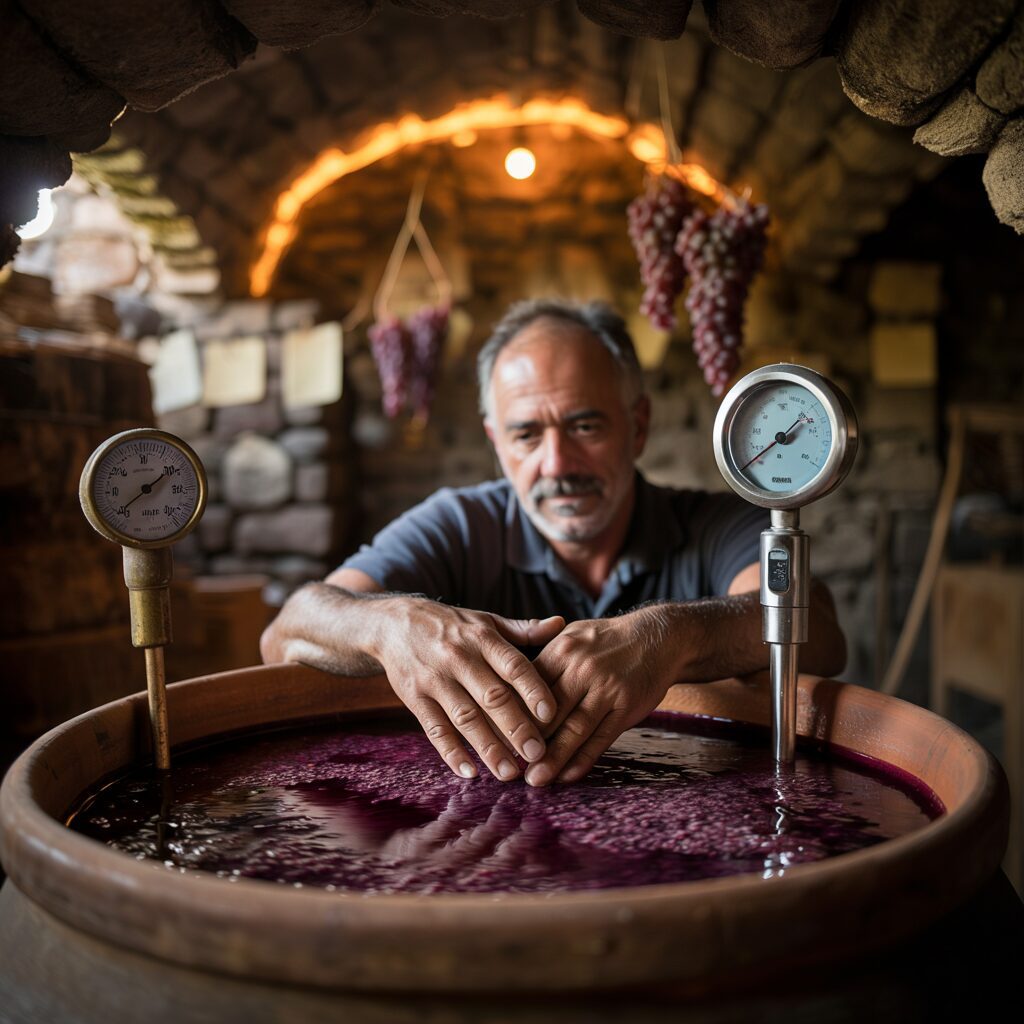
The unmistakable scent of promise fills the air as you carefully transfer your fresh must into the fermentation vessel. Hours of meticulous preparation have led to this moment—the beginning of a transformation that should, in theory, yield a wine worthy of your effort and passion. Yet for too many home winemakers, that promise remains unfulfilled as they lift the cloth covering their fermentation vessel days later to discover something has gone terribly wrong.
Fermentation—the alchemical heart of winemaking—remains frustratingly temperamental even for those who follow recipes with religious devotion. The difference between a mediocre bottle and an exceptional vintage often comes down to a single critical factor that craftsmen have obsessed over for centuries: temperature control.
What separates the consistent excellence of traditional winemakers from the hit-or-miss results of enthusiastic amateurs isn’t expensive equipment or secret ingredients—it’s their unwavering attention to the thermal environment of their fermenting wine. The masters understand what many modern winemakers have forgotten: fermentation is not merely a chemical process but a living collaboration with microorganisms that have very specific comfort zones.
The Pervasive Problem of Temperature Fluctuation
You’ve been there—puzzled by a batch that smells off, tastes flat, or simply doesn’t match your expectations despite following the same process that worked beautifully before. You check your notes, confirm you used identical ingredients, and yet the results vary dramatically from batch to batch. This inconsistency isn’t just frustrating; it undermines the entire craft.
Temperature fluctuation is the silent saboteur of fermentation. When yeast cells experience thermal shock—rapid changes beyond their optimal range—they respond by producing stress compounds that fundamentally alter your wine’s flavor profile. What begins as subtle inconsistency gradually deteriorates into batches plagued by stuck fermentations, off-flavors, and unpredictable alcohol levels.
The consequences extend beyond disappointment. Each inconsistent batch represents wasted ingredients, squandered time, and opportunities lost. More critically, it erodes the confidence that forms the foundation of craftsmanship. How can you call yourself a winemaker when you cannot predict the outcome of your most basic process?

When Poor Temperature Control Becomes Catastrophic
The relationship between fermentation temperature and wine quality isn’t linear—it’s exponential. Small deviations don’t just create small problems; they cascade into compounding disasters that can render entire batches undrinkable.
Consider what happens when fermentation runs too hot. Above 85°F (29°C), yeast begins producing excessive fusel alcohols—heavy, complex alcohols that contribute harsh, solvent-like flavors and intensify hangover symptoms. These compounds don’t mellow with age; they permanently mar your wine’s character. Meanwhile, valuable aromatic compounds literally evaporate from solution, carried away by the excessive carbon dioxide production of overheated yeast.
Conversely, fermentation that runs too cold creates equally problematic outcomes. Below 65°F (18°C) for red wines or 55°F (13°C) for whites, yeast metabolism slows dramatically. What appears as merely a slower fermentation actually represents incomplete sugar conversion. The result? Wines with residual sweetness vulnerable to bacterial spoilage, refermentation in the bottle, or a cloying sweetness that masks the grape’s natural character.
Most catastrophic are the stalled fermentations that occur when temperature fluctuations shock yeast into dormancy. These “stuck” fermentations leave winemakers with a half-transformed liquid—neither juice nor wine—that proves exceptionally difficult to restart. The financial consequences multiply with each passing day as you attempt increasingly desperate revival methods, often ending with the heartbreaking decision to discard what should have been months of aging potential.
The Hidden Cost of Temperature Neglect
Beyond ruined batches lies a deeper cost that affects even commercially successful winemakers—reputation damage. Inconsistency erodes trust. Whether you’re sharing bottles with friends or selling to customers, unpredictable quality establishes a lasting impression of amateurism that’s difficult to overcome.
This inconsistency also prevents meaningful improvement. Without temperature stability as a controlled variable, it becomes impossible to isolate which changes to your process actually improved results. Was it the new yeast strain that enhanced flavor, or simply that the ambient temperature happened to be perfect that week? Without thermal control, winemaking remains perpetually experimental rather than progressively refined.

The Craftsman’s Approach to Temperature Management
Traditional winemakers didn’t have digital thermometers or refrigeration units, yet they consistently produced exceptional wines across centuries. Their methods weren’t primitive approximations but sophisticated systems developed through generations of observation. These time-tested approaches remain relevant precisely because they work with natural principles rather than against them.
Thermal Mass: Nature’s Temperature Regulator
The most fundamental principle in traditional temperature control is thermal mass—using materials that absorb and release heat slowly to moderate environmental fluctuations. Ancient winemakers built caves not from superstition but from empirical observation that underground spaces maintain remarkably consistent temperatures.
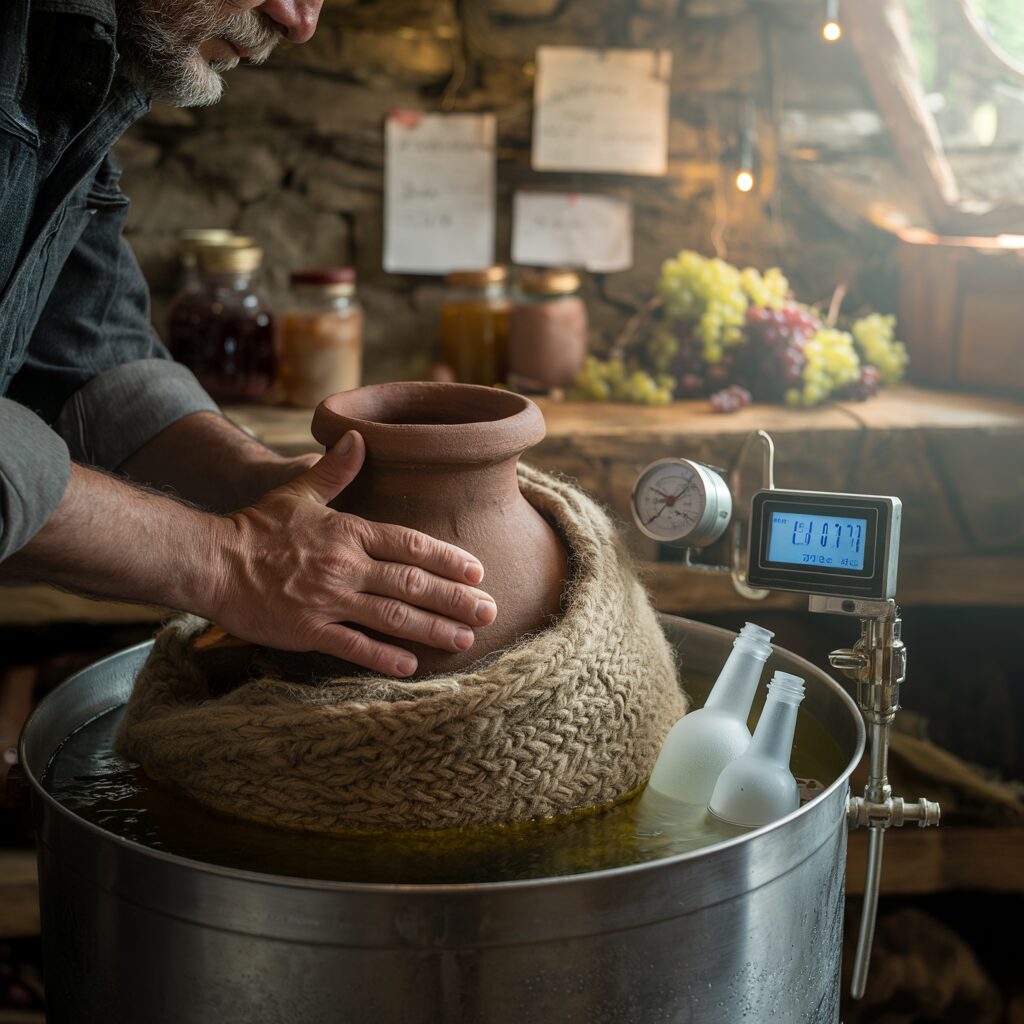
You can implement this principle without excavating your backyard. Clay fermentation vessels provide excellent thermal stability compared to stainless steel or plastic. Similarly, placing fermentation vessels inside larger containers filled with water creates a thermal buffer that slows temperature changes. Even wrapping fermenters in wool blankets (a technique still used in some French wine regions) effectively insulates against rapid temperature shifts.
Strategic Timing and Placement
Traditional winemakers developed intimate knowledge of microclimates within their cellars and homes. They understood which corners stayed coolest during summer heat waves and which spots captured ambient warmth during cooler months. This knowledge informed not just where they placed fermentation vessels but when they scheduled fermentation itself.
The timing of your fermentation should align with favorable ambient conditions. Autumn has been the traditional winemaking season not just because of harvest timing but because its moderate temperatures create ideal fermentation conditions with minimal intervention. If summer fermentation is unavoidable, beginning the process in early morning allows the most vigorous phase to occur during cooler nighttime hours rather than peak daytime heat.
Monitoring Through Sensory Awareness
Before thermometers became commonplace, craftsmen developed acute sensory awareness of fermentation health. They recognized that properly fermenting wine maintains a temperature several degrees warmer than its environment due to yeast activity. By simply placing hands on fermentation vessels at consistent intervals, they could detect problematic temperature trends before they affected quality.
This practice of regular, hands-on monitoring remains valuable even with modern instruments. The tactile connection to your fermenting wine provides immediate feedback that digital readings alone cannot convey. Temperature tells only part of the story—the sounds, smells, and visual cues of healthy fermentation complete the picture.

Modern Solutions That Honor Traditional Wisdom
Today’s winemaker needn’t choose between ancient wisdom and modern convenience. The most successful approaches integrate traditional principles with contemporary tools, creating systems that maintain temperature stability with less constant attention.
Ambient Environment Modification
Rather than attempting to control individual fermentation vessels, consider modifying your entire winemaking space. Dedicated fermentation rooms with insulated walls create stable environments that reduce the need for vessel-specific interventions. Even designating a closet or corner specifically for fermentation can significantly improve temperature consistency compared to general household spaces subject to heating and cooling cycles.
Simple modifications like weatherstripping doors, insulating windows, and minimizing air exchange with the broader environment can transform problematic spaces into suitable fermentation chambers. Remember that stability matters more than achieving a specific target temperature—consistent 68°F (20°C) fermentation produces better results than fluctuating between 65-72°F (18-22°C).
Immersion Systems
Water’s exceptional thermal stability makes it an ideal medium for temperature control. Modern implementations of this principle include specialized fermentation chambers that circulate temperature-controlled water around vessels. For smaller-scale operations, simply placing fermenters in a water bath with frozen water bottles added or removed as needed can maintain remarkably consistent temperatures.
More sophisticated approaches include aquarium chillers repurposed for winemaking or purpose-built glycol systems that circulate cooling fluid through jackets surrounding fermentation vessels. These systems provide precise control without the abrupt temperature changes that can shock yeast populations.
Monitoring and Automation
Digital monitoring represents one area where modern innovation clearly surpasses traditional methods. Continuous temperature tracking with alerts for significant deviations allows prompt intervention before problems develop. Wireless monitoring systems enable tracking fermentation temperature remotely, providing peace of mind without constant physical presence.
For those inclined toward technical solutions, temperature controllers connected to heating or cooling elements can automatically maintain target temperatures within tight parameters. These systems range from simple plug-and-play controllers to sophisticated units programmable for specific fermentation profiles that gradually change temperature as fermentation progresses.
Temperature Profiles for Different Wine Styles
The craftsman’s approach to temperature control isn’t about maintaining a universal “correct” temperature but about understanding how different thermal environments produce different stylistic outcomes. Each wine variety develops optimal character within specific temperature ranges:
Red Wines: Balancing Extraction and Aromatics
Red wine fermentation presents a fundamental tension between phenolic extraction and aromatic preservation. Higher temperatures (75-85°F/24-29°C) accelerate tannin extraction from skins and seeds, building structure and aging potential. However, these same temperatures can volatilize delicate fruit aromas. Traditional craftsmen managed this balance through deliberate temperature progression rather than static conditions.
A thoughtful approach begins fermentation around 65-70°F (18-21°C) to preserve fruit character during the initial microbial bloom. As fermentation establishes, allowing temperatures to rise naturally to 75-80°F (24-27°C) during peak activity maximizes extraction without harsh tannins. Finally, gently cooling toward the end preserves remaining aromatics and prevents the harsh alcoholic notes that can develop in overly warm late fermentation.
White Wines: Preserving Delicate Aromatics
White wines reveal their greatest expressiveness when fermented at consistently cool temperatures, typically between 55-65°F (13-18°C). This cooler range preserves volatile aromatic compounds that define varietal character while promoting clean, focused flavor development. The challenge lies in maintaining these cool temperatures during the heat-generating peak of fermentation.
Traditional craftsmen addressed this challenge by fermenting in cool cellars, often beginning the process in the evening when ambient temperatures dropped. Modern winemakers can achieve similar results using cooling systems or ice baths, particularly during the first 3-5 days when fermentation generates the most heat. The key insight is maintaining consistent coolness without shocking yeast with sudden temperature drops.
Specialty Wines: Temperature as Stylistic Tool
Beyond basic red/white distinctions, temperature becomes a powerful tool for creating distinctive wine styles. Traditional dessert wine production often employs extremely slow fermentation at very cool temperatures (45-55°F/7-13°C) to retain natural sweetness. Conversely, some traditional styles intentionally employ warmer fermentation to develop specific flavor compounds that contribute regional character.
Understanding temperature as a stylistic choice rather than merely a technical requirement opens creative possibilities. Experimenting with different temperature profiles for the same grape variety can yield remarkably different expressions, effectively expanding your winemaking repertoire without changing your base ingredients.
Developing Your Temperature Control Strategy
Effective temperature management doesn’t require expensive equipment or technical expertise—it demands awareness, consistency, and thoughtful planning. Building your personal approach begins with understanding your specific constraints and opportunities:
Assessing Your Environment
Begin by mapping the thermal landscape of your available spaces. Track temperature patterns in potential fermentation locations over several days, noting not just average readings but the range and timing of fluctuations. Often, areas you might overlook—interior closets, basements, or north-facing rooms—maintain surprisingly stable temperatures suitable for fermentation.
Consider seasonal patterns as well. Spaces that work perfectly in spring might become problematic during summer heat waves. Having alternative locations identified in advance prevents scrambling to relocate actively fermenting wine during thermal emergencies.
Matching Methods to Resources
Your temperature control approach should align with your available time, space, and budget. Complex automation makes sense for those producing multiple batches year-round but represents unnecessary complication for seasonal winemakers. Similarly, expensive cooling systems provide precision but may offer minimal improvement over simpler methods if your natural environment already provides reasonable stability.
Remember that consistent monitoring matters more than sophisticated equipment. Even the most basic setup—a fermentation vessel wrapped in insulating material, placed in a naturally stable environment, and checked regularly—can produce excellent results when managed attentively.
Creating Redundancy and Emergency Plans
Thoughtful winemakers prepare for thermal emergencies before they occur. Having backup cooling methods ready (ice packs, frozen water bottles, or even bags of ice) provides immediate intervention options when temperatures unexpectedly rise. Similarly, insulating materials should be kept accessible for unexpected cold snaps that might stall fermentation.
Document your intervention thresholds in advance—the temperatures at which you’ll take specific actions—to avoid indecision during critical moments. Knowing exactly what steps you’ll take if temperatures exceed 80°F or drop below 60°F transforms potential crises into manageable situations.
The Transformative Impact of Temperature Mastery
Controlling fermentation temperature transforms winemaking from an unpredictable hobby into a reliable craft. The immediate benefits—more consistent results, fewer failed batches, improved flavor development—represent just the beginning of this transformation.
With temperature stability established, you gain the ability to make intentional, incremental improvements to your process. Each batch builds upon previous knowledge rather than representing a complete reset. You can confidently experiment with different yeast strains, maceration techniques, or oak treatments knowing that temperature variables won’t confound your results.
Perhaps most significantly, temperature mastery reconnects modern winemaking with its heritage as a craftsman tradition. When you control fermentation through careful observation and thoughtful intervention rather than arbitrary recipes, you participate in the same process that has produced extraordinary wines for centuries.
From Frustration to Craftsmanship
The journey from inconsistent results to craftsman-level winemaking begins with acknowledging temperature’s fundamental importance. What might initially seem like technical obsession quickly reveals itself as the foundation of artistry—the stable platform from which creativity and excellence become possible.
The methods described here represent not just technical solutions but a philosophy of winemaking that values understanding natural processes over manipulating them. Whether you implement simple traditional approaches or sophisticated modern systems, the underlying principle remains the same: working with the biological rhythms of fermentation rather than against them.
Your next fermentation need not be another roll of the dice. By implementing these craftsman-approved temperature control methods, you establish the conditions for success before the first yeast cell begins its work. The result isn’t just better wine but a more rewarding relationship with the ancient craft of vinification.
Begin your transformation from frustrated enthusiast to confident craftsman by downloading our comprehensive temperature control checklist for different wine varieties. This practical guide translates centuries of winemaking wisdom into actionable steps tailored to your specific wine style—because every great wine begins with temperature mastery.
Master Temperature Control for Your Wine Variety
Download our free Temperature Control Checklist featuring optimal ranges and monitoring schedules for 12 popular wine varieties. Transform your fermentation results with this craftsman-approved guide.


