
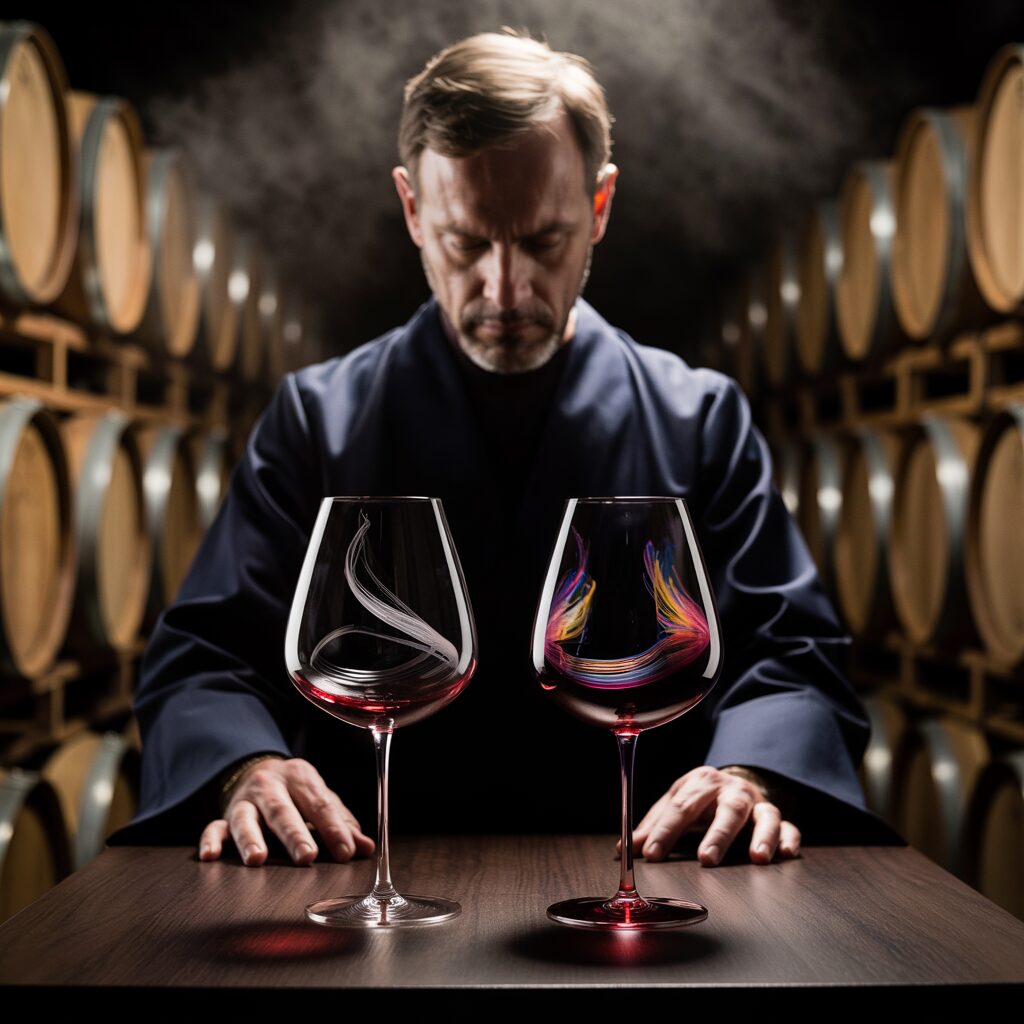
A profound silence fell over the tasting room as the master sommelier swirled the two glasses before him. In one, a commercially filtered cabernet from a respected vineyard. In the other, the same wine processed through traditional craftsman methods. The difference wasn’t just noticeable—it was transformative. “This isn’t the same wine,” he declared, gesturing to the commercial product. “Something essential has been lost.”
What disappeared wasn’t just subtle notes or minor characteristics—it was the very soul of the wine itself.
For generations, the art of winemaking has faced a fundamental tension between efficiency and authenticity. Today’s commercial wineries have embraced industrial filtration systems that promise crystal-clear bottles and extended shelf life. But at what cost? The answer lies in what you can no longer taste—the complex tapestry of flavor compounds, textural elements, and aromatic substances that make truly exceptional wine an experience rather than just a beverage.
When JP Farmer first encountered this problem twenty years ago, he wasn’t looking to revolutionize wine filtration. He simply wanted to preserve what made wine special in the first place. “There’s something fundamentally wrong with treating wine like a factory product,” he explains. “Wine isn’t just a liquid—it’s a living entity with personality, character, and heritage.”
The Hidden Damage of Commercial Filtration
Modern commercial filtration systems operate on a simple premise: remove everything that might cause cloudiness, instability, or inconsistency. These systems typically employ aggressive mechanical and chemical processes designed for maximum efficiency and minimum cost. They include sterile filtration, crossflow microfiltration, and other techniques that force wine through increasingly fine membranes under high pressure.
The problem isn’t filtration itself—it’s the indiscriminate nature of these industrial methods. When wine passes through these systems, they don’t selectively remove only undesirable elements. Instead, they strip away many of the compounds that give wine its distinctive character, complexity, and depth.
Imagine listening to a symphony where suddenly all the string instruments go silent. The music continues, but something essential is missing. This is what happens when commercial filtration removes critical aromatic compounds, colloids, and beneficial microorganisms from wine.
These elements aren’t impurities—they’re fundamental components of what makes wine special:
The Complexity Compromise
The most immediate casualty of aggressive filtration is complexity. Wine contains thousands of different compounds that interact to create its unique profile. Commercial filtration methods indiscriminately remove many of these, particularly larger molecular structures that contribute to mouthfeel, aging potential, and aromatic development.
Wine is a holistic experience—a conversation between countless elements that have developed during fermentation and aging. When filtration silences key voices in this conversation, what remains is often a simplified, less interesting version of what might have been.
Consider the phenomenon known as “flavor scalping,” where filtration media actually absorb flavor and aroma compounds from the wine. This doesn’t just reduce intensity—it fundamentally alters the balance of flavors, often emphasizing sharper, more aggressive elements while diminishing subtle complexity.
The Textural Devastation
Beyond flavor, commercial filtration wreaks havoc on texture. The colloids, polysaccharides, and macromolecules that give wine its distinctive mouthfeel are among the first casualties of aggressive filtration. These components create the silky, velvety sensations that make great wines memorable.
When these elements are stripped away, the resulting wine often feels thin, sharp, and structurally compromised. It’s the difference between a finely tailored suit and one off the rack—both may look similar at first glance, but the experience of wearing them reveals profound differences.
“The mouthfeel is where you first notice what’s been lost,” explains JP Farmer. “Wine should have presence on the palate—a certain weight and dimensionality. Over-filtered wines feel like ghosts of themselves.”
The Living Wine Dilemma
Perhaps most concerning is how commercial filtration affects wine’s ability to evolve. Wine is not a static product—it continues to develop and change throughout its life. This evolution depends on the presence of certain compounds and even beneficial microorganisms that aggressive filtration removes.
When these elements are stripped away, wine loses its capacity to mature gracefully. Instead of developing new dimensions over time, heavily filtered wines often remain frozen in a simplified state, or worse, begin to deteriorate more quickly than their less-processed counterparts.
This phenomenon is particularly evident in age-worthy varieties like Cabernet Sauvignon, Nebbiolo, and fine Bordeaux blends. Wines that should develop complexity over decades instead peak prematurely and then decline, robbing collectors and enthusiasts of the transcendent experience that properly aged wine can provide.

The Craftsman’s Alternative: Preserving Wine’s Integrity
JP Farmer’s approach to filtration represents a fundamental shift in philosophy. Rather than treating clarity and stability as the ultimate goals, his methodology prioritizes preserving the wine’s essential character while gently addressing only those elements that genuinely detract from quality.
“The craftsman approach asks a different question,” Farmer explains. “Not ‘How can we make this wine perfectly clear and stable as quickly and cheaply as possible?’ but rather ‘How can we help this wine express itself most truthfully while ensuring it remains sound?'”
This shift in perspective leads to radically different methods:
The Gravity Advantage
At the heart of the craftsman approach is a return to gravity-based clarification. Rather than forcing wine through tight filters under pressure, traditional methods rely primarily on time and gravity to allow heavy particles to settle naturally.
This technique, known as racking, involves carefully moving wine from one vessel to another, leaving sediment behind. It requires patience and precision but preserves the wine’s structural integrity. The process may be repeated several times over months, allowing the wine to clarify gradually without trauma.
“Patience is the secret ingredient,” notes Farmer. “Commercial operations are driven by quarterly profits and tank space turnover. They can’t afford to let wine take its natural time to settle and clarify. But when you rush clarification, you’re essentially performing surgery on the wine with a chainsaw instead of a scalpel.”
Selective Intervention
When additional clarification is necessary, the craftsman approach employs selective intervention techniques that target specific issues while preserving beneficial elements. These might include:
Traditional fining with natural materials like egg whites or bentonite clay, which address specific issues (like excess tannin or protein instability) without the broad-spectrum damage of mechanical filtration.
Gentle filtration through natural materials such as diatomaceous earth or cellulose, which remove larger particles while allowing beneficial colloids and aromatic compounds to pass through.
Cold stabilization, where wine is chilled to near freezing, causing tartrate crystals to form and precipitate naturally, rather than using additives or electrodialysis to prevent them.
What unites these techniques is their selective nature. Rather than removing everything of a certain size, they target specific components while preserving the wine’s essential integrity.
The Microbiological Balance
One of the most significant differences in the craftsman approach concerns microbiological stability. Commercial operations typically employ sterile filtration to remove all microorganisms, effectively rendering the wine biologically inert.
The craftsman approach recognizes that not all microbes are enemies. Many contribute positively to wine’s development and complexity. Rather than eliminating all microbial life, this methodology focuses on creating conditions where harmful organisms cannot thrive while beneficial ones may continue their work.
This is achieved through careful management of pH, sulfur dioxide levels, temperature control, and judicious exposure to oxygen. The result is a wine that remains microbiologically sound without sacrificing its living character.
“Wine has coexisted with certain microorganisms for thousands of years,” Farmer observes. “The idea that we need to create a sterile environment to make good wine is both recent and fundamentally misguided. It’s like trying to improve a forest by paving it.”

The Sensory Evidence: What Your Palate Knows
The difference between craftsman-filtered and commercially processed wines becomes immediately apparent in comparative tastings. The same wine, treated through different methods, emerges as fundamentally different experiences.
Aromatic Preservation
The nose of a wine offers the first indication of filtration damage. Commercially filtered wines often display diminished aromatic intensity and complexity. The most delicate and nuanced notes—the fleeting impressions of wildflowers, forest floor, or subtle spices—are frequently the first casualties of aggressive filtration.
In contrast, wines treated through craftsman methods retain their full aromatic spectrum. The difference isn’t subtle—it’s immediately apparent even to casual wine enthusiasts. The wine simply smells more complete, with layers of aroma that unfold gradually rather than presenting a simplified version of itself.
Palate Integrity
On the palate, the differences become even more pronounced. Commercially filtered wines often display what professionals call a “broken” structure—disconnected elements that don’t integrate harmoniously. The beginning, middle, and finish of the wine seem disjointed, with gaps where connecting flavors should be.
Craftsman-processed wines maintain what winemakers call “seamlessness”—a continuous flow of flavor from the first impression through the long finish. Nothing seems missing or out of place. The wine tells a complete story rather than offering fragmentary impressions.
This integrity extends to texture as well. The craftsman approach preserves the colloidal structure that gives fine wine its distinctive mouthfeel. The result is a wine that feels complete and three-dimensional rather than thin and simplified.
Aging Trajectory
Perhaps most revealing is how differently these wines evolve over time. Commercial filtration creates wines that often peak quickly and then decline, lacking the structural elements needed for proper aging.
Wines processed through craftsman methods maintain their aging trajectory, developing new dimensions over years or decades rather than simplifying with time. They retain what wine professionals call “life force”—the mysterious but unmistakable sense that the wine continues to evolve in the bottle.
This difference becomes increasingly apparent the longer the wines are cellared. After five, ten, or twenty years, the gap in quality doesn’t just persist—it widens dramatically as the craftsman-filtered wine continues to develop complexity while its commercially processed counterpart fades.

The Business Case for Better Filtration
Beyond the quality arguments, there’s a compelling business case for adopting craftsman filtration methods. As wine consumers become increasingly educated and discerning, they’re developing the ability to recognize and reject wines that have been processed into mediocrity.
This shift is particularly evident among Millennials and Gen Z consumers, who demonstrate strong preferences for authentic, minimally processed products across all categories. They’re willing to pay premium prices for wines with integrity but reject even bargain-priced options that feel artificial or manipulated.
The Premium Quality Differential
Wineries that adopt craftsman filtration methods consistently report ability to command higher prices for their products. The quality difference is simply too apparent to ignore, and consumers demonstrate willingness to pay for wines that deliver complete sensory experiences.
This creates a virtuous cycle where better production methods justify higher prices, which in turn support the additional time and care these methods require. Rather than competing in a race to the bottom on price and efficiency, these producers establish themselves in a different category altogether.
The Reputation Factor
In an age of unprecedented information sharing, winery reputations are increasingly tied to production methods. Consumers and critics alike are becoming more knowledgeable about technical aspects of winemaking, including filtration.
Wineries known for gentle, respectful processing develop loyal followings among enthusiasts who appreciate their commitment to quality over convenience. These relationships translate into not just premium pricing but also stability through economic fluctuations, as dedicated customers continue to support producers they trust.
The Sustainability Alignment
Craftsman filtration methods align naturally with broader sustainability efforts. They typically require less energy, fewer chemical inputs, and generate less waste than industrial processes. This creates natural synergies with organic and biodynamic cultivation practices, allowing wineries to tell a coherent story about respect for both nature and tradition.
As environmental concerns become increasingly central to consumer decision-making, this alignment offers significant marketing advantages. The same philosophical foundation that leads to better wine quality also supports ecological responsibility, creating a powerful narrative that resonates with contemporary values.

Implementing the Craftsman Approach
For wineries considering a shift toward craftsman filtration methods, the transition need not be abrupt or disruptive. Many producers successfully implement these techniques gradually, beginning with their premium offerings and expanding as they develop comfort with the processes.
The Infrastructure Shift
The physical requirements for craftsman filtration differ significantly from commercial setups. Rather than expensive, high-tech filtration equipment, these methods rely primarily on:
Adequate vessel capacity to allow for extended settling time
Careful temperature control systems for natural cold stabilization
Gentle transfer equipment that minimizes disruption during racking
Simple, natural filtration media when intervention is necessary
This infrastructure typically requires less capital investment than commercial filtration systems, though it demands more physical space and longer production timelines.
The Knowledge Component
More challenging than the physical transition is developing the knowledge base necessary to implement these methods successfully. Craftsman filtration isn’t about following standardized protocols—it’s about developing sensitivity to each wine’s unique needs and responding appropriately.
This requires cultivating skills that were once common among winemakers but have become increasingly rare in the age of industrial production. These include:
Sensory acuity to detect subtle quality indicators
Pattern recognition to anticipate how wines will evolve
Problem-solving creativity to address issues without heavy-handed intervention
Patience and confidence to allow natural processes to complete
For many operations, this knowledge development represents the true challenge of transition. It requires not just technical training but a fundamental shift in philosophy—from controlling wine to collaborating with it.
The Future of Wine Filtration
As the wine industry continues to evolve, we’re witnessing a promising convergence of traditional wisdom and modern understanding. The craftsman approach to filtration isn’t a rejection of science—it’s a more sophisticated application of it, recognizing the complex interactions that create exceptional wine.
Emerging research in wine chemistry increasingly validates what craftsman producers have understood intuitively: that many components once considered merely cloudy impurities are actually essential contributors to wine quality. As this understanding deepens, we can expect to see even commercial operations begin adopting more selective, respectful filtration methods.
The future likely lies not in abandoning filtration entirely, but in developing increasingly sophisticated approaches that preserve wine’s essential character while addressing only genuine flaws. This represents not a return to the past but an evolution toward a more nuanced understanding of wine as a complex, living product.
Conclusion: The Choice Before Us
The wine in your glass tells a story—not just about soil, climate, and grape variety, but about human choices. Commercial filtration methods represent a choice to prioritize consistency, clarity, and efficiency over character, complexity, and potential.
The craftsman approach championed by JP Farmer and others offers an alternative vision—one where wine is treated not as a commodity to be processed but as a living creation to be guided and preserved. This vision requires more time, more attention, and more humility before the mysterious alchemy that transforms grape juice into fine wine.
As consumers, we have the power to shape which approach prevails. Every purchase decision is a vote for the kind of wine world we want to create. By seeking out and supporting producers who employ respectful filtration methods, we encourage the preservation of authentic winemaking traditions.
The result isn’t just better wine in our glasses today, but the preservation of winemaking knowledge and traditions that might otherwise be lost to industrial efficiency. In this way, our choices about wine become choices about the kind of relationship we want with the products we consume and the traditions we value.
The soul of wine lies in its integrity—the complete expression of place, time, and careful human stewardship. When filtration honors rather than compromises this integrity, the result is wine that speaks truthfully and moves us deeply. It’s a difference you can taste, and a choice worth making.


