What if the secret to your most abundant harvest has been hiding in plain sight for over two thousand years? While modern agriculture obsesses over the latest technology and synthetic solutions, ancient Roman farmers developed a sophisticated calendar system that worked in perfect harmony with natural cycles—and it’s still delivering remarkable results today.
The Romans weren’t just exceptional builders and conquerors; they were master agriculturalists who fed an empire spanning three continents. Their farming calendar wasn’t based on arbitrary dates or convenience, but on careful observation of seasonal patterns, lunar cycles, and the subtle rhythms of nature that modern farming often overlooks. This time-tested wisdom offers something our ancestors understood intuitively: working with nature’s timing produces far superior results than fighting against it.
Picture walking through a Roman villa’s gardens in the first century, where every planting decision followed principles refined through generations of careful observation. These weren’t superstitions or guesswork—they were practical techniques developed by people whose survival depended on consistent, bountiful harvests year after year.
The Foundation of Roman Agricultural Wisdom
Roman farming practices emerged from a deep understanding that agriculture succeeds when it aligns with natural rhythms rather than imposing artificial schedules. The Roman calendar divided the agricultural year into specific periods, each optimized for particular farming activities based on seasonal energy patterns and environmental conditions.
The genius of this system lay in its recognition that plants, soil, and weather operate according to predictable cycles. Instead of planting whenever convenient or following generic modern recommendations, Roman farmers synchronized their activities with these natural patterns to maximize both yield and crop quality.
The Roman approach focused on three core principles: timing activities according to seasonal energy shifts, preparing soil when conditions naturally supported optimal nutrient development, and harvesting when plants reached their peak nutritional content and storage potential.
This wasn’t just practical wisdom—it was economic necessity. Roman farmers couldn’t afford crop failures or mediocre yields. Their calendar system evolved through centuries of testing and refinement, with successful techniques passed down through generations while ineffective methods were quickly abandoned.

Understanding Seasonal Energy Patterns
The Romans recognized that each season carries distinct energy signatures that either support or hinder various agricultural activities. Spring energy naturally supports germination and rapid growth, making it ideal for planting most crops. Summer’s intense energy promotes fruiting and flowering, while autumn’s contracting energy signals harvest time and root development.
Winter represented a period of rest and preparation, when smart farmers focused on planning, tool maintenance, and soil conditioning rather than attempting to force growth during nature’s dormant phase.
Modern applications of these seasonal principles involve aligning your planting schedule with natural energy cycles rather than calendar dates alone. This means paying attention to soil temperature, daylight patterns, and local weather indicators that signal when conditions truly support the activities you’re planning.
Imagine the difference between forcing seeds into cold, unwelcoming soil because the calendar says it’s time to plant, versus waiting for the subtle signs that indicate the earth is genuinely ready to support new growth. The Roman approach prioritized these natural indicators over arbitrary timing.
Spring Awakening Techniques
Roman spring practices began with careful soil observation rather than predetermined planting dates. They watched for specific indicators: soil that crumbled easily in the hand without forming sticky clumps, consistent nighttime temperatures that wouldn’t shock tender seedlings, and the appearance of certain wild plants that signaled optimal growing conditions.
The early spring period focused on soil preparation activities that worked with the earth’s natural awakening process. This included gentle cultivation that preserved soil structure while incorporating organic matter that had decomposed over winter.
Rather than rushing to plant everything at once, Roman farmers staggered their spring activities based on each crop’s specific needs and the gradually warming conditions. Cool-season crops went in first, followed by warm-season varieties as soil and air temperatures stabilized.
Summer Intensity Management
Summer farming activities in the Roman system recognized that intense heat and strong solar energy could either benefit or damage crops depending on timing and technique. Morning hours were reserved for activities requiring precision and care, while the intense midday period was used for tasks that benefited from strong sun and heat.
Water management during summer followed natural patterns, with deep, infrequent watering that encouraged root development rather than shallow, frequent applications that created surface-dependent plants vulnerable to heat stress.
The Romans also understood that summer’s intense energy made it an ideal time for certain types of soil improvement and pest management activities that required strong solar energy to be most effective.

Lunar Cycle Integration for Enhanced Results
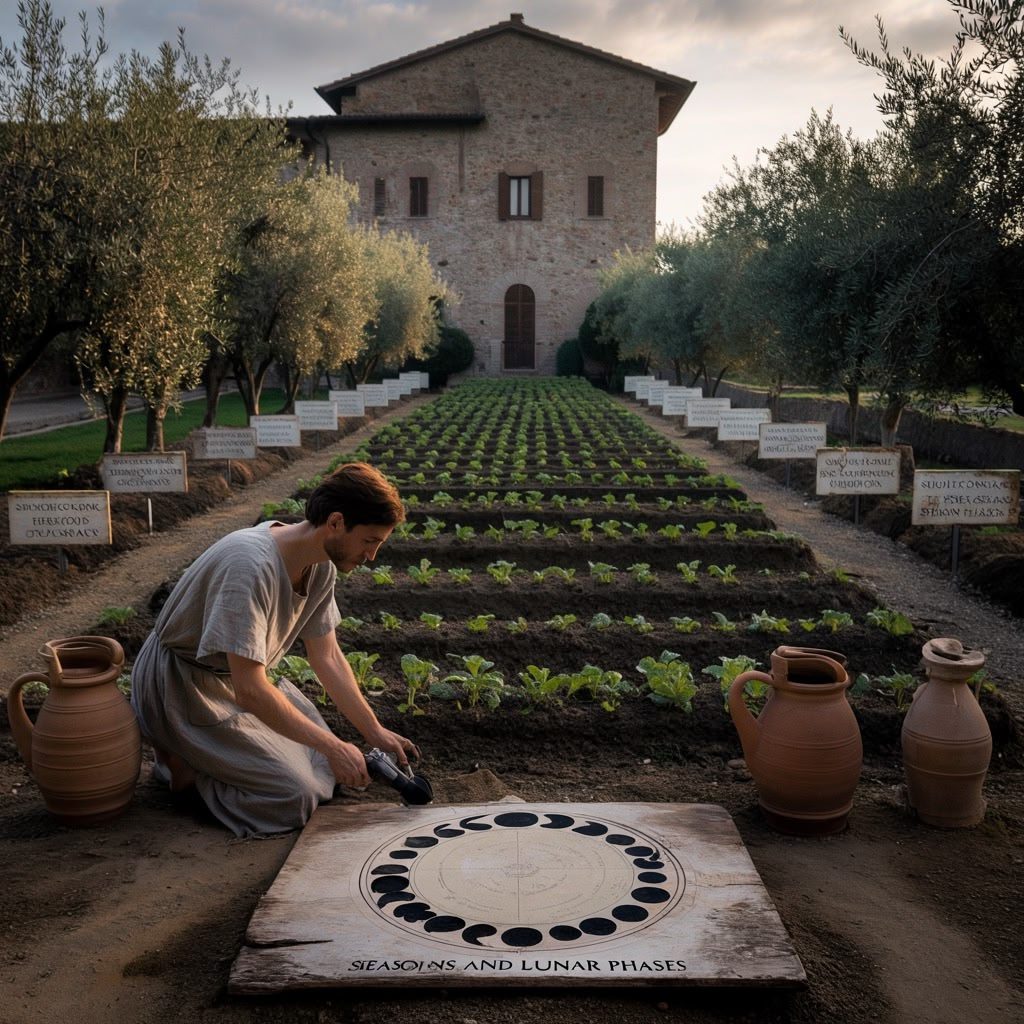
One of the most sophisticated aspects of Roman farming involved timing activities according to lunar phases. This wasn’t mystical thinking—it was practical observation of how moon phases affected moisture levels, plant energy, and growth patterns.
The Romans observed that certain activities produced consistently better results when performed during specific lunar phases. Seeds planted during the waxing moon showed stronger germination rates and more vigorous early growth, while root crops planted during the waning moon developed more robust underground systems.
The practical application involves understanding four basic lunar phases: the new moon period for starting new projects and planting seeds, the waxing moon for activities supporting upward growth, the full moon for harvesting and preservation activities, and the waning moon for root development and soil preparation.
Modern gardeners and farmers applying these principles often report noticeable improvements in germination rates, plant vigor, and harvest quality when they align major farming activities with appropriate lunar phases.
New Moon Planting Strategies
The new moon period represented fresh beginnings and increasing energy, making it ideal for starting seeds and beginning new growing projects. Roman farmers used this time for planting crops where strong initial germination was crucial for later success.
This phase also worked well for soil preparation activities that would support the upcoming growing cycle, such as adding compost or preparing planting beds for future use.
The key principle involved starting activities during this phase that would benefit from gradually increasing energy over the following weeks as the moon waxed toward fullness.
Waxing Moon Growth Support
As the moon waxed toward fullness, Roman farmers focused on activities that supported upward growth and leaf development. This included transplanting seedlings, applying growth-supporting amendments, and performing cultivation activities that encouraged vigorous plant development.
The increasing lunar energy during this phase seemed to enhance the effectiveness of fertilization and soil improvement activities, making it an optimal time for feeding established plants and preparing growing areas.
Pruning activities during the waxing moon focused on encouraging new growth and shaping plants for better production rather than removing excess growth.
Soil Preparation Following Natural Rhythms
Roman soil preparation methods worked with natural processes rather than forcing immediate results through artificial inputs. They understood that healthy soil required time to develop proper structure, beneficial microbial populations, and nutrient availability.
The timing of soil preparation activities followed seasonal patterns that supported natural soil development processes. Fall preparation allowed organic matter to decompose slowly over winter, creating rich, living soil by spring planting time.
The Roman approach emphasized three soil development phases: autumn preparation that initiated natural decomposition processes, winter rest periods that allowed beneficial organisms to establish, and spring conditioning that fine-tuned soil conditions for optimal planting.
This patient approach produced soil that remained productive year after year without requiring excessive external inputs or losing fertility over time.
Autumn Soil Conditioning
Fall soil preparation in the Roman system focused on setting up conditions that would create optimal growing medium by the following spring. This involved incorporating organic matter at a time when natural decomposition processes would work most effectively.
The cooling temperatures and increased moisture of autumn created ideal conditions for beneficial soil organisms to break down organic amendments while building soil structure that would support healthy root development.
Rather than heavy mechanical manipulation, autumn soil work involved gentle incorporation of materials that would improve soil health through natural processes over the dormant season.
Winter Planning and Preparation
Winter represented a crucial planning period in the Roman agricultural calendar, when successful farmers prepared for the upcoming growing season through careful observation and strategic preparation.
This dormant period provided time for seed selection, tool maintenance, and detailed planning that ensured efficient use of the active growing season when it arrived.
Winter also offered opportunities for soil conditioning activities that required slow, natural processes to achieve optimal results by spring.

Harvest Optimization Through Timing Mastery
Roman harvest timing focused on capturing crops at their peak nutritional content and maximum storage potential rather than simply when they appeared mature. This approach significantly improved both the quality and longevity of harvested crops.
The Romans understood that harvest timing affected not just immediate yield but also storage life, nutritional value, and seed viability for future planting. They developed specific indicators for determining optimal harvest timing for different types of crops.
Harvest optimization involved three key considerations: peak nutritional development in the plant, optimal storage conditions in the environment, and proper lunar phase timing for maximum preservation potential.
This comprehensive approach to harvest timing often meant that Roman farmers achieved better long-term results with smaller immediate harvests, as properly timed crops stored better and provided higher quality nutrition throughout winter storage periods.
Peak Nutrition Indicators
Determining peak nutritional content required careful observation of subtle plant indicators that revealed when crops had reached optimal development. These indicators varied by crop type but generally involved specific color changes, texture modifications, and natural plant signals.
For leafy crops, peak nutrition often occurred before full maturity, when leaves maintained optimal texture and flavor profiles. Root crops reached peak nutrition when their growth slowed but before they began redirecting energy toward seed production.
Fruit crops required observation of multiple indicators including color development, ease of separation from the plant, and specific aromatic qualities that indicated optimal sugar and nutrient development.
Storage-Optimized Harvesting
Roman harvest techniques prioritized long-term storage success over immediate convenience. This meant harvesting during specific weather conditions and times of day that minimized moisture content and maximized natural preservation qualities.
Morning harvests after dew had evaporated but before intense heat accumulated often produced crops with optimal moisture levels for storage. Harvesting during dry weather conditions reduced the risk of storage problems caused by excess moisture.
The Romans also understood that certain lunar phases enhanced the natural storage life of harvested crops, with harvests timed during waning moon phases often showing superior storage characteristics.
Applying Roman Wisdom to Modern Growing
Integrating Roman farming calendar principles into contemporary growing practices doesn’t require abandoning modern tools or techniques. Instead, it involves adding timing wisdom that enhances the effectiveness of current methods.
Start by observing natural seasonal patterns in your specific location rather than relying solely on generic planting dates. Notice when wild plants begin growing, when soil becomes workable, and when natural indicators suggest optimal timing for various activities.
Begin with simple applications: time your major planting activities to align with natural seasonal energy patterns, incorporate basic lunar phase timing for planting and harvesting, and adjust soil preparation schedules to work with natural processes rather than against them.
Track your results over multiple growing seasons to identify which Roman principles produce the most noticeable improvements in your specific growing conditions. This patient, observational approach mirrors the Roman method of continuous refinement based on actual results.
Creating Your Personal Farming Calendar
Developing a personalized farming calendar based on Roman principles requires careful observation of your local growing conditions combined with understanding of universal natural patterns.
Begin by noting the timing of natural events in your area: when do wild plants begin growing, when does soil become workable, when do insects become active, and when do seasonal weather patterns typically shift?
Use these observations to create a framework for timing your farming activities in harmony with natural cycles rather than arbitrary calendar dates. Adjust this framework each year based on actual seasonal variations and growing results.
Measuring Success and Refinement
The Roman approach emphasized continuous improvement based on careful observation of results. Track not just immediate yields but also crop quality, storage life, plant health throughout the growing season, and soil condition improvements over time.
Compare results from activities timed according to Roman principles with those following conventional schedules to identify which approaches work best in your specific conditions.
Remember that the Roman system developed over centuries of refinement. Expect gradual improvement rather than immediate dramatic changes, and focus on building understanding of natural patterns that will serve you for many growing seasons.
The Timeless Value of Natural Rhythm
The Roman farming calendar offers modern growers something often missing from contemporary agriculture: a deep understanding of how to work with natural systems rather than imposing artificial schedules upon them. This isn’t about rejecting modern knowledge but about combining ancient wisdom with current techniques for superior results.
The principles behind Roman agricultural success—careful observation, patience with natural processes, and timing activities to align with natural cycles—remain as valuable today as they were two millennia ago. These approaches often produce better results with less effort, creating the kind of sustainable abundance that supported one of history’s greatest civilizations.
Consider how different your growing experience might become when you start viewing your garden or farm as part of larger natural rhythms rather than an isolated system requiring constant intervention. The Romans understood that successful agriculture flows from partnership with nature’s patterns rather than dominance over them.
What aspects of Roman agricultural wisdom resonate most strongly with your current growing challenges? Which seasonal timing adjustments might offer the greatest improvements in your specific situation? The answers to these questions provide your starting point for integrating these time-tested principles into your modern growing practices.
Begin observing the natural cycles already operating in your growing area. Notice how plants, weather, and soil conditions change throughout the seasons. Start timing one or two key activities—perhaps spring planting or fall soil preparation—according to natural indicators rather than calendar dates alone. Track the results and let your observations guide further applications of Roman agricultural wisdom.
The path to better harvests may be simpler than you imagined: it requires not more complex techniques, but deeper alignment with the natural patterns that have supported abundant agriculture for thousands of years.


