Picture this: You’ve just harvested your biggest crop yet, but now you’re staring at bushels of grain, baskets of root vegetables, and jars of preserved goods with one nagging question—how do you store it all without losing half to spoilage? While modern homesteaders scramble for the latest storage gadgets and temperature-controlled solutions, there’s a wealth of wisdom waiting in the agricultural practices of ancient Rome that solved these exact challenges two thousand years ago.
The Romans weren’t just master builders and military strategists—they were agricultural innovators who fed an empire spanning three continents without a single electric refrigerator or climate-controlled warehouse. Their food storage techniques weren’t just effective; they were sustainable, economical, and brilliantly adapted to work with natural forces rather than against them. These time-tested methods offer modern homesteaders a pathway to food security that doesn’t depend on electrical grids or expensive equipment.
Why Ancient Romans Mastered Food Storage Better Than Most Modern Homes
The Roman Empire’s success hinged on one critical factor that many overlook: their ability to store and distribute food efficiently across vast distances and varying climates. While we often focus on their architectural marvels, the real foundation of Roman civilization was their sophisticated understanding of food preservation and storage.
Roman agricultural writers understood something fundamental that modern convenience has made us forget—successful food storage isn’t about fighting natural processes, but working with them. They developed techniques that harnessed the natural properties of materials, the physics of air circulation, and the chemistry of preservation without ever needing to understand the scientific principles behind them.
This practical wisdom emerged from necessity. Roman families, whether urban or rural, had to plan for seasons of scarcity, military campaigns, and trade disruptions. Every household developed storage strategies that could keep staple foods viable for months or even years. The techniques they perfected weren’t just survival skills—they were the economic backbone of one of history’s most enduring civilizations.
What makes these methods particularly valuable for today’s homesteaders is their resilience. Roman storage solutions worked without external power sources, complex machinery, or supply chains for replacement parts. They were designed to function reliably using materials that could be sourced locally and maintained by anyone with basic crafting skills.

The Horreum: Engineering Food Security Without Electricity
Understanding the Roman Granary System
The cornerstone of Roman food storage was the horreum—a sophisticated granary system that maintained grain quality for extended periods using nothing more than intelligent design and natural airflow. These structures weren’t simple barns; they were carefully engineered storage facilities that controlled moisture, temperature, and pest access through architectural principles that modern homesteaders can easily adapt.
Roman horrea featured raised floors that protected stored goods from ground moisture while allowing air circulation underneath. This elevation served multiple purposes: it prevented rot from damp earth, discouraged rodent access, and created a buffer zone that helped regulate temperature fluctuations. The space beneath the storage floor acted as a natural climate control system, moderating the extreme temperatures that could damage stored grain.
The walls of Roman granaries incorporated ventilation systems that maintained consistent airflow without exposing stored goods to rain or direct sunlight. Small openings positioned strategically around the structure created cross-ventilation that prevented the stagnant air conditions where mold and mildew thrive. These weren’t random holes—they were carefully planned ventilation networks that moved fresh air through the storage space while maintaining structural integrity.
Adapting Horreum Principles for Modern Homesteads
Modern homesteaders can incorporate these Roman engineering insights into storage sheds, root cellars, or dedicated food storage areas. The key principles translate directly to contemporary construction: elevate storage areas above ground level, create controlled ventilation pathways, and design spaces that work with natural air circulation patterns rather than requiring mechanical ventilation systems.
Consider how these principles might transform a basic storage shed. By raising the floor even a few inches and installing strategically placed vents, you create a micro-climate that naturally preserves stored goods. The investment in proper elevation and ventilation pays dividends in reduced spoilage and extended storage life for everything from bulk grains to preserved vegetables.
Clay Vessel Preservation: The Original Airtight Storage
The Science Behind Roman Amphorae
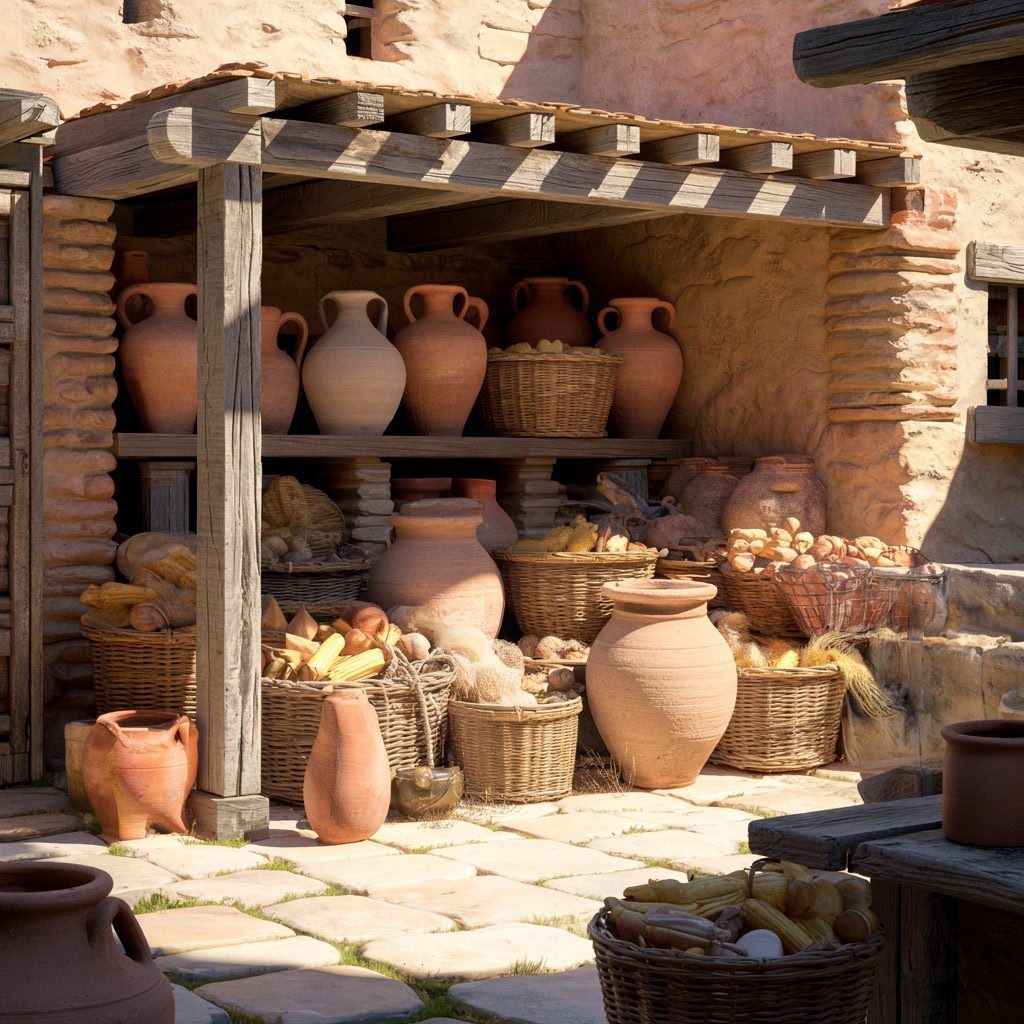
Roman amphorae weren’t just convenient containers—they were precision-engineered storage vessels that created optimal preservation environments for different types of food. The clay composition, wall thickness, and shape of these vessels were specifically designed to regulate moisture exchange and protect contents from temperature fluctuations.
The porous nature of unglazed clay created a natural breathing system that allowed gradual moisture adjustment without permitting harmful levels of humidity. This controlled porosity meant that stored grains could release excess moisture during humid periods while drawing slight moisture from the clay walls during dry spells, maintaining optimal storage conditions automatically.
Romans also understood the importance of vessel size and shape for different storage needs. Wide-mouthed jars allowed easy access and inspection of stored goods, while narrow-necked amphorae created natural barriers against contamination and pest intrusion. The pointed bottoms of many Roman storage vessels weren’t just artistic choices—they prevented sediment accumulation and made it easier to pour liquids without disturbing settled particles.
Modern Applications of Clay Storage Principles
Today’s homesteaders can harness these same principles using readily available materials. Large ceramic crocks, unglazed pottery, and even food-grade clay vessels can recreate the storage environment that kept Roman foods fresh for months. The key is understanding which foods benefit from the slight moisture exchange that clay provides and which require completely airtight storage.
Root vegetables, for instance, often store better in clay vessels than in plastic containers because the slight moisture regulation prevents both drying out and excess humidity that leads to rot. Grains and legumes can benefit from clay storage when properly prepared, as the vessels naturally deter many insect pests while maintaining optimal moisture levels.

Natural Cooling Techniques That Work Without Power
Roman Evaporative Cooling Systems
Long before mechanical refrigeration, Romans developed cooling techniques that could lower storage temperatures by significant amounts using nothing more than water, airflow, and strategic positioning. These methods worked on the same principles that modern evaporative coolers use, but required no electricity or moving parts to maintain effectiveness.
Roman cooling systems often incorporated water features that created natural air conditioning through evaporation. Storage areas positioned near fountains, pools, or even large water vessels benefited from the cooling effect of water evaporation, which could lower ambient temperatures by several degrees even in hot climates. This wasn’t accidental—Roman architects deliberately integrated water features into food storage areas to create more stable preservation environments.
Underground storage chambers took advantage of the earth’s natural insulation properties to maintain consistent temperatures year-round. These spaces weren’t just holes in the ground—they were carefully constructed chambers that used thermal mass to moderate temperature swings while incorporating drainage and ventilation systems to prevent moisture problems.
Implementing Natural Cooling on Modern Homesteads
Homesteaders can recreate these cooling effects using variations of Roman techniques adapted for contemporary materials and construction methods. A simple evaporative cooling system might involve placing water-filled vessels near storage areas with good airflow, creating the same temperature-moderating effect that Roman installations achieved.
Underground root cellars or partially buried storage areas can provide the thermal stability that made Roman food storage so effective. Even shallow excavations can create significantly more stable storage environments than above-ground structures, and the principles of drainage and ventilation that Romans mastered remain just as important today.
Salt, Oil, and Natural Preservatives: The Roman Pantry Strategy
Layered Preservation Techniques
Romans didn’t rely on single preservation methods—they developed integrated systems that combined multiple preservation techniques to create storage solutions more effective than any individual method alone. This layered approach meant that if one preservation element failed, others would continue protecting stored food.
Salt preservation formed the foundation of many Roman storage strategies, but they understood that different foods required different salt applications. Dry salting drew moisture from foods to prevent bacterial growth, while salt brines created controlled environments for long-term storage of vegetables and proteins. The Romans also recognized that salt quality mattered—different types of salt provided different preservation properties and flavors.
Oil preservation techniques created barriers against air and moisture while adding nutritional value and flavor to stored foods. Romans stored everything from vegetables to cheeses in oil, understanding that the oil layer prevented oxidation and contamination while allowing foods to remain accessible without complex preparation.
Modern Homestead Applications
Contemporary homesteaders can adapt these Roman preservation strategies using ingredients and techniques that remain just as effective today. The principles of combining preservation methods—using salt, oil, controlled drying, and proper storage containers together—create food storage systems that can maintain quality and safety for extended periods without refrigeration.
Understanding how different preservation techniques complement each other allows modern homesteaders to develop storage strategies tailored to their specific needs and available materials. A root cellar might combine Roman-inspired ventilation design with traditional preservation techniques to create a complete food storage system that rivals modern refrigeration for many types of food.

Building Your Roman-Inspired Storage System
Assessment and Planning
Creating an effective Roman-inspired storage system begins with understanding your specific storage needs and available resources. Consider which foods you need to store, for how long, and in what quantities. Roman storage solutions were always tailored to specific circumstances—the techniques that worked for urban households differed from those used in rural farming communities.
Evaluate your available space and materials to determine which Roman techniques offer the most practical benefits for your situation. A small urban homestead might focus on clay vessel storage and natural preservation techniques, while a larger rural property could incorporate full-scale granary principles and underground cooling systems.
Implementation Strategies
Start with simple adaptations of Roman principles that can be integrated into existing storage areas. Improving ventilation, elevating storage surfaces, and incorporating natural moisture control can dramatically improve storage effectiveness with minimal investment. These foundational improvements create the platform for more advanced Roman-inspired storage techniques.
As your system develops, you can add more sophisticated elements like dedicated clay vessel storage, evaporative cooling systems, or underground storage chambers. The key is building incrementally, allowing each addition to prove its effectiveness before expanding further.
Maintenance and Optimization
Roman storage systems succeeded because they were designed for long-term maintenance by their users. Regular inspection, cleaning, and adjustment of storage conditions were built into the Roman approach to food preservation. This ongoing attention to storage conditions prevented small problems from becoming major failures.
Develop routines for monitoring your storage systems that reflect the Roman emphasis on consistent attention to food preservation. Regular checks of moisture levels, temperature conditions, and stored food quality help maintain the effectiveness that made Roman storage techniques so reliable.
The Sustainable Advantage of Roman Storage Methods
What makes Roman storage techniques particularly relevant for modern homesteaders isn’t just their effectiveness—it’s their sustainability and resilience. These methods work without dependence on external power sources, complex supply chains, or specialized equipment that might become unavailable during disruptions.
Roman storage solutions also offer environmental benefits that align with sustainable homesteading principles. They use natural materials, work with rather than against natural processes, and create food storage systems that can be maintained and repaired using locally available resources. This self-sufficiency was a cornerstone of Roman agricultural success and remains a valuable asset for contemporary homesteaders.
The economic advantages of Roman-inspired storage systems become apparent over time as reduced food spoilage and lower maintenance costs offset the initial investment in proper storage infrastructure. Romans understood that effective food storage was an investment in long-term food security and economic stability—principles that remain just as relevant today.
From Ancient Wisdom to Modern Food Security
The Romans solved the fundamental challenge that every homesteader faces: how to store food effectively for extended periods using reliable, sustainable methods. Their techniques weren’t just historical curiosities—they were practical solutions developed through centuries of trial and refinement that can provide modern homesteaders with proven strategies for food security.
By adapting Roman storage principles to contemporary homesteading, you’re not just preserving food—you’re building resilience, reducing waste, and creating systems that can function reliably regardless of external circumstances. These techniques offer a path to greater self-sufficiency that honors traditional wisdom while meeting modern needs.
The journey from Roman granary to modern homestead storage system isn’t about recreating the past—it’s about applying time-tested principles to create more effective, sustainable food storage solutions. Whether you implement simple ventilation improvements or construct elaborate underground cooling systems, Roman storage wisdom offers practical guidance for building food security that can last for generations.
Consider which Roman storage techniques might transform your homestead’s food preservation capabilities. Start with one or two principles that align with your immediate needs and available resources, then build your system gradually as you experience the benefits of these ancient but remarkably effective approaches to food storage. The Romans built an empire on the foundation of reliable food storage—imagine what these same principles could do for your homestead’s resilience and sustainability.


