In a world obsessed with instant gratification and shortcuts to success, the ancient Romans mastered something we’ve forgotten: the profound art of patient excellence. While modern makers chase viral fame and overnight success, Roman artisans understood that true mastery requires a completely different approach to craft and character.
The Roman concept of virtus – excellence achieved through unwavering discipline – transformed ordinary workers into legendary masters whose creations still inspire awe two millennia later. Their approach wasn’t just about creating beautiful objects; it was about forging extraordinary human beings through the crucible of dedicated craftsmanship.
This mindset created artisans whose work transcended mere functionality to become art, whose techniques became traditions, and whose dedication became the foundation for an empire that dominated the world for centuries. The question isn’t whether these principles still work – it’s whether modern makers are willing to embrace the patience and discipline required to unlock their own mastery.
The Foundation of Excellence: Understanding Virtus
Virtus represented far more than skill – it embodied the complete integration of character, competence, and commitment. Roman craftsmen didn’t simply learn techniques; they internalized a philosophy that viewed their work as an extension of their moral character and personal honor.
Picture this mindset in action: imagine approaching your craft not as a means to an end, but as a daily practice of self-refinement. Every cut of the chisel, every turn of the potter’s wheel, every strike of the hammer became an opportunity to demonstrate excellence not just in technique, but in character. This wasn’t about perfectionism – it was about the relentless pursuit of becoming worthy of the craft itself.
The Romans understood that mastery begins in the mind before it manifests in the hands. They cultivated what we might call today a “growth mindset,” but their version carried the weight of personal honor and social responsibility. A Roman artisan’s reputation wasn’t built on a single masterpiece but on the consistent demonstration of virtus across decades of work.
This philosophical foundation created artisans who viewed temporary failures as information rather than defeat, who saw each project as part of a larger journey toward excellence, and who understood that their individual pursuit of mastery contributed to the greatness of Roman civilization itself.

The Architecture of Mastery: Rome’s Systematic Approach
Roman mastery wasn’t accidental – it was systematically engineered through structures that modern makers can adapt and apply. Their approach recognized that excellence emerges from the intersection of proper foundation, progressive challenge, and sustained commitment over time.
The Apprenticeship Framework
The Roman apprenticeeship system created a pathway that honored both tradition and innovation. Young craftsmen didn’t jump immediately into complex projects; instead, they spent years mastering fundamental principles under the guidance of established masters. This wasn’t about limiting creativity – it was about building the technical foundation that would eventually support true artistic expression.
Consider how this applies to modern craftsmanship: rather than rushing toward advanced techniques, Roman-inspired makers focus intensively on fundamental skills until they become second nature. They understand that creativity without technical mastery leads to frustration, while technical skill without creative vision leads to mere mechanical reproduction.
The apprenticeship model also embedded crucial social and professional networks. Master craftsmen didn’t just teach techniques; they transmitted values, connected apprentices with suppliers and clients, and created a support system that sustained artisans throughout their careers. This holistic approach recognized that sustainable mastery requires both individual skill and community support.
Progressive Skill Development
Romans approached skill development with the same methodical precision they applied to military strategy and engineering projects. They understood that mastery develops through carefully sequenced challenges that build upon previous achievements while gradually expanding the craftsman’s capabilities.
This progression followed natural learning patterns rather than arbitrary timelines. Apprentices advanced based on demonstrated competence rather than time served, creating internal motivation to truly master each level before moving forward. The system rewarded depth over speed, thoroughness over shortcuts.
Modern craftsmen can apply this principle by structuring their own learning journey around progressive mastery rather than random experimentation. Instead of jumping between different techniques or projects based on momentary interest, the Roman approach suggests identifying fundamental skills, mastering them completely, then building systematically toward more complex applications.

The Social Dimension: Craftsmanship as Noble Pursuit
Perhaps the most revolutionary aspect of Roman craft culture was its elevation of skilled artisans to positions of genuine social respect. Unlike many ancient civilizations that viewed manual labor as beneath the educated classes, Romans recognized that master craftsmen possessed knowledge and skills that deserved honor and substantial compensation.
This social recognition created a powerful psychological environment where craftsmen took genuine pride in their work and viewed their profession as worthy of lifelong dedication. When society values your contribution, you naturally invest more deeply in excellence. When your work is seen as noble rather than merely functional, you approach it with the dignity and commitment it deserves.
The implications for modern makers are profound. Rather than viewing craftsmanship as a hobby or side pursuit, the Roman mindset suggests approaching it with the same seriousness and commitment typically reserved for traditional professions. This doesn’t mean everyone needs to become a professional craftsman, but it does mean bringing professional-level dedication to the pursuit of excellence.
This social dimension also created accountability structures that sustained high standards across generations. Roman artisans worked within communities where reputation mattered, where shoddy work was quickly identified and penalized, and where excellence was publicly recognized and rewarded. These external pressures reinforced internal motivation and created consistent incentives for continuous improvement.
The Philosophy of Incremental Excellence
While modern culture celebrates dramatic breakthroughs and overnight transformations, Romans understood that true mastery emerges from the accumulation of small, consistent improvements over extended periods. Their approach embodied what we might call “patient excellence” – the willingness to invest years in gradual refinement rather than seeking immediate dramatic results.
This philosophy manifested in their approach to both individual projects and career development. Roman craftsmen didn’t rush to complete projects; they invested whatever time was necessary to achieve their highest current standard. They also didn’t expect to reach master level quickly; they embraced the decades-long journey of continuous learning and refinement.
Consider how this mindset transforms the daily experience of craftsmanship. Instead of frustration with current limitations, there’s curiosity about possibilities. Instead of impatience with slow progress, there’s appreciation for sustainable development. Instead of comparing current work to master-level examples, there’s focus on improvement from yesterday’s efforts.
The Roman approach also recognized that incremental improvement requires systematic attention to detail rather than casual effort. They developed practices for identifying specific areas needing improvement, methods for practicing those specific skills, and systems for measuring progress over time. This wasn’t obsessive perfectionism but intelligent, focused development.
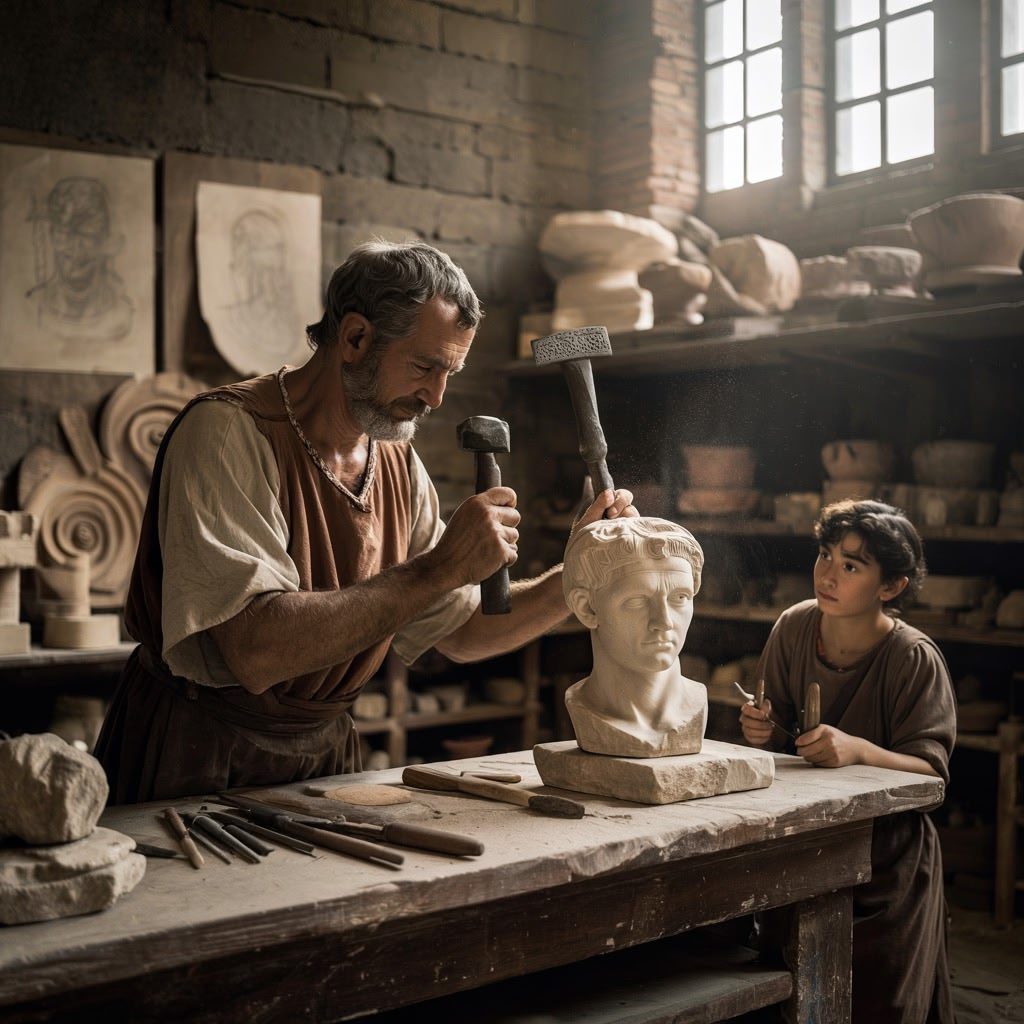
Discipline as the Bridge Between Vision and Reality
The gap between wanting to create something beautiful and actually possessing the skills to do so can only be bridged through disciplined practice. Romans understood that discipline isn’t about forcing yourself to work; it’s about creating sustainable systems that make excellent work inevitable.
Their discipline showed up in daily routines that prioritized craft development, workspace organization that supported focused work, and mental practices that maintained motivation through difficult periods. Roman artisans didn’t rely on inspiration or mood to determine their work schedule; they created consistent practices that generated momentum regardless of temporary feelings.
This systematic approach to discipline recognized that motivation fluctuates but systems endure. By building habits around craft practice, maintaining organized workspaces, and developing reliable methods for overcoming common obstacles, Roman craftsmen created conditions where excellence became their natural output rather than an occasional achievement.
Modern makers can apply this principle by identifying the specific systems and habits that support their best work, then implementing those consistently rather than waiting for perfect conditions or optimal motivation. The Roman mindset suggests that discipline creates freedom – the freedom to express your vision through competent execution.
The Legacy Mindset: Creating Work That Endures
Roman craftsmen didn’t create for immediate consumption or temporary appreciation. They approached each project with the understanding that their work would outlast their lifetime and represent their character to future generations. This legacy mindset fundamentally changed how they approached quality, materials, and techniques.
When you’re creating for posterity rather than instant gratification, shortcuts become unthinkable. Every decision about materials, methods, and finishing reflects on your permanent reputation. This perspective naturally elevates standards and creates internal pressure for excellence that no external quality control system could match.
The legacy mindset also influenced how Roman artisans thought about learning and skill development. They weren’t just acquiring techniques for immediate application; they were building capabilities that would support decades of increasingly sophisticated work. This long-term perspective justified the time and effort required for thorough mastery of fundamentals.
For modern craftsmen, adopting a legacy mindset means asking different questions: Will this work represent my best current abilities? Will the methods I’m using support the longevity I want this piece to have? Am I building skills that will serve increasingly ambitious projects? How does this project contribute to my development as a craftsman?

Integrating Ancient Wisdom with Modern Realities
The Roman approach to craftsmanship offers timeless principles that remain relevant despite dramatically different modern circumstances. The key is adapting their mindset and methods to contemporary contexts rather than trying to replicate their exact practices.
Modern makers face different challenges than Roman artisans – global competition, rapidly changing technologies, time pressures from modern life, and cultural messages that often undervalue patient skill development. However, the underlying principles of virtus, systematic development, and legacy thinking remain as powerful today as they were two thousand years ago.
The adaptation process requires identifying the essential elements of Roman craft philosophy, then finding contemporary expressions that honor those principles while working within current constraints. This might mean creating modern apprenticeship-style relationships through online communities, developing systematic skill-building programs that fit weekend schedules, or finding ways to maintain long-term perspectives despite short-term pressures.
The goal isn’t to become a Roman artisan but to capture the mindset and systematic approach that made Roman craftsmanship legendary. This means embracing patient excellence over quick results, viewing skill development as character development, and approaching each project as part of a larger journey toward mastery.
The Path Forward: Becoming a Modern Master
The Roman path to mastery isn’t a historical curiosity – it’s a proven system for developing extraordinary capabilities through ordinary dedication. The principles that created legendary Roman craftsmen are available to anyone willing to embrace their approach to learning, practice, and excellence.
Starting this journey doesn’t require dramatic life changes or perfect conditions. It begins with a simple shift in mindset: viewing your craft as worthy of serious attention, approaching skill development systematically rather than randomly, and committing to patient excellence over immediate results.
The Roman example demonstrates what becomes possible when craftsmanship is pursued with the same dedication typically reserved for professional advancement or athletic achievement. Their legacy proves that ordinary individuals, guided by extraordinary principles and sustained by disciplined practice, can create work that transcends their time and inspires future generations.
Your craft journey doesn’t have to remain a casual hobby or weekend distraction. The Roman mindset offers a path toward genuine mastery, meaningful contribution, and the deep satisfaction that comes from developing your full potential as a creator. The question isn’t whether these principles work – it’s whether you’re ready to apply them with the patience and dedication they require.
The Romans understood something we’re still learning: that the pursuit of excellence in craft is simultaneously the pursuit of excellence in character. Every project becomes an opportunity for growth, every skill developed strengthens your capacity for future achievements, and every moment of disciplined practice moves you closer to becoming the craftsman you’re capable of becoming.
What would change in your approach to craft if you adopted the Roman mindset of patient excellence? How might your work transform if you viewed each project as part of a decades-long journey toward mastery? The path of virtus remains open to anyone willing to walk it with the dedication it deserves.


