
The Ancient Wisdom That Modern Farmers Are Rediscovering
A revolution in agriculture is happening right under our feet, but its roots stretch back two millennia. As modern farming grapples with depleted soils, chemical dependencies, and sustainability challenges, the answer may lie in the sophisticated agricultural practices of ancient Rome. These aren’t primitive techniques being romanticized—they represent a sophisticated understanding of ecological principles that modern science is only now fully appreciating.
While standing in a vibrant field in central Italy, I couldn’t help but reflect on the irony. The very ground I was examining had been continuously farmed since before the birth of Christ, yet remained more fertile than many American fields farmed for less than two centuries. This wasn’t coincidence but the result of agricultural wisdom passed down through generations—wisdom that modern farming abandoned in pursuit of industrial efficiency.
Roman farmers, without access to synthetic fertilizers or fuel-powered machinery, developed intricate systems that maintained soil fertility indefinitely. Their approach wasn’t merely sustainable—it was regenerative, actually improving soil structure and fertility over time. What’s most remarkable is how these ancient techniques address the very problems threatening modern agricultural productivity: soil degradation, pest resistance, and the environmental impact of chemical inputs.
Today’s regenerative agriculture movement, often presented as innovative and cutting-edge, is in many ways a rediscovery of principles the Romans understood intuitively. The question isn’t whether these ancient techniques work—two thousand years of agricultural history prove they do. The question is whether modern farmers can humble themselves to learn from the past.
The Roman Three-Field System: Ancient Innovation for Modern Problems
At the heart of Roman agricultural genius was their sophisticated approach to crop rotation. While basic crop rotation has been practiced in many ancient civilizations, the Romans refined it into a science. Their most notable contribution was the development of what would later evolve into the three-field system—a method that would sustain European agriculture for centuries after the empire’s fall.
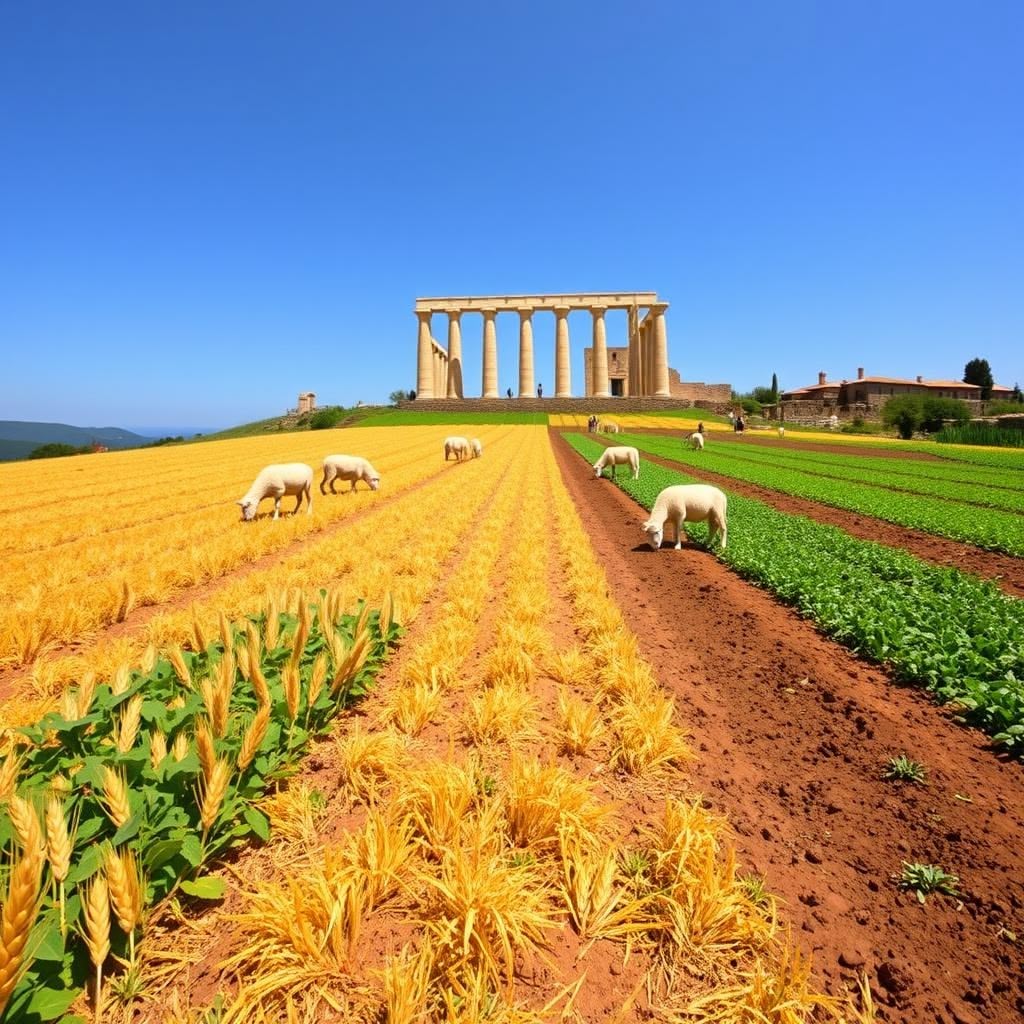
This system divided farmland into three distinct sections. One section would grow autumn crops (typically wheat or rye), another would grow spring crops (often legumes like peas, lentils, or beans), and the third would remain fallow. Each year, the designations would rotate, ensuring that no field grew the same crop twice in succession and that each field periodically rested.
What makes this system remarkable isn’t just its longevity but its ecological sophistication. The Romans understood—without the benefit of modern soil science—that different crops removed different nutrients from soil. They recognized that legumes actually improved soil fertility (what we now know is nitrogen fixation). And they observed that leaving land fallow allowed beneficial soil organisms to replenish.
Modern research confirms what Roman farmers knew through observation: this rotation reduces pest pressures naturally, as many pests and diseases are crop-specific and cannot survive when their host plants are absent for a season. The system breaks pest cycles without requiring chemical interventions—an elegant solution to a problem modern agriculture often addresses with increasing pesticide applications.
Today’s conventional monoculture farming, with its reliance on external inputs, stands in stark contrast to this integrated approach. Fields growing the same crop year after year become dependent on synthetic fertilizers while developing persistent pest problems that require escalating chemical controls—a treadmill that Roman farmers neatly avoided through their rotational wisdom.

Beyond Rotation: The Integrated Roman Approach to Soil Health
Roman agricultural excellence extended far beyond basic crop rotation. Their farming systems integrated livestock, cover crops, and careful soil management in ways that modern regenerative farmers are only now rediscovering. Columella and Varro, Roman agricultural writers whose works have survived the centuries, documented these practices in remarkable detail.
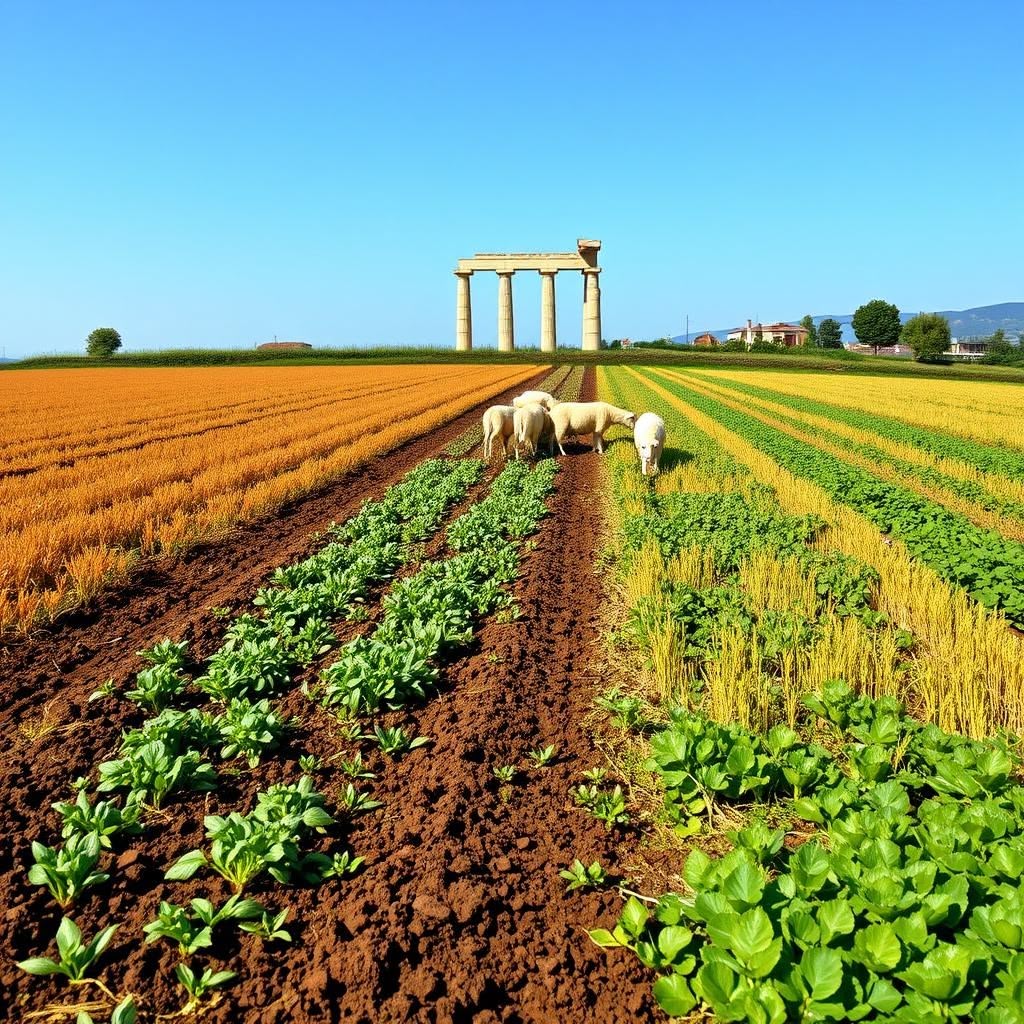
The Romans understood the critical relationship between livestock and cropland. Animals weren’t merely meat producers but integral components of the agricultural system. Sheep, cattle, and other livestock would graze fallow fields, controlling weeds naturally while depositing valuable manure. This practice, now called “mob grazing” or “adaptive multi-paddock grazing” by progressive farmers, builds soil organic matter and cycles nutrients efficiently without mechanical intervention.
Cover cropping—growing plants specifically to protect and enhance soil—was another Roman staple. They would plant quick-growing crops like mustard or certain grasses after harvest to protect bare soil from erosion and suppress weeds. These cover crops would then be plowed under as “green manure,” returning organic matter to the soil. This practice, abandoned during the chemical agriculture revolution of the 20th century, is now being rediscovered as a powerful tool for carbon sequestration and soil building.
Roman farmers also practiced careful composting, understanding that different organic materials contributed different values to soil. They categorized various manures by quality and appropriate use, recognized the value of human waste as fertilizer (when properly processed), and even documented the benefits of seawater and certain minerals for specific crops—insights that anticipated modern understandings of micronutrients and soil biology.
These weren’t separate techniques but an integrated system where each element supported others—a truly holistic approach to agriculture that maintained productivity without depleting resources. Modern industrial agriculture, by contrast, has often treated soil as merely a medium to hold plants upright while providing nutrients through synthetic inputs, ignoring the complex biology that Roman farmers intuitively fostered.
The Fall and Rise of Regenerative Wisdom
The sophisticated agricultural knowledge of Rome wasn’t lost overnight. These practices continued throughout Europe for centuries, evolving and adapting to local conditions. The three-field system became the dominant agricultural approach throughout medieval Europe, sustaining population growth and providing stability in food production.
What ultimately displaced these time-tested methods wasn’t their failure but the temporary abundance offered by industrialization. Chemical fertilizers, derived from the Haber-Bosch process developed in the early 20th century, allowed farmers to grow crops without maintaining natural soil fertility. Mechanization made it possible to farm vast monocultures efficiently. Pesticides eliminated the need for cultural pest control methods.
These innovations created unprecedented abundance but at a hidden cost. Soil organic matter began declining across the world’s farmlands. Beneficial soil microorganisms diminished. Pest resistance accelerated, requiring ever more powerful chemical interventions. Waterways suffered from agricultural runoff. The very foundations of agricultural productivity—healthy soil and clean water—were being undermined by practices that prioritized short-term yields over long-term sustainability.
By the 1970s, some farmers began recognizing these problems and looking for alternatives. They found them not in new technologies but in older wisdom. The organic farming movement, biodynamic agriculture, and later, regenerative agriculture, all represented attempts to recapture the integrated, ecological approach to farming that the Romans had mastered.
Today, this return to historical wisdom is accelerating. Modern soil science now confirms what Roman farmers knew through observation: diverse rotations build soil health, cover crops protect and enhance soil biology, and integrating livestock with cropland creates synergies that benefit both. What was once dismissed as primitive or inefficient is now being recognized as sophisticated and sustainable.

Implementing Roman Wisdom in Modern Contexts
The question for today’s farmers isn’t whether to adopt these ancient principles but how to implement them in modern contexts. Modern agriculture operates at scales the Romans couldn’t have imagined, with economic pressures and market demands they never faced. Yet the fundamental principles remain applicable, requiring not wholesale adoption of ancient methods but thoughtful translation of their wisdom.
Extended crop rotations represent the most accessible entry point for conventional farmers looking to incorporate Roman wisdom. Even adding one additional crop to a corn-soybean rotation can break pest cycles and improve soil structure. More diverse rotations—incorporating small grains, forage crops, or vegetables—provide even greater benefits, mimicking the Roman understanding that diversity builds resilience.
Cover cropping, another Roman staple, fits within modern mechanized agriculture surprisingly well. Innovative equipment now allows for “planting green”—seeding crops directly into living cover crops—combining the soil health benefits the Romans understood with the efficiency modern farms require. Winter cover crops can protect fields during off-seasons without disrupting primary production, addressing erosion issues while building organic matter.
Reintegrating livestock with crop production presents more significant challenges in our specialized agricultural economy but offers proportionally greater benefits. Innovative farmers are finding ways to partner with livestock producers, allowing animals to graze cover crops or crop residues, mimicking the symbiotic relationship the Romans fostered between animals and fields. Mobile infrastructure and temporary fencing make this ancient practice newly practical at modern scales.
Perhaps most importantly, modern farmers can adopt the Roman perspective that views farming not as mining the soil for maximum short-term yield but as cultivating a relationship with living systems. This philosophical shift—seeing soil as a complex ecosystem to be nurtured rather than merely a medium for plant roots—changes decision-making throughout the farm operation.
The Economic Case for Ancient Wisdom
Critics often dismiss traditional agricultural methods as impractical or uneconomical in modern contexts, but evidence suggests otherwise. The initial transition from conventional to regenerative practices based on historical wisdom can indeed present challenges, but the long-term economic benefits are increasingly well-documented.
The most immediate economic benefit comes from reduced input costs. Farmers implementing diverse rotations and cover crops typically report significant reductions in fertilizer needs—often 50% or more after several years—as soil biology begins functioning more effectively. Pesticide requirements similarly decline as biodiversity increases and pest cycles are disrupted naturally. These reductions represent direct savings that improve farm profitability.
Improved soil structure from these practices also creates resilience against weather extremes—both drought and excessive rainfall—reducing yield volatility and the financial risk it creates. Fields managed with Roman-inspired practices typically show better water infiltration, reducing erosion and allowing crops to access moisture during dry periods. This resilience becomes increasingly valuable as climate change intensifies weather variability.
Premium markets represent another economic opportunity. Consumers increasingly seek food grown with environmental stewardship in mind, creating price premiums for regeneratively grown crops. While not all farmers can access these premium markets, the trend toward valuing sustainable production continues to grow, creating economic incentives that align with adopting historical wisdom.
Perhaps most significantly, these practices build rather than deplete natural capital. Conventional agriculture often achieves profitability by essentially converting soil carbon and structure—built over millennia—into current yields, an unsustainable approach. Roman-inspired practices reverse this, building soil organic matter and fertility over time, improving the farm’s fundamental asset rather than depleting it.

The Science Behind Ancient Wisdom
What makes the rediscovery of Roman agricultural practices so compelling is how modern science now validates their effectiveness. What Roman farmers understood through careful observation and generational knowledge, we can now explain through the lens of ecology, microbiology, and soil science.
The Roman practice of crop rotation, for instance, anticipates our modern understanding of soil microbial communities. Different plant families foster different beneficial microorganisms in their root zones. By rotating crops, Romans were effectively cultivating diverse soil biology, preventing the dominance of any single pathogenic organism while promoting beneficial relationships between plants and microbes.
Their use of legumes in rotation aligns perfectly with our understanding of nitrogen fixation—the process by which certain bacteria in legume root nodules convert atmospheric nitrogen into forms plants can use. Romans observed that crops following legumes grew better, even without understanding the microbiology involved. They codified this knowledge into practical systems that maintained soil fertility without external inputs.
Even the Roman understanding of composting and organic matter management shows remarkable alignment with modern soil science. Their careful attention to the quality of different manures and organic materials, the timing of their application, and their combination with other practices demonstrates an intuitive grasp of nutrient cycling and soil biology that scientific research now confirms.
This convergence between ancient wisdom and modern science offers a powerful framework for agricultural innovation—not by discarding either traditional knowledge or scientific advancement, but by integrating them. The Romans’ empirical understanding, tested over centuries, provides insights that reductionist science sometimes misses, while modern research explains mechanisms that make these practices more adaptable to current conditions.
From Ancient Fields to Modern Farms: Practical Steps Forward
For today’s farmers interested in incorporating Roman agricultural wisdom, the path forward isn’t about romanticizing the past but pragmatically adapting its principles to modern contexts. The transition requires thoughtful planning and typically works best when implemented gradually, allowing both the land and the farmer to adapt.
Starting with a single field often proves most practical. This creates a controlled experiment where farmers can observe changes directly, build confidence in new methods, and work through implementation challenges without risking their entire operation. Many successful regenerative farmers began their transition this way, gradually expanding as they gained experience and saw results.
Expanding crop rotations represents a logical first step. Adding even one additional crop to existing rotations creates immediate benefits, breaking pest and disease cycles while diversifying income streams. Small grains, forage crops, or specialty crops can all serve this purpose, depending on local markets and growing conditions.
Incorporating cover crops typically follows, with winter covers being easiest to implement in most cropping systems. These protect soil during off-seasons, build organic matter, and can provide additional benefits like weed suppression or nitrogen fixation, depending on species selected. As farmers gain experience, more sophisticated cover crop strategies—like multi-species mixes or relay cropping—can further enhance benefits.
Reintegrating livestock often represents the final and most transformative step in recapturing Roman agricultural wisdom. While not practical for all farms, even occasional grazing of cover crops or crop residues by rented animals can accelerate soil health improvements dramatically. Creative arrangements between crop and livestock producers can make this ancient practice newly viable.
Throughout this transition, learning from other farmers proves invaluable. The growing community of regenerative producers freely shares experiences, helping others avoid pitfalls and accelerate success. This modern form of knowledge-sharing captures the spirit of Roman agricultural communities, where techniques were refined through collective experience over generations.
Beyond the Farm: The Broader Implications of Roman Agricultural Wisdom
The significance of rediscovering Roman agricultural practices extends far beyond individual farms. As these methods spread, they offer potential solutions to some of our most pressing environmental and social challenges—from climate change to water quality to rural economic resilience.
Climate change mitigation represents perhaps the most significant opportunity. Regenerative practices based on Roman wisdom—diverse rotations, cover cropping, and integrated livestock—all build soil organic carbon, effectively sequestering atmospheric carbon dioxide in stable soil structures. This carbon sequestration offers a rare win-win: improving agricultural productivity while mitigating climate impacts.
Water quality also improves dramatically under these management approaches. The improved soil structure reduces erosion and nutrient runoff, protecting waterways from the agricultural pollution that creates dead zones and threatens drinking water supplies. Roman-inspired farming systems work with natural water cycles rather than disrupting them—an approach increasingly crucial as water resources face growing pressures.
Rural communities stand to benefit substantially as well. The transition toward more diverse, integrated farming systems typically creates additional labor needs—but positive ones, requiring skilled management rather than merely seasonal labor. This can help revitalize rural economies by creating meaningful work connected to land stewardship, reversing the population decline many agricultural regions have experienced.
Perhaps most profoundly, reconnecting with Roman agricultural wisdom offers a different relationship with the natural world—one based on partnership rather than domination. This philosophical shift recognizes that humans aren’t separate from natural systems but integral parts of them, responsible for their stewardship. As environmental challenges mount globally, this perspective becomes not merely admirable but essential for long-term prosperity.
Learning from the Past to Secure Our Future
The Roman agricultural legacy reminds us that sustainability isn’t a new concept but an ancient principle temporarily forgotten in our rush toward industrialization. Their sophisticated understanding of ecological relationships—developed through careful observation and generational knowledge—offers a roadmap for addressing many of modern agriculture’s most pressing challenges.
What makes this rediscovery so powerful isn’t nostalgia but practicality. These ancient techniques work. They build soil health, reduce dependency on external inputs, improve resilience against weather extremes, and maintain productivity over generations rather than merely years. Modern science now explains why these practices succeed, allowing us to adapt and enhance them for contemporary contexts.
The transition won’t happen overnight, nor should it. Thoughtful adaptation requires experimentation, learning, and gradual implementation. But the direction is clear: agriculture must move toward more diverse, integrated systems that work with natural processes rather than against them—exactly the approach Roman farmers mastered.
For farmers, this transition offers both challenges and opportunities. It requires developing new skills and knowledge, often changing equipment and infrastructure, and sometimes rethinking entire business models. But it also offers freedom from the treadmill of increasing input costs, greater resilience against market and weather volatility, and the profound satisfaction of leaving land better than they found it.
As consumers, we can support this agricultural renaissance by valuing food grown with these principles, recognizing that slightly higher costs at the register may reflect real value in environmental stewardship and long-term food security. Policy makers can accelerate the transition through programs that reward soil building and ecological services rather than merely maximizing short-term production.
The wisdom of Roman agriculture, tested across two millennia, offers not a rejection of progress but a more sophisticated definition of it—one that measures success not merely by yields this season but by the health of soils, ecosystems, and communities over generations. In rediscovering these ancient principles, we aren’t moving backward but forward toward truly sustainable abundance.


