When Your Tools Fail, Your Farm Follows
The snapping sound of a garden hoe breaking mid-row is unmistakable. So is the sinking feeling in your stomach when you realize you’ve just lost another day to equipment failure. That moment represents more than just a broken tool – it symbolizes wasted money, lost productivity, and the growing frustration of being caught in an endless cycle of replacement.
Across America’s farms and gardens, this scene repeats itself with alarming frequency. The modern farmer faces a paradox: we work the land using ancient principles, yet we’ve abandoned the tool-making wisdom that sustained agriculture for millennia. Instead, we’ve surrendered to a disposable culture of mass-produced implements that undermine the very sustainability we strive to achieve in our fields.
The cost extends beyond your wallet. Every time a cheaply made trowel bends under pressure or a flimsy rake loses its tines, you’re not just replacing a tool – you’re losing momentum, interrupting your workflow, and compromising the care your land deserves. For something as fundamental as the connection between farmer and soil, shouldn’t your tools reflect the same commitment to excellence that you bring to your fields?
The Hidden Toll of Disposable Farming
What truly compounds this problem is its invisibility. The deterioration happens gradually – handles that once felt solid develop a slight wobble, blades that used to slice cleanly through soil now require extra force, and what began as minor inconveniences slowly transform into major inefficiencies.
Consider the cumulative impact: A conventional gardener might replace their essential tools every 2-3 seasons. Over a decade, that represents not just hundreds or thousands of dollars wasted, but countless hours spent researching replacements, traveling to stores, and adapting to new equipment when you could be tending to your crops.
This cycle creates a particularly insidious form of false economy. The seemingly affordable $20 garden tool costs far more in the long run than its price tag suggests. And beyond the financial burden lies something even more valuable – the peace of mind that comes from knowing your tools won’t fail when you need them most.
The seasonal rush of spring planting or fall harvest leaves no room for equipment failure. Yet these critical moments are precisely when inferior tools reveal their weaknesses, having sat unused during off-seasons or being pushed beyond their limited capabilities during intensive work periods.

The Renaissance of Roman Metallurgy
The solution to this modern problem ironically lies in ancient wisdom. Long before planned obsolescence became a business strategy, Roman blacksmiths were forging agricultural implements designed to withstand generations of use. Their understanding of metallurgy, balance, and ergonomics created tools that served as extensions of the farmer’s body rather than obstacles to efficiency.
These weren’t merely functional objects – they were expressions of craftsmanship that honored both the material and its purpose. The Romans understood something we’ve largely forgotten: that quality tools transform work from drudgery into craftsmanship. Their implements were designed with an intimate knowledge of how humans move, how metals respond to stress, and how subtle variations in shape affect function.
Today, a renaissance of traditional blacksmithing is reconnecting farmers with this timeless approach to tool-making. Artisans who combine historical techniques with modern understanding of metallurgy are creating implements that don’t just resist breaking – they improve with use, developing a patina and character that reflects your specific patterns of work.
These aren’t museum pieces or decorative objects. They represent a fundamental rethinking of our relationship with the tools that mediate our connection to the land. By returning to hand-forged implements, modern farmers are rediscovering a profound truth: the right tool doesn’t just make work easier – it makes it more meaningful.
The Essential Blacksmithed Arsenal for Every Farm
The transition to heirloom-quality tools begins with understanding which implements deliver the greatest impact. While every farm has unique needs, certain tools form the foundation of efficient, sustainable agricultural work. These core implements benefit most dramatically from blacksmithing techniques that have been refined over centuries.
The Digging Spade: Your Primary Earth Mover
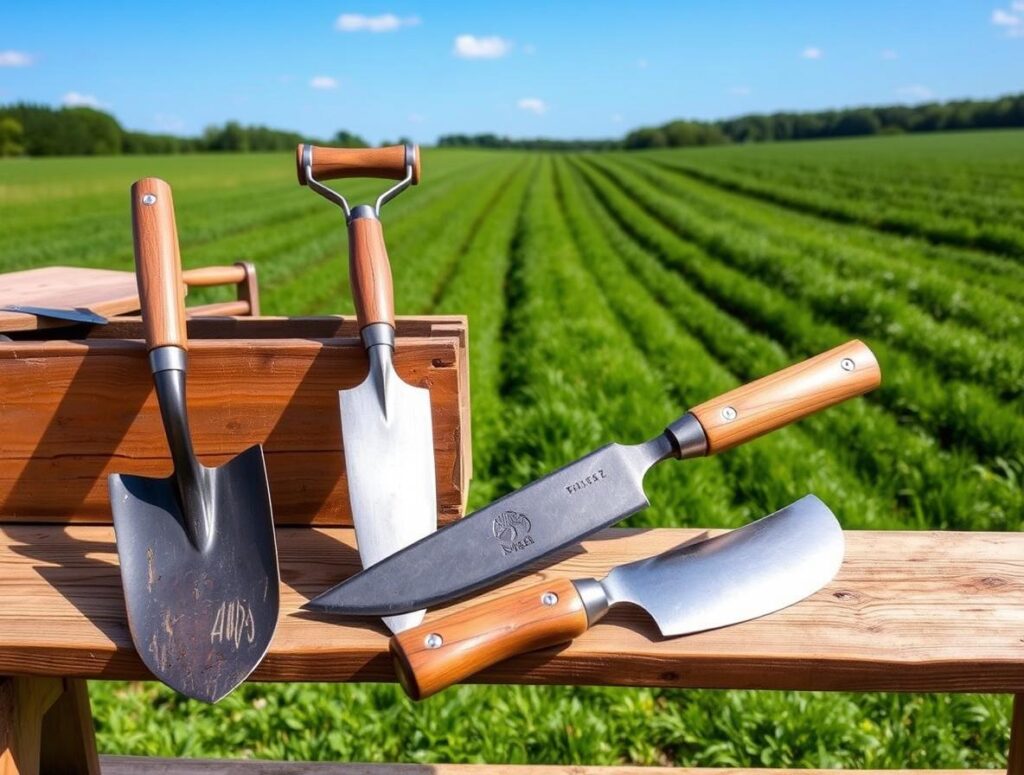
The humble spade represents the most fundamental connection between farmer and soil. A blacksmithed spade differs dramatically from its mass-produced counterparts in several critical ways. The blade is forged from a single piece of high-carbon steel, heat-treated for the perfect balance between hardness (for edge retention) and flexibility (to prevent snapping under pressure). The shoulder – where your foot applies pressure – is reinforced through controlled forge-welding rather than spot welding that creates weak points.
The handle socket is integral to the blade rather than attached as an afterthought, creating unmatched durability at this crucial stress point. Perhaps most importantly, the blade geometry is subtly convex, allowing soil to release cleanly rather than creating suction that requires additional effort to overcome. This seemingly minor detail can reduce the energy required for digging by a surprising margin over a full day’s work.
The Garden Hoe: Precision Weed Management
Few tools see more consistent use than the garden hoe, making it an ideal candidate for blacksmith upgrading. A properly forged hoe features a blade that maintains its edge through countless hours of use without requiring constant resharpening. The blade angle is precision-set for optimal soil engagement based on the user’s height and typical working stance – a level of customization impossible in mass manufacturing.
The attachment between blade and handle on a blacksmithed hoe uses a tapered tang secured with a handcrafted ferrule, eliminating the loosening that plagues cheaper tools. This construction method creates a balanced, responsive tool that feels like an extension of your arm rather than an awkward appendage, dramatically reducing fatigue during long weeding sessions.
The Harvest Knife: The Versatile Harvester
Perhaps no tool better demonstrates the superiority of blacksmith craftsmanship than the harvest knife. Used for everything from cutting lettuce to harvesting root vegetables, this versatile implement requires both strength and finesse. A hand-forged harvest knife features a differentially heat-treated blade – harder at the edge for retention of sharpness, softer at the spine for shock absorption and flexibility.
The full-tang construction provides unmatched durability, while subtle details like a perfectly balanced weight distribution and ergonomic handle design prevent hand fatigue during repetitive harvesting motions. Unlike disposable alternatives, these knives develop a natural patina that actually protects the metal from corrosion while creating a unique signature of your specific use patterns.
The Broadfork: Soil Conditioning Without Disruption
For those practicing no-till or low-disturbance farming, the broadfork represents an essential tool that benefits tremendously from traditional forging techniques. The tines of a hand-forged broadfork are individually shaped, heat-treated, and secured to the frame using methods that eliminate weak points. The resulting implement can penetrate compacted soils without bending or breaking, even after years of use in challenging conditions.
The strategic placement of each tine, the precise angle of penetration, and the carefully calculated leverage ratios make these tools remarkably efficient despite their simple appearance. A well-crafted broadfork allows you to aerate soil deeply without disrupting the microbial life that conventional tilling destroys – preserving the soil structure that took nature centuries to develop.

The Blacksmith Difference: Why Forged Tools Outperform Factory Models
The superiority of blacksmithed tools extends beyond mere durability. Understanding the specific attributes that separate hand-forged implements from their mass-produced counterparts reveals why the investment pays dividends across generations of use.
Material Selection: The Foundation of Excellence
Blacksmiths select materials based on function rather than cost efficiency. High-carbon steels like 1075 or 5160 offer superior edge retention and strength compared to the mild steels typically used in mass production. For handles, sustainably harvested hardwoods like ash or hickory provide the perfect combination of strength, shock absorption, and connection to natural materials that synthetic alternatives cannot match.
This material selection extends beyond obvious components to include elements like rivets, ferrules, and other fittings – each chosen to complement the primary materials rather than merely meet a price point. The result is a harmonious whole rather than a collection of compromises.
Heat Treatment: The Unseen Advantage
Perhaps the most significant yet least visible advantage of blacksmithed tools lies in their heat treatment. This process – which involves precisely heating and cooling the metal to develop specific crystalline structures – determines how a tool performs under stress. Master blacksmiths develop this skill over decades, learning to read subtle color changes that indicate when metal has reached the optimal temperature for its intended purpose.
Factory tools undergo automated heat treatment designed for speed and consistency rather than optimal performance. By contrast, each hand-forged tool receives individualized attention, with the blacksmith adjusting the process based on the exact composition of that particular piece of steel and its intended use. This customized approach creates tools with the perfect balance of hardness (for edge retention) and toughness (for impact resistance) – qualities that cannot coexist without skilled heat treatment.
Ergonomics: The Human Connection
The most profound difference between mass-produced and hand-forged tools often emerges only after hours of use. Blacksmiths understand that tools must work in harmony with human biomechanics, and they incorporate subtle contours, balance points, and weight distributions that minimize fatigue and maximize efficiency.
These ergonomic considerations aren’t theoretical – they evolve from centuries of feedback between makers and users, refined through countless iterations to create implements that feel increasingly natural as you use them. The handle of a well-made garden tool develops a patina that reflects your grip pattern, essentially customizing itself to your hand over time. This relationship between tool and user creates an efficiency that no factory setting can replicate.

Maintaining Your Heirloom Tools: Preservation Practices
The transition to heirloom-quality tools brings responsibility for their proper maintenance. Unlike disposable implements designed to be replaced rather than repaired, blacksmithed tools respond remarkably well to routine care, developing character and efficiency with each season of use.
Seasonal Cleaning and Preparation
At the close of each growing season, dedicating time to proper cleaning prevents deterioration during storage. Begin by removing all soil using a stiff brush rather than water when possible, as moisture is the primary enemy of fine tools. For stubborn dirt, use minimal water and dry thoroughly immediately afterward. Apply a light coat of appropriate oil to metal components – boiled linseed oil for general protection or food-grade mineral oil for tools used with edible crops.
Wood handles benefit from an annual application of equal parts boiled linseed oil, beeswax, and turpentine – a traditional formula that penetrates the wood fibers to prevent drying and cracking while maintaining the tactile connection between hand and tool. Apply with a cloth, allow to penetrate for 15 minutes, then wipe away excess to prevent stickiness.
Edge Maintenance: The Key to Efficiency
Properly forged tools hold their edges remarkably well, but regular maintenance enhances their performance. Rather than waiting until an edge is completely dull, incorporate brief sharpening sessions into your routine work pattern. A simple flat file followed by a sharpening stone is often all that’s needed to maintain the optimal cutting geometry.
Understanding the correct angle for each tool is essential – digging implements typically require a more robust edge (around 30-35 degrees) while cutting tools benefit from a sharper angle (20-25 degrees). Developing this knowledge connects you more deeply with your implements while ensuring they perform at their peak throughout their lengthy lifespan.
Storage Solutions: Protecting Your Investment
How you store tools between uses significantly impacts their longevity. Vertical storage that keeps metal components off the ground prevents moisture damage, while allowing air circulation around wooden handles prevents warping and rot. Creating dedicated space – whether through simple wall-mounted hooks or a more elaborate tool cabinet – transforms storage from an afterthought into a system that preserves your investment.
Traditional wisdom suggests hanging tools with their working ends upward, allowing any residual moisture to drain away from edges and preventing accidental damage when retrieving items. This seemingly minor detail reflects the thoughtful approach that distinguishes heirloom tool users from those caught in the replacement cycle.
The Economics of Excellence: Why Investing in Blacksmithed Tools Makes Financial Sense
The initial price difference between mass-produced and hand-forged tools often creates hesitation. However, examining the full lifecycle economics reveals why blacksmithed implements represent a superior investment strategy for the serious farmer or gardener.
Consider a practical comparison: A typical hardware store spade might cost $30-40 and require replacement every 2-3 seasons under regular use. Over a 30-year period, this represents 10-15 replacements totaling $300-600 in direct costs, plus the hidden costs of downtime during failures and shopping for replacements. By contrast, a hand-forged spade costing $150-200 will likely outlive its owner with proper maintenance, potentially serving for generations.
This economic advantage extends beyond mere longevity. Blacksmithed tools maintain their performance throughout their lifespan rather than experiencing the gradual degradation common to mass-produced alternatives. This consistent performance translates to more efficient work, reduced physical strain, and ultimately greater productivity – benefits that compound with each use but rarely factor into initial purchasing decisions.
Perhaps most significantly, quality tools retain value rather than depreciating. Many hand-forged implements actually appreciate over time, becoming more valuable as the skills to create them become increasingly rare. This represents a fundamental shift in thinking from tools as expenses to tools as assets – a perspective that aligns perfectly with sustainable agriculture’s longer-term worldview.
The Intangible Benefits: Beyond Durability
While the practical advantages of blacksmithed tools are compelling, their less tangible benefits often prove equally valuable. Using implements crafted with intention creates a different relationship to work itself – one characterized by mindfulness rather than mere efficiency.
Working with tools that respond precisely to your movements, that carry the subtle evidence of their maker’s hands, reconnects physical labor with craftsmanship in ways that transform routine tasks. The weight of a perfectly balanced hoe, the smooth resistance of well-forged steel cutting through soil – these sensory experiences engage you more fully in the act of cultivation.
This engagement extends to a deeper connection with agricultural traditions. When you use tools made using methods that have sustained farmers for centuries, you participate in an unbroken lineage of land stewardship. This historical continuity provides context for your work, placing individual efforts within a broader cultural narrative about human relationships with food and land.
Perhaps most importantly, heirloom tools encourage intergenerational thinking. When you use implements designed to outlast you, you naturally consider their future users – whether family members, apprentices, or unknown inheritors. This perspective shifts farming from a season-by-season activity to a multi-generational practice, reinforcing sustainable thinking across all aspects of land management.
Finding Your Blacksmith: Sourcing Quality Tools
As interest in traditional craftsmanship grows, opportunities to acquire blacksmithed tools have expanded beyond specialized collectors’ markets. Several pathways exist for modern farmers seeking to transition to heirloom-quality implements.
Local blacksmiths offer the most direct connection, allowing for customization based on your specific needs and working style. Many regions have experienced a revival of traditional metalworking, with craftspeople dedicating themselves to agricultural tools as practical expressions of their skill. These maker-to-user relationships often evolve into valuable exchanges of knowledge that benefit both parties.
For those without local access, specialized online marketplaces now connect users with blacksmiths across geographic boundaries. These platforms typically provide detailed information about materials, methods, and the makers themselves, creating transparency that mass retail cannot match. Many offer custom options that consider factors like your height, strength, and specific growing conditions.
Additionally, vintage tool restoration represents a viable alternative for those combining historical interest with practical needs. Many tools manufactured before the mid-20th century were made using traditional methods and materials that closely resemble modern blacksmithing standards. With proper reconditioning, these implements can provide excellent service while carrying forward their unique histories.
Cultivating Legacy Through Your Tools
The true value of blacksmithed garden tools extends far beyond their practical advantages. When you choose implements made with intention rather than expediency, you participate in a profound reclamation of agricultural heritage that connects past wisdom with future sustainability.
These tools become more than equipment – they transform into companions in your agricultural journey, adapting to your specific working patterns and developing character that reflects your unique relationship with the land. The subtle marks left by seasons of use tell a story that mass-produced alternatives cannot – one of consistent care, meaningful work, and enduring commitment.
For the modern farmer facing unprecedented challenges, this connection to timeless principles provides both practical solutions and philosophical grounding. In a world of disposable convenience, choosing tools designed for generations of use represents a quiet but powerful statement about values that transcend momentary efficiency.
As you consider your next equipment purchase, remember that you’re not just buying a tool – you’re making a choice about what kind of agricultural legacy you wish to create. Will you remain caught in the cycle of replacement, or will you step into a tradition of excellence that honors both the soil and those who work it? The answer lies in your hands – and in the tools you choose to hold in them.


