Master the art of wine cellar construction with our comprehensive guide covering wood selection, temperature regulation, humidity control, and design principles that will transform your collection and home value.
The gentle pop of a cork. The delicate cascade of ruby liquid into a waiting glass. The complex aromas that transport you to distant vineyards. Wine appreciation represents one of life’s most refined pleasures – but without proper storage, these sensory experiences remain merely a fraction of what they could be.
Wine collectors understand a fundamental truth: proper storage isn’t just about preservation; it’s about transformation. A well-designed wine cellar doesn’t simply maintain your collection – it elevates it, allowing each bottle to reach its full potential through carefully controlled aging. Beyond the practical aspects, a thoughtfully constructed wine cellar becomes a sanctuary within your home, a space where craftsmanship and connoisseurship converge.
The difference between wine that merely ages and wine that truly matures lies in the environment you create. Temperature fluctuations, inappropriate humidity levels, and excessive light exposure can permanently damage even the finest vintages. Conversely, stable conditions allow complex chemical processes to unfold gradually, developing the subtle characteristics that distinguish exceptional wines.
This guide emerges from years dedicated to traditional woodworking principles and modern wine preservation techniques. We’ll explore every aspect of creating a cellar that honors both your collection and your home – from selecting woods that complement specific wine varieties to implementing precise climate control systems. Whether you’re planning a small under-stair conversion or a dedicated room, these principles will guide you toward creating a space that serves as both functional storage and a testament to craftsmanship.
Understanding the Fundamentals of Wine Preservation
Before we dive into construction specifics, we must understand what wine requires to mature properly. Wine is remarkably sensitive to its environment, with several key factors directly influencing how it develops:
Temperature stands as the most critical element in wine storage. Fluctuations force wine to expand and contract, potentially pushing corks out or allowing unwanted oxygen infiltration. The ideal temperature range centers around 55°F (13°C), though slight variations suit different wine varieties. More important than the exact temperature is consistency – sudden changes cause more damage than storage that’s consistently a few degrees off the ideal.
Humidity works hand-in-hand with temperature control. Too dry, and corks shrink, allowing oxygen to seep in and spoil the wine. Too humid, and labels deteriorate while risking mold growth. The sweet spot lies between 60-70% relative humidity – enough to keep corks properly sealed without creating dampness issues.
Light exposure, particularly UV rays, triggers chemical reactions that degrade wine components. This explains why quality wines come in colored glass – but even this protection isn’t enough for long-term storage. A properly designed cellar minimizes light exposure, particularly from fluorescent sources and natural sunlight, both of which emit damaging UV radiation.
Vibration disrupts the delicate aging process by preventing sediment from settling and potentially accelerating unwanted chemical reactions. This often-overlooked factor becomes particularly important when considering cellar location and construction methods.
With these principles in mind, let’s begin the journey of creating a cellar that addresses each of these crucial factors through thoughtful design and construction.

Selecting Location: Finding the Perfect Space Within Your Home
The location of your wine cellar fundamentally shapes both its effectiveness and construction requirements. While dedicated enthusiasts might envision grand underground spaces, practical considerations often dictate more creative approaches within existing homes.
North-facing rooms or basement areas offer natural advantages, typically maintaining cooler, more stable temperatures year-round. These spaces require less energy for climate control and provide natural protection from direct sunlight. When examining potential locations, consider proximity to vibration sources like laundry rooms, home theaters, or mechanical systems – all potential threats to proper wine maturation.
Many successful cellars emerge from repurposed spaces: under-stair areas, converted closets, or repurposed storage rooms. Even a section of basement can be transformed with proper insulation and sealing. The key lies not in the space’s original purpose but in your ability to control its environment.
Space assessment involves more than just measurements. Document the existing conditions throughout different seasons and times of day. How does temperature fluctuate? Where does natural light enter? Are there existing moisture issues? These observations will guide your design decisions and help anticipate challenges before construction begins.
Access to utilities becomes another crucial consideration. Temperature control systems require electricity, and some humidity management approaches benefit from water access. Consider how you’ll route these services to your chosen location without compromising the cellar’s insulation envelope.
Remember that your collection will likely grow over time. When possible, choose a location that allows for potential expansion or incorporates flexible storage solutions. The regret of an undersized cellar far outweighs the minimal additional investment required for extra capacity during initial construction.
The Art of Wood Selection: Choosing Materials That Enhance Your Collection
Wood selection represents perhaps the most significant craftsmanship decision in cellar construction, affecting everything from humidity regulation to aesthetic appeal and even subtle aromatic contributions to your cellar’s environment.
Traditional cellar construction has long favored particular woods for their natural properties. Redwood earns its reputation through natural resistance to rot, moisture damage, and insects – all without chemical treatments that might introduce unwanted aromas. Its dimensional stability means minimal expansion and contraction with humidity changes, crucial for maintaining tight seals in your cellar environment.
Mahogany offers similar benefits with a more distinctive aesthetic presence. Its rich coloration develops character over time, while its natural oils provide protection against the moisture-rich environment of a proper wine cellar. Though more expensive than some alternatives, mahogany’s exceptional durability makes it an investment that appreciates alongside your wine collection.
White oak deserves special consideration for wine enthusiasts. The same properties that make it ideal for wine barrels – tight grain, minimal oxygen transfer, and natural beneficial compounds – translate perfectly to cellar construction. Its historical use in both barrel-making and cellar construction speaks to centuries of proven performance.
Modern approaches sometimes incorporate sustainable alternatives like Western red cedar, which offers natural resistance to moisture and insects similar to traditional options. Its distinctive aroma, while pleasant in many contexts, requires consideration for how it might interact with your cellar environment over decades of use.
Beyond the primary wood selection, consider how different materials might serve specific functions within your cellar. Perhaps redwood for structural elements that contact concrete floors, white oak for wine racks that directly hold bottles, and decorative accents in figured maple or cherry for visual interest. This thoughtful mixing of materials creates both functional benefits and visual depth.
Regardless of species chosen, prioritize properly kiln-dried lumber with moisture content between 6-8%. This ensures dimensional stability once installed in your carefully regulated cellar environment. Working with wood that hasn’t been properly dried virtually guarantees future issues as it reaches equilibrium with your cellar’s humidity levels.

Insulation and Vapor Barriers: Creating the Perfect Microclimate
The invisible components of your wine cellar – insulation and vapor barriers – often determine its ultimate success more than the visible craftsmanship. These elements create the stable environment essential for proper wine maturation while protecting your home’s structure from potential moisture issues.
Insulation requirements for wine cellars differ significantly from standard construction. While typical home insulation focuses primarily on energy efficiency, cellar insulation must create a completely isolated environment. For walls and ceilings, closed-cell spray foam provides superior performance, typically achieving R-values of 7 per inch while creating an inherent vapor barrier. Alternatively, rigid foam board insulation (minimum 2″ thickness) can be combined with a separate vapor barrier.
Floor insulation presents unique challenges but cannot be overlooked. Concrete slabs in basement applications require special consideration to prevent ground moisture migration. A combination of rigid foam insulation over a proper vapor barrier, with a floating floor system above, creates the necessary thermal break while protecting against potential moisture issues.
The vapor barrier placement becomes critical in wine cellar construction. Unlike standard construction where vapor barriers face living spaces, wine cellar vapor barriers must face outward – protecting surrounding structures from the higher humidity levels maintained within your cellar. This “reverse” approach often confuses contractors unfamiliar with wine cellar construction, so clear communication becomes essential.
Thermal bridges – areas where construction materials create direct pathways through insulation – require special attention. Door frames, electrical boxes, and structural elements can all compromise your carefully designed thermal envelope if not properly detailed. These seemingly minor penetrations often explain why some cellars struggle to maintain consistent conditions despite adequate equipment.
Creating a complete thermal and vapor envelope requires meticulous attention to transitions between different components. The junction where walls meet ceilings, where the floor system meets walls, and particularly door openings all require careful detailing to maintain the integrity of both insulation and vapor control layers.
Temperature Control Systems: Balancing Tradition with Technology
The heart of any wine cellar lies in its temperature management system. While passive cellars (those relying solely on natural conditions) exist in ideal circumstances, most home installations require active temperature control to maintain the consistent conditions wines demand.
Wine-specific cooling systems differ fundamentally from standard air conditioning. They maintain higher humidity levels, operate with minimal vibration, and function within the narrow temperature band ideal for wine. These specialized systems typically take one of several forms, each with distinct advantages for different cellar configurations.
Through-wall systems offer the simplest installation for small to medium cellars, functioning similar to a window air conditioner but designed specifically for wine storage conditions. These self-contained units require no external condensing unit but do need a way to exhaust heat, typically into an adjacent room or hallway. Their capacity limitations and noise considerations make them best suited for smaller installations up to approximately 500 cubic feet.
Split systems separate the evaporator (inside the cellar) from the condensing unit (located remotely, often outdoors), offering several advantages. This configuration reduces noise and vibration in the cellar environment while allowing for larger capacity and more precise control. The additional installation complexity and higher cost become worthwhile investments for serious collectors creating larger cellars.
Ducted systems represent the premium approach, completely removing all equipment from the cellar space. By locating cooling components in a separate mechanical area and routing conditioned air through insulated ductwork, these systems eliminate all equipment noise and vibration from the cellar environment. They also allow for the most design flexibility, as no wall-mounted equipment appears within your finished space.
System sizing requires careful calculation beyond simple square footage. Factors including insulation values, exterior wall exposure, glass elements, and entry frequency all affect cooling requirements. Working with specialists in wine cellar climate systems ensures proper equipment selection – perhaps the most critical decision in cellar creation.
Even with the finest equipment, proper thermostat placement makes a crucial difference. Locate temperature sensors away from doors, lights, and cooling system output to obtain accurate readings of your cellar’s true conditions. Consider secondary monitoring systems that track both temperature and humidity, potentially with alert capabilities for conditions outside acceptable parameters.

Humidity Management: Protecting Corks Without Creating Dampness
While temperature control systems address the primary requirement for wine storage, humidity management presents a more nuanced challenge. The ideal range of 60-70% relative humidity maintains cork integrity without creating conditions conducive to mold growth or label damage.
Many wine-specific cooling systems incorporate some humidity management, but often require supplementation – particularly in dry climates or during winter months when heating systems reduce ambient humidity throughout the home. Conversely, naturally damp basements might require dehumidification to prevent excessive moisture.
For cellars requiring additional humidity, several approaches exist beyond standard residential humidifiers (which often introduce unwanted maintenance requirements). Water features incorporated into cellar design – small fountains or water elements – provide both aesthetic appeal and natural evaporation. Similarly, decorative exposed water trays can be discreetly integrated into cellar designs, allowing natural evaporation without mechanical systems.
The choice of cellar materials significantly impacts humidity management. Concrete floors, natural stone elements, and certain wood species naturally buffer humidity fluctuations, absorbing excess moisture and releasing it when conditions become too dry. These hygroscopic materials create a more stable environment with less reliance on mechanical systems.
In cellars requiring dehumidification, specialized systems that won’t adversely affect temperature become essential. Standard dehumidifiers generate significant heat – unacceptable in a temperature-controlled cellar environment. Wine-specific systems or those integrated with cooling equipment provide appropriate moisture control without temperature impact.
Monitoring remains crucial for proper humidity management. Simple hygrometers provide basic readings, but serious collectors should consider integrated monitoring systems that track humidity trends over time. These records help identify seasonal patterns requiring adjustment of your management approach throughout the year.
Designing for Both Function and Beauty: Rack Systems and Layout
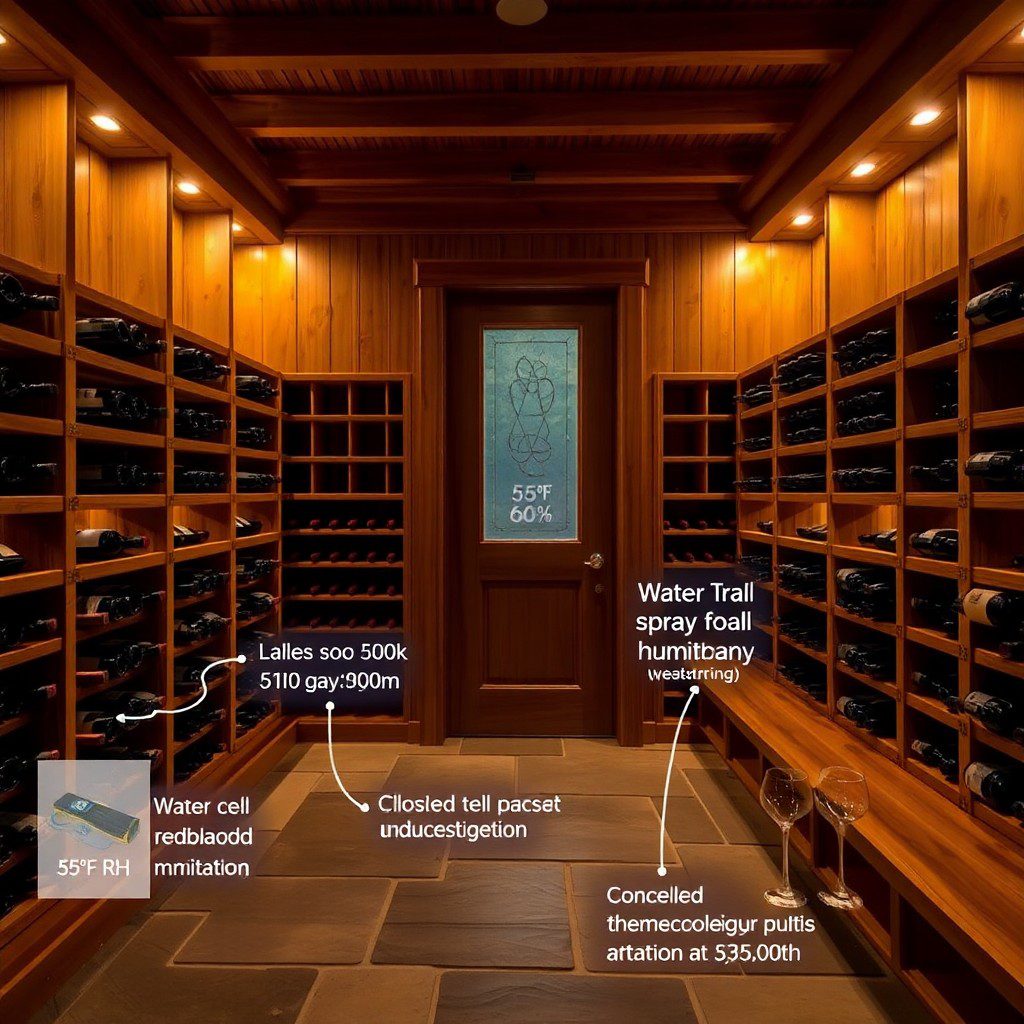
The visible elements of your wine cellar – rack systems, display areas, and overall layout – represent the marriage of functionality and craftsmanship. These components must securely store your collection while creating an environment that enhances your enjoyment of wine.
Traditional rack designs have evolved over centuries to properly support bottles while allowing for efficient organization. Individual bottle storage typically uses a slight downward angle toward the cork, keeping it moist while allowing sediment to settle away from the neck. This orientation has practical benefits beyond tradition, representing genuine wisdom in proper wine storage.
Modern cellar design often incorporates multiple storage configurations within a single space. Individual bottle racking provides maximum capacity and flexibility for standard bottles. Diamond bins accommodate case storage efficiently. Display rows present special bottles at viewing angles while maintaining proper orientation. Integrating these different elements creates both visual interest and practical functionality.
Material selection for racking components requires balancing structural requirements with aesthetic goals. Primary support structures demand strength and stability, while display elements might prioritize visual appeal. This hierarchy of structural importance allows for efficient use of premium materials where they create the most impact.
Consider how bottle movement through your cellar impacts its design. Newly acquired wines often benefit from staging areas where they can rest after transport before joining the main collection. Similarly, dedicated zones for wines approaching their drinking windows facilitate selection without disturbing bottles meant for longer aging.
Incorporate appropriate space for the enjoyment of wine within or adjacent to your cellar. Whether a simple tasting ledge or a dedicated area with seating, these spaces transform your cellar from mere storage into an experience. These areas need not be large – even compact designs can create meaningful spaces for appreciating your collection.
Lighting design requires particular attention in cellar environments. UV-free LED systems provide necessary illumination without damaging wines, while offering flexibility for highlighting architectural features or special bottles. Consider lighting controls that allow different scenes – subtle background illumination for daily viewing versus brighter task lighting when selecting or reorganizing bottles.
The Construction Process: From Plans to Completion
With design decisions made, the construction process begins – transforming concepts into the physical reality of your wine cellar. This phase requires careful sequencing and attention to details that will ultimately determine your cellar’s performance.
Begin with detailed documentation – beyond basic dimensions to include specific construction details at critical junctions. These drawings become the roadmap for all subsequent work, ensuring that critical elements like vapor barriers and insulation maintain continuity throughout the construction process.
The construction sequence generally begins with rough framing to establish the cellar’s boundaries. This phase often requires special considerations like deeper wall cavities to accommodate enhanced insulation or structural reinforcement for racking systems. Thoughtful planning for future mechanical systems – including routing of refrigeration lines, electrical conduits, and potential plumbing – must happen before walls are closed.
The insulation and vapor barrier installation represents perhaps the most critical phase of construction. Meticulous attention to detail, with no gaps or penetrations in these systems, determines your cellar’s ultimate performance. This phase deserves thorough inspection before proceeding to finishing work, as corrections become exponentially more difficult once wall surfaces are installed.
Interior finishing materials must balance practical requirements with aesthetic goals. Wall and ceiling surfaces should contribute to humidity stability while supporting the cellar’s design concept. Flooring materials must withstand potential moisture while providing a stable surface for racking systems. Each material selection affects both the cellar’s performance and visual character.
Door selection represents a frequently underestimated component of cellar construction. Exterior-grade, insulated doors with proper weatherstripping and thresholds maintain the cellar’s thermal separation from surrounding spaces. The door’s performance specifications should match or exceed your wall construction, preventing this common weak point in the thermal envelope.
Climate control system installation follows completion of the basic envelope. Working with specialists familiar with wine storage requirements ensures proper equipment placement, line routing, and control system configuration. This expertise often justifies separate contractors for this phase rather than relying on general HVAC contractors unfamiliar with wine-specific requirements.
Racking installation represents the final major construction phase, transforming the prepared space into a functional cellar. Whether using modular systems or custom-built components, proper attachment to structural elements ensures stability for what will eventually hold a significant investment in wine.
Living With Your Cellar: Maintenance and Management
A properly constructed wine cellar requires ongoing attention to maintain optimal conditions for your collection. Establishing regular maintenance routines protects both the physical space and the wines it contains.
Climate control systems require regular maintenance to ensure consistent performance. Filter replacement, condensate line cleaning, and inspection of mechanical components should follow manufacturer recommendations. These simple preventative measures prevent costly equipment failures that could potentially damage your collection.
Monitoring systems provide peace of mind through continuous oversight of cellar conditions. Modern options range from simple thermometer/hygrometer combinations to sophisticated systems providing remote monitoring and alerts. For significant collections, redundant monitoring with alert capabilities justifies the modest investment compared to the value of wines being protected.
Cellar management extends beyond physical maintenance to organizing your collection in meaningful ways. Inventory systems – whether simple spreadsheets or dedicated wine management software – help track bottles, drinking windows, and storage locations. These systems transform random storage into thoughtful collection management.
Regular inspection of the physical cellar components catches potential issues before they affect your wines. Check for signs of moisture problems, inspect door seals for proper function, and examine racking systems for any structural concerns. This routine oversight prevents small issues from developing into significant problems.
Finally, a wine cellar should enhance your enjoyment of wine – not simply store it. Establish rituals around selecting bottles, whether for special occasions or everyday enjoyment. The process of entering your carefully crafted space, considering options, and making selections becomes part of the overall wine experience.
Conclusion: Creating an Heirloom That Enhances Every Bottle
A properly constructed wine cellar transcends simple storage to become a transformative element for both your collection and home. Through careful material selection, precise environmental control, and thoughtful design, you create a space where wines develop their full potential while expressing your personal appreciation for craftsmanship.
The principles outlined in this guide represent centuries of wisdom in wine storage, adapted for modern homes and construction methods. By understanding the fundamental requirements of proper wine maturation and addressing them through thoughtful construction, you create conditions where even modest bottles develop greater complexity and expression.
Beyond the technical aspects, your wine cellar becomes a physical manifestation of patience and appreciation for processes that unfold over years or decades. In our world of immediate gratification, few spaces so perfectly encapsulate the rewards of waiting, of allowing time to work its transformative magic.
Whether your collection focuses on investment-grade vintages or everyday enjoyments, the environment you create through proper cellar construction honors both the winemakers’ intentions and your personal commitment to experiencing wines at their best. This thoughtful approach to storage becomes as much a part of wine appreciation as the selection of bottles themselves.
As you embark on creating your own wine cellar, remember that this project combines both craftsmanship and connoisseurship – each informing and enhancing the other. The result becomes not simply a storage space but a legacy, an environment where wines evolve and improve under your careful stewardship, ready to be shared and enjoyed at their perfect moment.


