The amber liquid cascaded into the glass, its aroma rich with promise. But as the winemaker raised it to his lips, his expression fell. Another batch lost to the relentless enemy of fine wine: oxidation. In cellars across the world, this scene repeats with devastating frequency, costing the industry millions in ruined product and disappointed customers. Yet two thousand years ago, Roman vintners were solving this very problem with ingenious methods that required no electricity, no chemical additives, and no modern technology.
What if the solution to one of winemaking’s most persistent and expensive problems has been hiding in plain sight, buried in the practices of ancient civilizations? This question has consumed JP Farmer’s research for the past decade, leading to discoveries that are sending ripples through the wine world.
“When we examine the historical record, it’s remarkable how sophisticated Roman preservation techniques were,” Farmer explains. “They weren’t just making wine; they were creating systems that protected it during long journeys across the Mediterranean, through seasonal temperature changes, and for years of storage—all without a single modern preservative.”
The Oxidation Crisis: A Multi-Million Dollar Problem
Oxidation remains the silent killer in wine production. When wine interacts with oxygen, chemical reactions transform its flavor compounds, destroying the delicate balance that defines exceptional vintages. The telltale signs—browning colors, flat aromas, and nutty, sherry-like flavors—signal thousands of dollars evaporating from every affected barrel.
Modern winemakers combat this threat with an arsenal of technological interventions: temperature-controlled facilities, inert gas systems, vacuum pumps, and chemical additives like sulfur dioxide. These solutions come with significant costs—both financial and environmental—and can introduce their own complications to the winemaking process.
The global wine industry loses an estimated 10-20% of production to oxidation and related quality issues each year. For premium producers, where a single barrel might represent tens of thousands of dollars in potential revenue, the stakes are particularly high. The environmental impact of energy-intensive preservation systems adds another layer of concern for an industry increasingly focused on sustainability.
What makes this situation particularly frustrating is that most oxidation problems don’t occur during fermentation or aging, but during two critical transition points: the racking process (when wine is moved between containers) and bottling. These moments of vulnerability have proven stubbornly resistant to modern solutions.

Rome’s Forgotten Wisdom: Preservation Through Design
The Romans approached winemaking with a philosophical difference that modern producers are only beginning to appreciate. Rather than fighting against oxidation through additives and technology, they designed their entire production process around prevention.
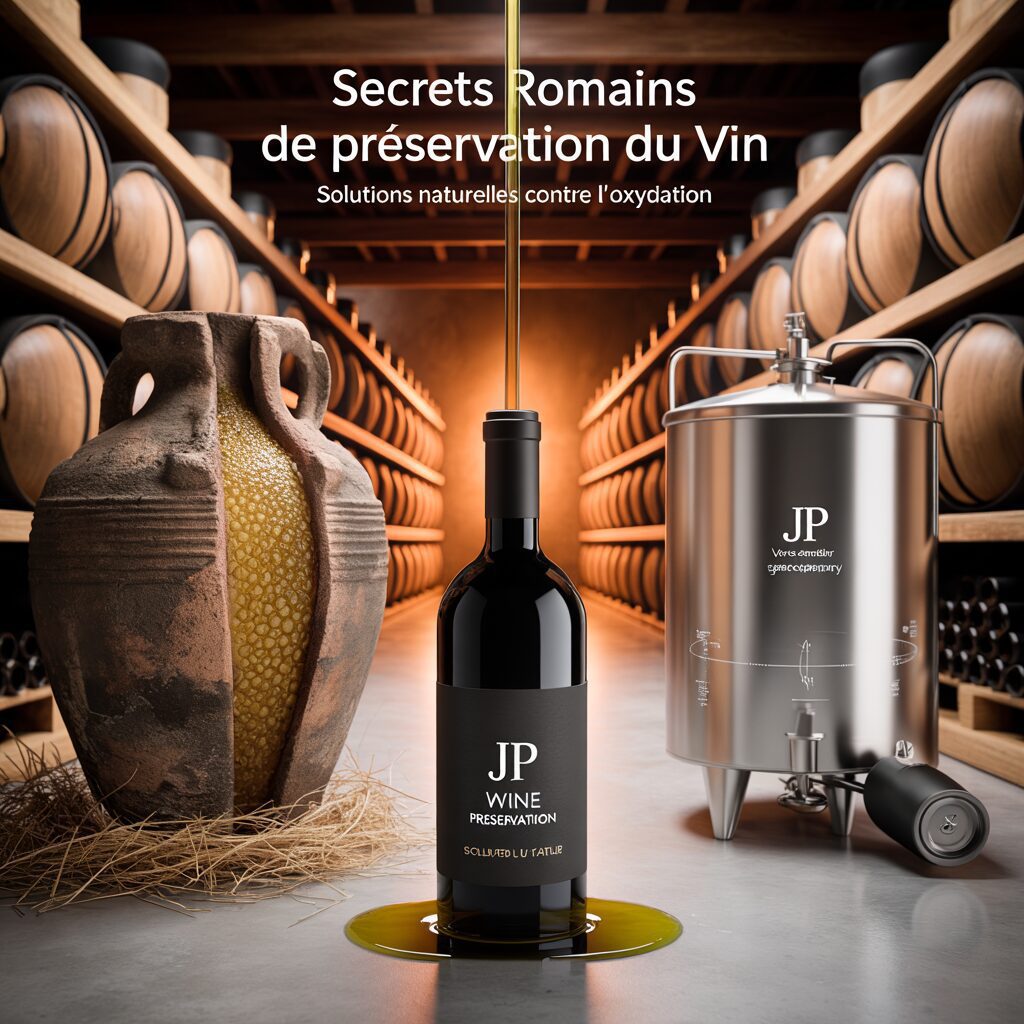
At the heart of Roman wine preservation was the amphora—the iconic clay vessel that transported wine throughout the ancient world. These weren’t merely convenient containers; they were sophisticated preservation systems. The amphora’s narrow neck and sealed design minimized the wine’s contact with air, while its porous clay structure allowed beneficial micro-oxygenation without harmful exposure.
What truly distinguished Roman practice, however, was their sealing methodology. Excavations at Pompeii and Herculaneum have revealed amphorae with multiple layers of protection: cork stoppers covered with pitch (pine resin), then sealed with clay, and finally capped with a plaster mixture that hardened to create an airtight environment.
The Romans also discovered the preservative properties of natural materials. They lined amphorae with beeswax to create impermeable barriers and incorporated antimicrobial resins from pine and terebinth trees. These natural additives didn’t merely mask oxidation—they actively prevented it through compounds that scavenged oxygen and inhibited bacterial growth.
Perhaps most fascinating was their use of olive oil as a floating seal—a thin layer poured on top of wine to create a barrier between the liquid and the air. This remarkably simple technique proved extraordinarily effective at preventing oxidation during storage.
The Lost Knowledge Renaissance
JP Farmer’s journey into ancient preservation methods began with a question that haunted him after years in commercial winemaking: Why are we solving the same problems that winemakers have faced for millennia, yet ignoring the solutions they developed?
His research took him through archaeological sites across the Mediterranean, into the archives of monasteries that preserved Roman techniques through the Middle Ages, and through chemical analysis of residues found in ancient vessels. What emerged was a comprehensive understanding of a sophisticated preservation system that had been fragmented and largely forgotten as winemaking modernized.
“The Romans weren’t just making wine differently—they were thinking about preservation from first principles,” Farmer notes. “They understood that prevention was far more effective than treatment, and they designed every aspect of their process with this in mind.”
This perspective shift represents the most valuable insight from Roman winemaking. Modern producers typically focus on treating oxidation after it occurs or preventing it through technological intervention. The Roman approach suggests a more fundamental reconsideration of how wine interacts with its environment throughout the production process.

Ancient Solutions for Modern Problems
The true genius of Roman wine preservation lay in its systems thinking—the integration of compatible techniques that addressed vulnerabilities throughout the production process. Today’s winemakers can adapt these principles without abandoning modern quality standards or reverting to ancient technologies.
The most immediately applicable Roman technique involves rethinking container design. The amphora’s effectiveness came from minimizing the surface area where wine contacted air. Modern winemakers are now experimenting with variable-geometry tanks that can change shape as wine levels decrease, eliminating headspace where oxidation begins.
Roman sealing compounds offer another avenue for innovation. The pine resins they used contain pinosylvin and other natural compounds with powerful antioxidant properties. Contemporary researchers have isolated these compounds and developed natural preservative formulations that provide protection without the heavy pine flavor that would overwhelm modern palates.
The floating oil seal technique has proven remarkably adaptable to current practices. Some producers of limited-production natural wines have successfully implemented modified versions using food-grade oils with neutral flavors. The oil creates a physical barrier that prevents oxygen transfer while being easily removable before bottling.
Perhaps most intriguing is the potential application of Roman container material science. The specific clay compositions they used for amphorae created microscopically ideal environments for wine—allowing beneficial oxygen transfer rates while blocking harmful exposure. Modern ceramic engineers are now developing containers with precisely controlled porosity that mimic these properties while meeting contemporary safety standards.
The Sustainability Connection
Beyond their effectiveness, Roman preservation methods offer something increasingly valuable in today’s market: sustainability. Many modern preservation techniques require significant energy inputs, chemical additives, or both. The Roman approach relied primarily on renewable materials and passive systems that required no external energy.
This alignment with contemporary environmental concerns makes these rediscovered techniques particularly appealing. Winemakers face growing pressure to reduce their carbon footprint and chemical usage while maintaining quality. Ancient methods provide pathways to accomplish both goals simultaneously.
The environmental benefits extend beyond production. Roman preservation techniques were designed for wine that would travel extensive distances without refrigeration. As climate change disrupts global supply chains and increases energy costs, these resilient preservation strategies offer insurance against future disruptions.

Bridging Worlds: Implementation Challenges
Adapting ancient techniques to modern winemaking presents significant challenges. Contemporary consumers expect consistency and fault-free wines, while regulatory frameworks impose strict requirements on production methods. Successfully implementing Roman-inspired approaches requires thoughtful translation between worlds.
The first hurdle is standardization. Roman winemakers worked intuitively, adjusting techniques based on observation and experience. Today’s industry requires reproducible processes with predictable outcomes. JP Farmer’s work has focused on developing standardized protocols that capture the principles of Roman methods while meeting modern production requirements.
Regulatory compliance presents another obstacle. Many traditional preservation materials haven’t undergone the extensive testing required for official approval in winemaking. Forward-thinking producers are partnering with research institutions to conduct the necessary studies, paving the way for wider adoption.
Perhaps the most significant challenge is philosophical—convincing an industry built on technological progress to consider ancient wisdom. Success stories are gradually changing this perception. Winemakers who have implemented these techniques report not only reduced oxidation problems but often enhanced flavor development and aging potential.
Case Study: The Amphora Revival
The clearest example of successful implementation comes from the growing movement of amphora-aged wines. Producers across multiple continents have revived the use of clay vessels, often with modifications that make them compatible with modern cellar operations.
These winemakers report remarkable results: enhanced texture, improved aging trajectories, and significantly reduced need for preservatives. The porous structure of properly made clay creates ideal conditions for gradual maturation while naturally limiting oxidation—exactly what the Romans understood thousands of years ago.
Beyond the practical benefits, these wines tell compelling stories that resonate with consumers seeking authentic experiences and connections to winemaking traditions. The marketing potential of these historical connections has proven valuable in increasingly crowded markets.
The Future of Ancient Preservation
As research into Roman techniques continues, the potential applications expand beyond traditional winemaking. Natural wine producers, who minimize interventions and additives, have been early adopters of these rediscovered methods. Their success suggests these approaches may find particular relevance in the growing market for low-intervention beverages.
The principles extend to other fermented products as well. Craft brewers, cider makers, and even producers of non-alcoholic fermented beverages are beginning to experiment with Roman-inspired preservation techniques. This cross-pollination of ideas promises to revitalize multiple beverage categories with ancient wisdom.
JP Farmer envisions a future where these historical techniques don’t replace modern methods but complement them—creating hybrid approaches that combine the best of both worlds. “The goal isn’t to recreate Roman wine exactly as it was,” he explains. “It’s to understand their first principles and apply them to contemporary challenges.”
This fusion approach is already yielding promising results. Some innovative producers use modern analytical tools to monitor wine development while employing Roman-inspired preventative techniques. Others incorporate traditional materials into technologically advanced systems, creating preservation solutions that are both effective and environmentally sound.
Preservation as Philosophy
Beyond specific techniques, the Roman approach to winemaking offers a philosophical reorientation that may prove its most valuable contribution. Their holistic perspective—seeing preservation not as a series of interventions but as an integrated system beginning with grape selection and extending through storage—represents a return to fundamentals that the industry increasingly needs.
This philosophical shift aligns with broader cultural movements toward sustainability, authenticity, and connection with traditional practices. Consumers increasingly value products with genuine historical roots and minimal processing—precisely what these techniques offer.
For winemakers, this perspective invites a reconsideration of their relationship with time and natural processes. Rather than battling against oxidation through technological domination, they can work with natural materials and principles to create environments where wine develops optimally with minimal intervention.
This approach doesn’t reject modern knowledge—it complements it. Contemporary understanding of chemistry and microbiology allows winemakers to comprehend why Roman techniques worked and adapt them with precision. The fusion of ancient wisdom with modern science creates opportunities for innovation that neither tradition nor technology alone could achieve.
Accessing Ancient Wisdom in Modern Winemaking
For winemakers intrigued by these possibilities, JP Farmer has developed resources that make Roman preservation techniques accessible to contemporary producers. Through extensive research and practical experimentation, his team has created standardized protocols that translate ancient practices into implementable modern processes.
These resources include detailed guides to container selection and preparation, natural sealing compounds formulated for contemporary palates, and monitoring systems that allow producers to track wine development while using traditional methods. Each element has been thoroughly tested in real-world production environments to ensure reliability.
Beyond technical resources, JP Wine offers consulting services that help producers identify which Roman techniques align with their specific production challenges and quality goals. This customized approach recognizes that different wine styles and market positions require tailored preservation strategies.
For those ready to explore these methods more deeply, JP Wine hosts regular workshops where producers can gain hands-on experience with Roman-inspired techniques. These events combine practical training with the historical and scientific context needed to implement these approaches successfully.
Conclusion: The Wisdom of Ages
The story of Roman wine preservation techniques offers more than practical solutions to oxidation problems. It reminds us that innovation doesn’t always mean looking forward—sometimes the most powerful breakthroughs come from looking back with fresh eyes.
The Romans created sophisticated preservation systems using only the materials nature provided. They understood wine not as a product to be controlled but as a living substance to be guided through natural processes. Their wisdom, nearly lost to history, offers contemporary winemakers both practical techniques and philosophical insights that align perfectly with today’s challenges.
As climate change disrupts growing conditions, as consumers demand more sustainable products, and as regulatory frameworks increasingly restrict chemical interventions, these ancient approaches offer timely solutions. They represent not a retreat to the past but a sophisticated integration of historical wisdom with contemporary needs.
For winemakers tired of fighting the same battles against oxidation year after year, these rediscovered techniques offer a compelling alternative—one that may not only solve persistent production problems but also create distinctive wines that tell powerful stories in the marketplace.
The ancients have spoken. The question is: are modern winemakers ready to listen?


