
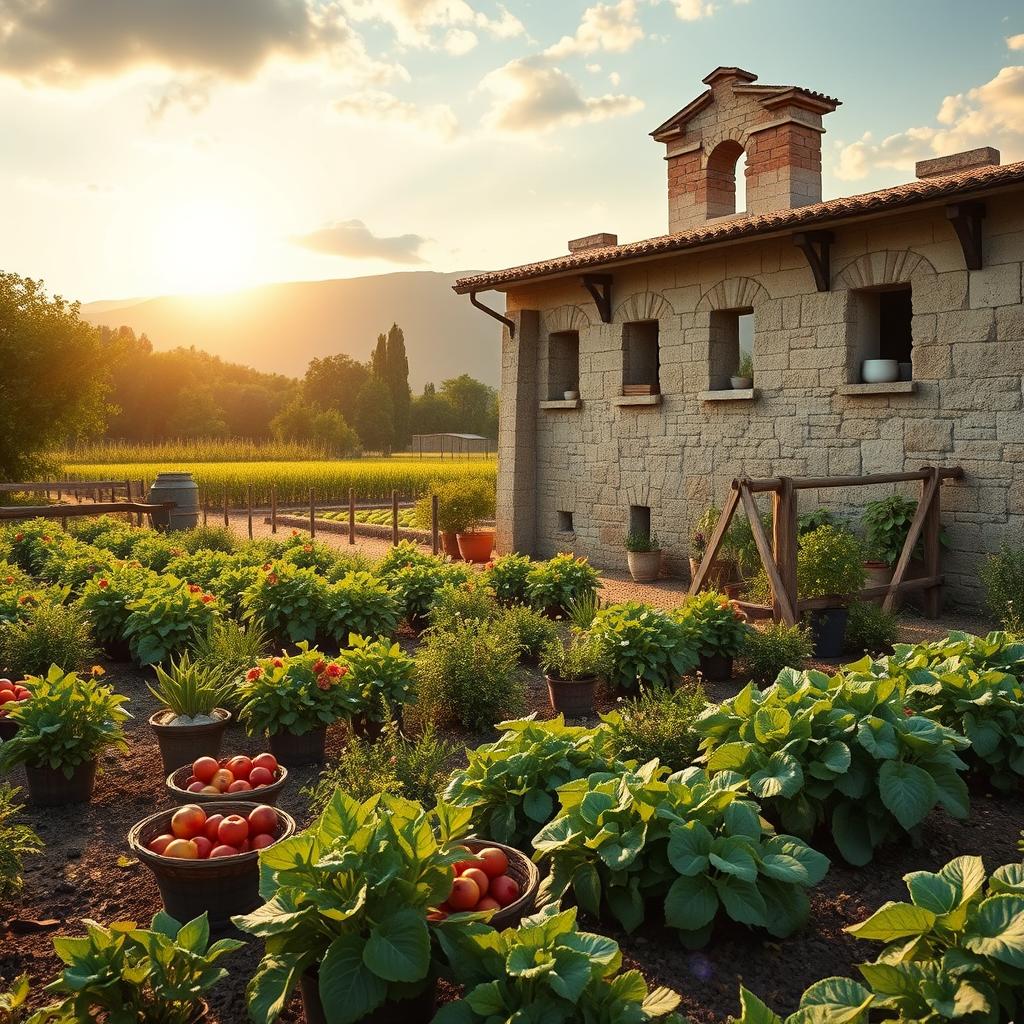
The Empire That Fed Itself: What Romans Knew About Sustainable Agriculture
The ground beneath our feet holds more than just soil—it contains wisdom. Long before industrial agriculture and synthetic fertilizers, the Romans built an agricultural empire so efficient it fed millions across three continents with techniques developed through centuries of careful observation. These weren’t primitive methods—they were sophisticated systems born from necessity and perfected through generations.
While we often think of modern farming as more advanced than anything from antiquity, something remarkable happens when we look back at Roman agricultural practices. Their methods weren’t just good “for their time”—many represent the height of sustainable farming wisdom that modern agriculture abandoned only in the last century, often to our detriment.
The Romans understood something fundamental that industrial farming forgot: working with natural systems rather than fighting against them creates resilience. As climate change challenges our food security and chemical-dependent farming shows its limitations, these ancient techniques aren’t just historically interesting—they’re increasingly essential.
What makes these methods so remarkable isn’t just their age but their effectiveness. The Romans lacked our scientific instruments but possessed something perhaps more valuable: generational knowledge refined through direct observation and practical application. They created agricultural systems that maintained soil fertility for centuries without depleting natural resources.
Today, as farmers and gardeners seek solutions that reduce dependence on costly inputs while rebuilding soil health, these ancient methods offer proven alternatives backed by two millennia of success. Let’s explore five Roman agricultural techniques that remain surprisingly relevant and effective for today’s growing challenges.
The Four-Field Rotation: Nature’s Renewal System
When modern farmers speak of crop rotation, they’re drawing on a practice the Romans elevated to an art form. Unlike today’s simplified two-crop rotations common in industrial agriculture, Roman farmers developed intricate multi-year rotation systems that maintained soil fertility naturally while breaking pest and disease cycles.
The Roman agricultural writer Columella described elaborate rotation schemes in his work “De Re Rustica” where fields cycled through specific crop sequences designed to maximize soil health. The fundamental principle was simple yet profound: different plants interact with soil in different ways—some take, others give.
At the core of the Roman system was the understanding that legumes (beans, peas, lentils) enriched soil through their unique ability to fix atmospheric nitrogen through root nodules. These nitrogen-fixing crops would be followed by heavy feeders like wheat or other grains, which would benefit from the enhanced soil fertility. Subsequent plantings might include less demanding vegetables or green manures before returning to legumes.
The genius of this system wasn’t just in alternating crops but in creating complete ecological cycles. Romans observed that certain plant combinations and sequences maintained soil structure, reduced pest pressure, and eliminated the need for fallow periods that wasted growing space.
Modern applications of this ancient wisdom go beyond simply switching between corn and soybeans. Thoughtful farmers now implement complex rotations incorporating cover crops, green manures, grains, and vegetables in sequences that build rather than deplete soil health. The modern organic farming movement has essentially rediscovered what Romans knew: diverse crop rotations create self-sustaining fertility cycles.
For today’s home gardener or small-scale farmer, implementing Roman-inspired rotation means planning garden beds on a multi-year cycle. By dividing growing spaces into sections that move through different crop families annually, even small gardens can maintain natural fertility while reducing pest pressures without chemical interventions.

Terracing: Engineering Harmony with Landscape
The Mediterranean landscape presents a particular challenge to farmers: hillsides. Sloping land creates erosion problems and water runoff that can make agriculture difficult. Rather than avoiding these areas, Romans transformed them into productive farmland through an engineering marvel that still dots the landscape today—terraces.
Roman terracing wasn’t merely about creating level planting surfaces. These carefully engineered systems managed water flow, prevented soil erosion, created microclimates, and maximized growing space in challenging terrain. Stone walls were built along contour lines to create level growing platforms that followed the natural shape of the land.
What made Roman terraces particularly effective was their integration with water management systems. Terraces were designed not just to stop erosion but to capture and utilize rainfall efficiently. The slight inward slope of each terrace allowed water to penetrate soil slowly rather than running off, effectively turning entire hillsides into water harvesting systems.
Today’s farmers face increasing challenges from extreme weather events, with heavy rains followed by drought becoming more common. Modern applications of Roman terracing principles offer solutions for erosion control while maximizing water conservation. In areas from California vineyards to small homesteads, properly designed terraces transform problematic slopes into productive growing spaces.
Beyond large agricultural operations, home gardeners can implement scaled-down terracing using retaining walls, raised beds, or even hay bales to create level growing areas on sloped properties. These systems capture rainwater precisely where plants need it while preventing the loss of precious topsoil during heavy rains.
The lasting power of this technique is evident in places like Italy’s Cinque Terre or Spain’s mountainous regions, where terraces built during Roman times continue producing abundant crops after two thousand years—perhaps the ultimate testament to sustainable design.
Water Management: The Lifeblood of Roman Agriculture
Perhaps no aspect of Roman farming genius was more impressive than their water management systems. While the massive aqueducts carrying water to cities receive most historical attention, equally sophisticated systems distributed water to farms through networks of channels, cisterns, and irrigation techniques that maximized efficiency.
Romans understood the precious nature of water in Mediterranean climates and developed systems for its conservation and strategic use that modern farmers are only now beginning to appreciate. Their approach combined engineering with ecological understanding to work with natural water flows rather than against them.
Central to Roman water management was the development of gravity-fed irrigation. Water would be captured at high points through springs, wells, or diverted streams, then distributed through carefully graded channels that delivered precise amounts to different crops based on need. Unlike modern sprinkler systems that lose significant water to evaporation, Roman irrigation delivered water directly to plant roots with minimal waste.
Underground cisterns captured rainfall during wet seasons for use during dry periods, effectively creating water reserves that buffered against drought. Some Roman farms incorporated elaborate systems where water flowed from fish ponds to garden beds, creating nutrient-rich irrigation that maximized both water and fertilizer efficiency.
Today’s gardeners and farmers can implement these principles through modern adaptations like drip irrigation (which mimics Roman delivery methods), rainwater harvesting systems, and swales that slow and distribute water across landscapes. The key insight remains unchanged: water should be captured when abundant and used with careful intention rather than wasted.
As water scarcity becomes an increasing concern globally, these ancient techniques offer proven solutions for maximizing agricultural productivity while minimizing water usage. The Romans demonstrated that abundant food production doesn’t require excessive water consumption when systems are designed with conservation in mind.

Natural Soil Building: The Foundation of Roman Productivity
While modern agriculture often treats soil as merely a medium to hold plants upright while feeding them synthetic nutrients, Romans understood soil as a living system to be nurtured and built over time. Their approach to soil fertility combined careful observation with practical methods that maintained productivity without depleting land.
Roman agricultural writers like Cato and Varro described elaborate soil building practices that included composting, green manuring, and the strategic use of animal wastes. Unlike today’s separated agricultural systems, Roman farms integrated crop production with animal husbandry in cycles that maintained fertility naturally.
Composting wasn’t a side activity but central to Roman farming. Farm wastes, kitchen scraps, animal manures, and even human waste were carefully processed into what they called “black gold”—rich compost that rejuvenated soil. They understood different materials required different composting approaches and developed systems for creating various composts for specific crops.
Green manuring—growing crops specifically to be turned back into the soil—was a standard practice. Legumes would be grown during off-seasons, then plowed under before flowering to add nitrogen and organic matter. This practice, abandoned during the chemical fertilizer revolution, has returned as a cornerstone of sustainable agriculture.
Perhaps most surprisingly, Romans practiced what we now call biochar application. They observed that incorporating charcoal into poor soils dramatically improved fertility. Modern science confirms this practice sequesters carbon while creating habitat for beneficial soil microorganisms.
Today’s regenerative farmers are essentially rediscovering these Roman principles through practices like compost tea application, cover cropping, and minimal tillage. The fundamental insight remains unchanged: soil is a living system that requires feeding and care rather than simply extraction.
For home gardeners, implementing Roman soil-building means creating compost systems, using cover crops in off-seasons, and thinking of garden beds as ecosystems to be nurtured rather than just places to grow plants. These practices build self-sustaining fertility that reduces or eliminates the need for purchased fertilizers.
Companion Planting: Plant Relationships and Natural Pest Control
Long before modern science could explain plant interactions at a chemical level, Romans observed and documented how certain plants benefited others when grown in proximity. This knowledge formed the basis of sophisticated planting schemes that maximized production while naturally controlling pests.
Roman gardeners and farmers practiced what we now call companion planting—strategic positioning of different plant species to create beneficial relationships. They noticed that certain aromatic herbs repelled specific pests, while other plant combinations increased vigor and productivity for both species.
A typical Roman garden would interplant cabbage family crops with aromatic herbs like thyme and rosemary, which naturally deterred cabbage moths and other pests. Fruit trees would be surrounded by specific flowering plants that attracted beneficial insects for pollination and pest control. These weren’t random combinations but carefully observed relationships passed down through generations.
Beyond pest management, Romans recognized certain plants improved soil conditions for their neighbors. Deeper-rooted plants were positioned to bring up nutrients from subsoil layers that benefited shallow-rooted companions. Tall plants provided shade for those needing protection from intense Mediterranean sun.
Modern science has validated many of these traditional plant partnerships. We now understand that plants communicate through root exudates and airborne chemicals, forming complex relationships that can either hinder or help neighbors. The companion planting practices Romans developed through observation align remarkably well with what biochemistry now confirms.
Today’s gardeners can implement these ancient wisdom systems by researching traditional plant combinations and observing what works in their specific growing conditions. Rather than reaching for pesticides when problems arise, companion planting creates resilient systems where plants protect each other.
From the famous “Three Sisters” planting of corn, beans and squash (which mirrors Roman polyculture approaches) to herb gardens designed to repel pests naturally, these ancient techniques create gardens that largely manage themselves once properly established.

Bringing Ancient Wisdom to Modern Soil
What makes these Roman agricultural techniques so relevant today isn’t just their historical interest but their practical effectiveness in addressing modern challenges. As industrial agriculture faces increasing problems with soil degradation, water scarcity, and pest resistance to chemicals, these time-tested methods offer proven alternatives.
The beauty of Roman agricultural wisdom lies in its holistic approach. Rather than treating individual problems with isolated solutions, Roman farming created integrated systems where each element supported others. Water management connected to soil building; crop rotation supported pest management; and the entire system worked with natural cycles rather than against them.
For today’s farmers facing climate uncertainty and rising input costs, these ancient techniques offer paths to greater resilience and sustainability. By reducing dependence on purchased fertilizers and pesticides while building natural soil fertility, Roman-inspired methods can lower costs while potentially increasing yields over time.
Home gardeners benefit perhaps even more immediately from these approaches. Small-scale growing spaces allow for the careful attention and management these systems require, and the rewards include healthier plants, fewer pest problems, and gardens that improve rather than deplete over seasons.
What’s most remarkable about studying Roman agricultural methods isn’t just their effectiveness but how they reveal that sustainable farming isn’t a new invention but a return to proven wisdom. Before the brief chemical agriculture experiment of the last century, farmers worldwide used variations of these techniques successfully for thousands of years.
Your Turn to Experiment with Ancient Wisdom
The truest test of any agricultural method isn’t in reading about it but in applying it to real soil. These Roman techniques invite experimentation, adaptation, and personal discovery. Their lasting power comes not from rigid application but from understanding the principles behind them and adapting them to specific conditions.
I invite you to choose just one of these ancient techniques to implement this growing season. Perhaps start with a simple three-crop rotation in your garden beds, experiment with companion planting between tomatoes and basil (a combination Romans favored), or build a small rainwater harvesting system inspired by Roman water management.
The journey toward more sustainable growing practices doesn’t require abandoning modern knowledge—rather, it means integrating the best of ancient wisdom with contemporary understanding. Romans didn’t have electron microscopes to see soil biology, but their careful observation led to practices that modern science now confirms build healthy soil food webs.
As you implement these techniques, keep notes on what works in your specific conditions. Share your experiences with fellow gardeners and farmers. This knowledge exchange mirrors how Romans themselves refined agricultural practices—through community wisdom and shared observation over generations.
There’s something profoundly satisfying about connecting with agricultural traditions that span millennia. When you build a compost pile following principles Romans understood, or create a garden bed that rotates crops in their tradition, you’re not just growing food—you’re participating in a continuous stream of human knowledge that connects us across time.
The most powerful legacy of Roman agriculture isn’t found in ancient texts but in the living soil of gardens and farms that apply these principles today. Their greatest lesson may be the most simple: good farming works with nature’s systems rather than attempting to overcome them. In that fundamental wisdom lies the key to agricultural sustainability for generations to come.
What Roman farming technique will you try this season? Share your plans and results with our community as we rediscover these ancient practices together.


