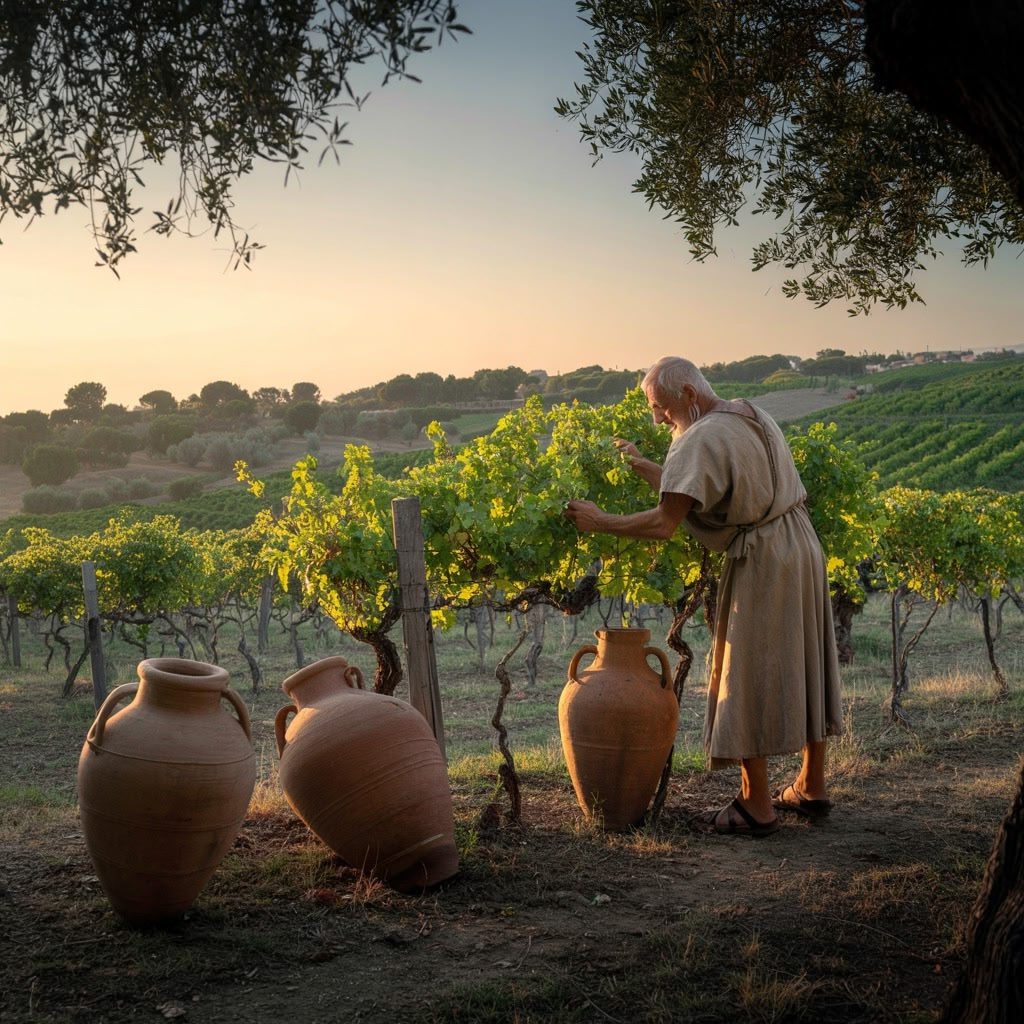
The moment I decided to abandon my smartphone, electric lights, and modern conveniences to follow the ancient rhythms of Roman winemaking, my friends thought I’d lost my mind. But standing in my vineyard at dawn six months later, watching the sun illuminate rows of vines that had been tended using methods unchanged since Caesar’s time, I realized I’d found something far more valuable than convenience: I’d discovered the profound wisdom embedded in traditional wine craftsmanship.
What began as curiosity about Roman winemaking traditions evolved into a transformative journey that changed not just how I understand wine, but how I approach life itself. The experience revealed why ancient methods produce flavors that modern shortcuts simply cannot replicate, and more importantly, how the discipline required for traditional wine craftsmanship cultivates qualities that extend far beyond the vineyard.
The Call to Ancient Wisdom
Modern winemaking promises efficiency and consistency, but something essential gets lost in the translation from ancient wisdom to contemporary production. The Romans understood that exceptional wine isn’t just about the grape—it’s about the entire philosophy of creation that honors time, patience, and natural processes.
Walking away from temperature-controlled fermentation systems and automated bottling lines felt like stepping back in time, but it was actually a step forward into deeper understanding. Authentic Roman viticulture demands a relationship with your materials that modern methods rarely cultivate. Every decision becomes intentional when you’re working within the constraints and wisdom of historical wine methods.
The Romans viewed winemaking as both art and spiritual practice. They understood that rushing the process diminishes the result, and that true craftsmanship requires surrendering control to natural rhythms that have governed fermentation for millennia. This perspective transforms the vintner from a manufacturer into a steward of ancient wisdom.

Embracing the Rhythm of Ancient Fermentation
The first lesson came during my initial attempt at ancient fermentation techniques. Without temperature control or chemical additives, everything depends on reading subtle signs that our ancestors understood intuitively. The color changes in fermenting grape juice become your calendar, the sounds of bubbling fermentation become your timekeeper, and the evolving aromas become your guide.
This process demands a level of attention that modern life rarely requires. You cannot multitask your way through traditional fermentation. The grape juice communicates its needs through sensory cues that require your full presence to interpret correctly. Missing these signals means missing the opportunity to create something extraordinary.
Living this way for months taught me that authentic creation requires sustained attention rather than sporadic effort. The Romans succeeded because they understood that excellence emerges from consistent daily practices rather than occasional bursts of inspiration. This principle applies whether you’re fermenting wine or building any meaningful endeavor in your life.
The Discipline of Daily Observation
Each morning began before sunrise, not because tradition demanded it, but because the grapes needed attention when the air was cool and the natural yeasts were most active. This rhythm aligned my days with natural cycles rather than artificial schedules, creating a more sustainable and fulfilling approach to work.
Without modern monitoring equipment, success depends on developing sensory awareness that most people never cultivate. The subtle shift in aroma that signals the transition from primary to secondary fermentation becomes as clear as reading words on a page once you learn to pay attention. This heightened awareness extends beyond winemaking into every area of life where quality matters.
Rediscovering the Language of Taste
Perhaps the most profound discovery was how heritage winemaking methods create flavors that simply don’t exist in mass-produced wines. The extended fermentation periods allowed by traditional methods develop complex flavor compounds that hurried production cannot replicate. These aren’t just different tastes—they’re entirely different categories of sensory experience.
Working with wild yeasts rather than cultured varieties produces unpredictable but ultimately more interesting results. Each batch becomes unique because the fermentation reflects the specific conditions of its creation—the weather, the soil, the timing, even the vintner’s state of mind during crucial moments in the process.
This unpredictability initially felt like a flaw, but it’s actually the source of traditional wine’s character and complexity. Mass production aims for consistency, but artisan wine production celebrates the beautiful variations that emerge when natural processes guide creation rather than human control.
The Patience That Builds Character
Modern wine production can complete fermentation in weeks, but traditional methods often require months. This extended timeline isn’t inefficiency—it’s investment in depth and complexity that cannot be rushed. The slow development of flavors teaches patience while building anticipation for something truly worthwhile.
Living at this pace for six months recalibrated my relationship with time itself. Instead of viewing long processes as obstacles to overcome, I learned to see them as opportunities for development and refinement. This shift in perspective applies to any meaningful goal that requires sustained effort rather than quick results.

The Intersection of History and Craftsmanship
Practicing Roman winemaking traditions connects you directly to centuries of accumulated wisdom. Every technique has been tested across generations, refined through countless iterations, and passed down because it consistently produces superior results. This isn’t nostalgia for the past—it’s recognition that some methods reach heights of effectiveness that modern innovations struggle to match.
The tools themselves become teachers when you use them as intended. Clay amphorae shape fermentation in ways that stainless steel cannot replicate. The porous nature of traditional vessels allows for micro-oxygenation that enhances flavor development while maintaining the wine’s connection to its origins. These aren’t primitive methods—they’re sophisticated technologies that work in harmony with natural processes.
Working within historical frameworks also provides structure that enhances creativity rather than limiting it. The constraints of traditional methods force innovative solutions that often prove more elegant and effective than modern alternatives. Limitation becomes liberation when it guides you toward excellence rather than merely convenience.
Ancient Wisdom for Modern Challenges
The principles that made Roman vintners successful remain relevant because they address fundamental aspects of quality creation that technology cannot replace. Focus, patience, attention to detail, and respect for natural processes produce superior results whether you’re making wine, building relationships, or developing skills.
These insights extend far beyond winemaking into any pursuit where depth matters more than speed. The modern tendency to rush toward results often sacrifices the very qualities that make achievements meaningful and lasting. Traditional methods remind us that the process of creation is as important as the final product.
Transforming More Than Wine
Six months of living like a Roman vintner changed more than my understanding of fermentation—it transformed my entire approach to meaningful work. The experience revealed how modern conveniences, while solving immediate problems, can disconnect us from the deeper satisfaction that comes from mastering traditional skills and understanding time-tested principles.
This transformation wasn’t about rejecting progress, but about reclaiming aspects of human experience that industrial efficiency often overlooks. The rhythms of seasonal work, the satisfaction of hands-on creation, and the deep knowledge that comes from sustained practice with natural materials offer fulfillment that automated processes rarely provide.
The wine that emerged from this traditional process reflected not just grape varietals and terroir, but the intentionality and care invested in its creation. Each bottle contained the story of its making—a narrative of patience, attention, and respect for ancient wisdom that modern production methods struggle to capture.
Integration with Contemporary Life
The challenge became integrating these insights with modern responsibilities without abandoning valuable innovations. The key lies in identifying which aspects of traditional methods enhance quality and satisfaction, then finding ways to incorporate these principles into contemporary practice.
This might mean choosing quality over convenience in key areas of life, developing patience for processes that cannot be rushed, or cultivating the sensory awareness that traditional crafts naturally develop. The goal isn’t to live in the past, but to reclaim wisdom that remains valuable despite technological advancement.

The Lasting Legacy of Traditional Methods
My experience with authentic Roman viticulture revealed why traditional methods persist despite modern alternatives. They succeed because they’re built on deep understanding of natural processes rather than attempts to circumvent or control them. This approach produces results that feel more connected to their origins and more satisfying to both creator and consumer.
The flavors achieved through traditional fermentation carry complexity that reflects the full story of their creation. Modern efficiency might produce acceptable wine more quickly, but traditional methods produce memorable wine that connects drinkers to the land, the season, and the craft itself. This connection creates value that extends beyond mere consumption.
Understanding why these methods work provides insights applicable to any field where quality and authenticity matter. Whether you’re developing skills, building relationships, or creating products, the principles that guide traditional craftsmanship offer reliable pathways to excellence that transcend specific applications.
Choosing Quality Over Convenience
The modern world offers countless shortcuts that promise similar results with less effort, but traditional methods remind us that some kinds of quality cannot be rushed or automated. The choice between efficiency and depth becomes a fundamental decision about what kinds of experiences and results we value most.
This doesn’t mean rejecting all modern innovations, but rather being intentional about when to choose time-tested methods over contemporary alternatives. Sometimes the slower path leads to destinations that faster routes cannot reach.
Practical Wisdom for Modern Applications
The insights gained from traditional winemaking extend into numerous areas of contemporary life. The patience required for proper fermentation translates into better decision-making in business and personal relationships. The attention to detail necessary for reading natural signs enhances awareness and responsiveness in any field requiring nuanced judgment.
Perhaps most importantly, the experience taught that mastery requires sustained engagement with fundamental processes rather than reliance on tools and shortcuts. Understanding how and why traditional methods work provides foundation knowledge that remains valuable regardless of technological changes.
This foundation becomes especially important when modern methods fail or prove inadequate. Traditional knowledge provides backup systems and alternative approaches that maintain quality and effectiveness when convenience-focused solutions encounter limitations.
The discipline developed through traditional practices also builds resilience and problem-solving abilities that serve well beyond their original context. Learning to work within natural constraints while achieving excellent results develops adaptability and resourcefulness that benefit any challenging endeavor.
A Toast to Timeless Wisdom
Six months of living like a Roman vintner taught me that some wisdom cannot be digitized, automated, or accelerated. The knowledge embedded in traditional methods represents generations of refinement that deserves respect and preservation, not just as historical curiosity but as practical guidance for creating meaningful work and authentic experiences.
The wine that resulted from this traditional process was undoubtedly different from modern production—more complex, more variable, more connected to its specific time and place of creation. But these differences weren’t flaws to be corrected; they were features that made each bottle unique and memorable.
This experience reinforced that in our rush toward efficiency and consistency, we sometimes sacrifice the very qualities that make experiences meaningful and products memorable. Traditional methods remind us that some forms of excellence require time, attention, and respect for processes that cannot be rushed or simplified without losing essential character.
Whether you’re interested in winemaking, craftsmanship, or simply living with greater intentionality, the principles that guided Roman vintners offer reliable pathways to depth and satisfaction that remain as relevant today as they were two millennia ago. The choice to embrace these insights, even partially, can transform not just what you create, but how you experience the process of creation itself.
Have you ever wondered what wisdom might be waiting in the traditional methods of your own interests or profession? Sometimes the most profound innovations come not from abandoning the past, but from understanding it deeply enough to apply its insights to contemporary challenges.


