The ground beneath our feet holds secrets of resilience that span millennia. While today’s headlines blare warnings about climate change and agricultural vulnerability, Roman farmers quietly mastered the art of growing food through unpredictable weather patterns without sophisticated forecasting technology or modern irrigation systems. Their solution? A diverse arsenal of remarkably resilient crops that modern agriculture has largely abandoned.
When the Mediterranean climate shifted between drought and deluge, Roman agricultural communities didn’t just survive—they thrived. These ancient cultivators developed farming systems that withstood climate variability through careful observation and agricultural diversity that would make today’s monoculture farmers rethink their approach.
What makes this ancient wisdom particularly valuable today is how Roman farmers approached uncertainty—not as a threat but as an expected condition requiring thoughtful preparation. Rather than fighting against climate variability, they embraced a portfolio of crops specifically selected to withstand whatever nature delivered.
The Ancient Climate Challenge That Mirrors Our Own
The Roman agricultural world faced remarkably familiar challenges. The Mediterranean climate has always been characterized by hot, dry summers and mild, wet winters—but with significant year-to-year variability. Archaeological evidence shows that Roman farmers contended with multi-year droughts, unexpected frosts, and periods of excessive rainfall that mirror our current climate concerns.
What’s particularly striking is how Roman agricultural communities responded to these challenges. Rather than relying on a single approach, they developed a sophisticated understanding of microclimate management, soil conditions, and crop diversity that created remarkable resilience. Their agricultural knowledge wasn’t just about what to plant—but when, where, and in what combination.
This wisdom wasn’t merely theoretical. The Roman agricultural writer Columella observed in his treatise De Re Rustica that prudent farmers should “not pursue only one kind of crop, but several different ones” precisely because climate uncertainty meant that conditions unfavorable for one crop might benefit another.
Let’s explore nine forgotten crops that formed the backbone of Roman climate resilience—crops that might once again deserve our attention as we face our own era of climate uncertainty.

Emmer Wheat (Triticum dicoccum): The Foundation of Roman Food Security
Before modern wheat dominated global agriculture, emmer wheat served as the cornerstone of Roman food security. This ancient grain variety, with its distinctive hulled kernels and remarkable hardiness, thrived in poor soil conditions where today’s wheat varieties would struggle to survive.
What made emmer especially valuable was its exceptional drought tolerance. With deeper roots than modern wheat varieties, emmer could access soil moisture unavailable to other crops. This characteristic meant that even when rainfall patterns became erratic, Roman farmers could still count on a base level of production.
Beyond its environmental resilience, emmer offered nutritional benefits that supported Roman population health. Significantly higher in protein and essential minerals than modern wheat varieties, emmer provided sustenance that could carry communities through lean times. The robust nature of this grain also made it less susceptible to storage pests, extending food security beyond the harvest season.
Roman farmers recognized emmer’s value by integrating it into their crop rotation systems in ways that maximized its benefits. By alternating emmer with nitrogen-fixing legumes, they maintained soil fertility without relying on extensive fertilization—a practice that modern regenerative agriculture is now rediscovering.
Bitter Vetch (Vicia ervilia): The Forgotten Climate Insurance Crop
Perhaps no crop better exemplifies Roman agricultural wisdom than bitter vetch—a legume virtually unknown in modern farming despite its remarkable properties. This hardy pulse crop performed a role similar to an insurance policy for Roman farmers facing uncertain growing conditions.
Bitter vetch’s extraordinary drought resistance made it invaluable during dry years when other crops failed. Roman agricultural writer Pliny the Elder noted that bitter vetch “fears neither cold nor other adversities,” making it particularly reliable during climate extremes. Its ability to fix nitrogen also meant that fields planted with bitter vetch improved soil fertility for subsequent crops—a form of natural fertilization that sustained the entire agricultural system.
What makes bitter vetch particularly interesting from a climate resilience perspective is its dual-purpose nature. While primarily grown for animal fodder, bitter vetch could serve as emergency human food during times of scarcity. Roman farmers would process the seeds to remove bitter compounds, creating a nutritious flour that could supplement their diet when other crops failed.
This versatility represented a sophisticated risk management strategy. Fields devoted to bitter vetch provided reliable animal feed during normal years while serving as a food security backup during climate disasters—a form of agricultural insurance we rarely consider in modern farming systems.

Italian Millet (Setaria italica): The 40-Day Wonder Crop
When climate unpredictability threatened Roman food systems, Italian millet offered a remarkable adaptation strategy through its astonishingly short growing season. Roman farmers valued this grain for its ability to mature in as little as 40 days from sowing—earning it the nickname “the 40-day wonder” among agricultural historians.
This rapid maturation created unique climate resilience opportunities. If spring crops showed signs of failure, farmers could quickly plant millet as a replacement. If summer drought threatened winter grain supplies, millet could be planted to bridge potential food shortages. This flexibility allowed Roman agricultural systems to adapt to climate conditions in near real-time—a capability modern farming systems often lack.
Italian millet’s minimal water requirements further enhanced its value during drought periods. Requiring significantly less moisture than wheat or barley, millet could produce reliable yields even when rainfall patterns became erratic. Roman farmers recognized this advantage, strategically incorporating millet into their cropping systems as climate insurance.
Beyond drought resistance, millet offered excellent storage stability. Once harvested, the grain could be stored for years without significant quality deterioration—creating food reserves that extended well beyond a single growing season. This characteristic allowed Roman communities to build climate resilience across multiple years, buffering against consecutive seasons of poor growing conditions.
Lupini Beans (Lupinus albus): The Soil-Regenerating Superfood
Roman agricultural resilience wasn’t just about surviving difficult growing conditions—it also focused on maintaining soil fertility through strategic crop selection. Lupini beans exemplified this approach, serving simultaneously as a protein-rich food source and a powerful soil regenerator.
As a legume, lupini beans performed the remarkable function of capturing atmospheric nitrogen and converting it into forms plants could use—essentially creating natural fertilizer. Roman farmers observed that crops planted after lupini beans showed exceptional vigor, even without additional fertilization. This nitrogen-fixing capability meant that fields maintained productivity even when other resources were scarce.
What distinguished lupini beans from other legumes was their ability to thrive in marginal soils where other crops would fail. Their deep taproot system could access water and nutrients unavailable to shallow-rooted plants, allowing cultivation on hillsides and in areas prone to erosion. Roman farmers strategically planted lupini beans on degraded land, using them to restore soil health while simultaneously producing a valuable food crop.
The nutritional profile of lupini beans further enhanced Roman climate resilience. Exceptionally high in protein (up to 40% by dry weight), these beans provided essential nutrition with minimal processing requirements. When properly prepared to remove bitter alkaloids, lupini beans offered a shelf-stable protein source that complemented grain-based diets and improved nutritional security during difficult times.

Chickling Vetch (Lathyrus sativus): The Famine-Fighting Legume
When severe drought threatened Roman food systems, chickling vetch often stood between communities and starvation. This remarkably hardy legume could produce yields in conditions so harsh that virtually all other food crops would fail—earning it a special place in Roman agricultural planning.
Chickling vetch’s extraordinary climate resilience stems from its exceptionally deep root system and minimal water requirements. Even in years when rainfall dropped to less than half of normal levels, chickling vetch could still produce a harvestable crop. This reliability made it an essential component of Roman risk management strategies, particularly in regions prone to recurring drought.
Roman farmers maintained a complex relationship with this crop, understanding both its life-saving potential and its limitations. When consumed as a dietary staple for extended periods, chickling vetch can cause lathyrism, a neurological condition. However, when properly prepared and eaten as part of a diverse diet, it posed minimal health risks while providing valuable nutrition during climate emergencies.
This nuanced approach to chickling vetch reflected a sophisticated understanding of risk management. Roman agricultural communities maintained knowledge of proper preparation techniques alongside seed reserves, creating a climate adaptation strategy that could be rapidly deployed when primary crops failed. This preparedness represented a form of food system resilience we would do well to reconsider today.
Broomcorn Millet (Panicum miliaceum): The Water-Efficient Grain
Among Roman climate-resilient crops, broomcorn millet stands out for its exceptional water-use efficiency. This often-overlooked grain produces more food per unit of water than any other cereal crop—a characteristic that made it invaluable during periods of water scarcity in the Roman agricultural system.
What gave broomcorn millet its remarkable drought tolerance was its unique physiology. Unlike wheat or barley, broomcorn millet utilizes C4 carbon fixation—a photosynthetic pathway that reduces water loss during hot, dry conditions. This adaptation allowed the crop to continue producing grain even when other cereals withered under drought stress.
Roman farmers leveraged this efficiency by incorporating broomcorn millet into strategic positions within their cropping systems. Often planted as a summer crop when water availability was at its lowest, millet provided food production during seasons when other grains couldn’t thrive. This seasonal complementarity extended the productive period of Roman agricultural lands while reducing overall climate vulnerability.
Beyond its water efficiency, broomcorn millet offered another climate adaptation advantage: phenological plasticity. The plant could adjust its growth cycle in response to available moisture, completing its development more quickly during drought conditions. This adaptive capability meant that even in difficult years, Roman farmers could harvest some grain—creating food system resilience through biological adaptation rather than technological intervention.

Flax (Linum usitatissimum): The Dual-Purpose Climate Hedge
Roman agricultural resilience often relied on crops that served multiple essential functions—and few exemplified this approach better than flax. This versatile plant provided both critical textile fibers and nutritious oilseeds, creating economic flexibility that helped farming communities weather climate uncertainty.
What made flax particularly valuable from a climate resilience perspective was its ability to thrive in conditions that challenged other crops. With moderate drought tolerance and excellent performance in cool, wet conditions that might cause problems for cereals, flax complemented other crops in the Roman agricultural portfolio. This environmental niche-filling created production diversity that buffered against climate variability.
Roman farmers further enhanced flax’s value through sophisticated processing knowledge. The same plant could yield either fine linen textile fibers or nutritious linseed oil depending on harvest timing and processing methods. This versatility meant that flax cultivation could be adapted to changing market conditions or immediate community needs, creating economic resilience alongside agricultural adaptability.
The nutritional contribution of flaxseed also enhanced Roman food security during difficult times. Rich in essential fatty acids and protein, flaxseed oil and meal provided dietary components often scarce during food shortages. Archaeological evidence suggests that Roman communities maintained knowledge of processing methods that reduced anti-nutritional factors in flaxseed, allowing its incorporation into emergency food supplies.
Fava Beans (Vicia faba): The Winter-Growing Protein Source
Roman climate adaptation strategies relied heavily on extending the growing season beyond typical cultivation periods—and fava beans played a crucial role in this approach. As a cool-season legume that could be planted in autumn and harvested in spring, fava beans allowed Roman farmers to produce protein-rich food during seasons when most crops remained dormant.
This winter-growing capability created several climate resilience advantages. By producing during the Mediterranean’s rainy season, fava beans efficiently utilized natural precipitation rather than requiring irrigation. Their early harvest also provided critical food resources during the “hunger gap”—that challenging period when the previous year’s stored grain supplies began running low but new cereal crops weren’t yet mature.
Beyond their seasonal advantages, fava beans contributed to soil health in ways that supported the entire Roman cropping system. As nitrogen-fixing legumes, they enriched soil fertility for subsequent crops while their extensive root systems reduced erosion during winter rainstorms. This ecological contribution meant that fava bean cultivation simultaneously addressed immediate food needs while building long-term agricultural resilience.
Roman agricultural writers, including Varro and Columella, specifically recommended fava beans for their ability to “refresh and repair” tired soils—recognizing their value beyond direct food production. Modern research confirms this ancient wisdom, showing that fava beans can fix up to 200 kg of nitrogen per hectare, significantly reducing fertilizer requirements for subsequent crops.
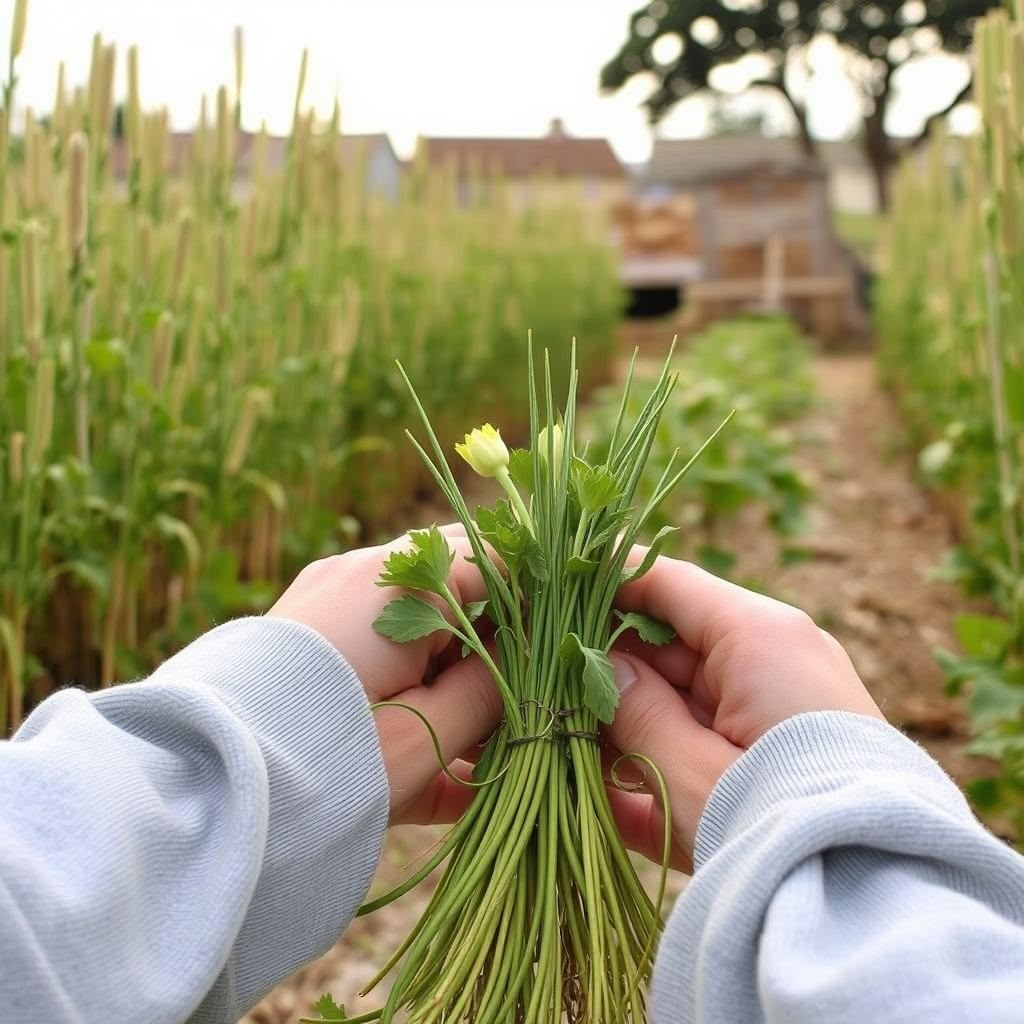
Sulla (Hedysarum coronarium): The Drought-Defying Forage Legume
No discussion of Roman climate resilience would be complete without acknowledging the critical role of livestock in ancient agricultural systems—and the specialized forage crops that sustained animal production during difficult conditions. Among these, sulla stands out for its exceptional drought tolerance and soil-building capabilities.
Often overlooked by modern agriculture, sulla provided Roman farmers with reliable forage production even during prolonged drought periods. Its deep root system, extending up to two meters into the soil, accessed water unavailable to shallow-rooted plants. This characteristic allowed livestock production to continue even when other feed sources failed, maintaining a critical protein source for Roman communities.
What made sulla particularly valuable was its dual contribution to agricultural resilience. Beyond providing drought-resistant animal feed, sulla dramatically improved soil quality through nitrogen fixation and organic matter addition. Roman farmers observed that fields where sulla had grown showed improved water retention and fertility for years afterward—creating a virtuous cycle of land regeneration alongside food production.
Archaeological evidence suggests that Roman farmers strategically incorporated sulla into their crop rotations, particularly in areas prone to drought or on degraded soils. This approach created a form of agricultural insurance, where livestock production systems actively rebuilt soil health rather than depleting it—a stark contrast to many modern animal agriculture approaches.
Ancient Wisdom for Modern Climate Challenges
The forgotten crops that sustained Roman agriculture through climate uncertainty offer more than historical curiosity—they provide a blueprint for agricultural resilience that remains remarkably relevant today. As modern farmers face increasing climate volatility, the ancient Roman approach to agricultural diversity and risk management deserves renewed attention.
What distinguishes the Roman agricultural system was its fundamental acknowledgment that climate uncertainty was inevitable. Rather than optimizing for maximum production during ideal conditions, Roman farmers developed systems that delivered reliable yields across a wide range of possible scenarios. This “reliability over maximization” approach created food security that persisted even when conditions turned unfavorable.
Modern agriculture can adopt several key principles from this ancient wisdom. Crop diversity within farming systems creates biological insurance against unpredictable conditions. Utilizing crops with different environmental niches extends production across varying conditions. Selecting varieties with inherent climate resilience reduces dependency on external inputs during stress periods.
Perhaps most importantly, the Roman approach reminds us that agricultural resilience isn’t achieved through individual miracle crops but through thoughtfully designed systems that work in harmony with natural patterns. By embracing diversity, understanding local conditions, and planning for uncertainty, we can build food systems that withstand whatever climate challenges the future brings.
The ground beneath our feet still holds the seeds of resilience planted by Roman farmers two thousand years ago. By rediscovering these forgotten crops and the wisdom behind their cultivation, we may find solutions to agricultural challenges that have been waiting quietly in the soil all along.


