When the Old World Meets New Passion
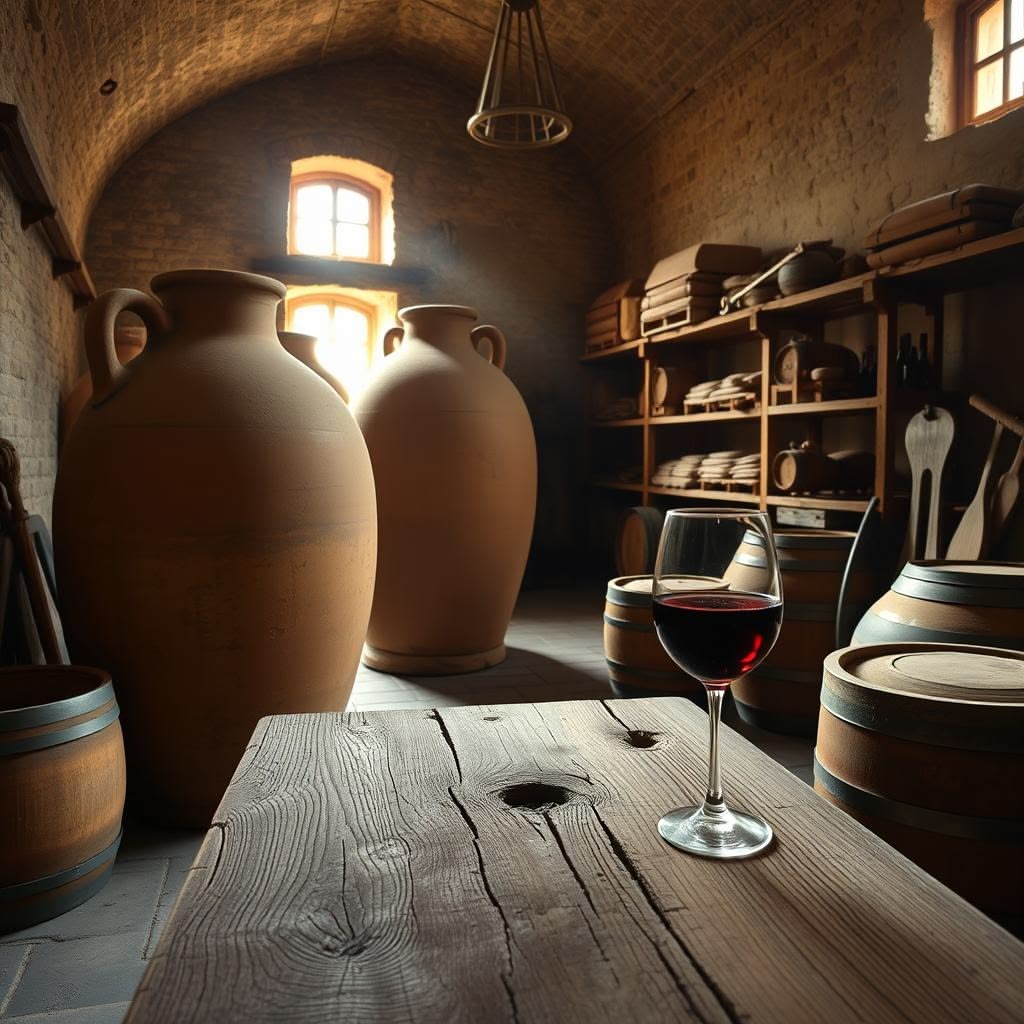
The afternoon sun filtered through the dusty windows of the barrel room as Mark swirled the Cabernet in his glass, his expression betraying a quiet disappointment. “It’s good,” he said, placing the glass down on the weathered oak table. “But so are a hundred other small-batch Cabs in this region.” After fifteen years of pouring his heart into his vineyard, Mark’s wines had achieved technical excellence but remained lost in a sea of similarity. His tasting room saw steady but unexceptional traffic, and his wine club membership had plateaued. Despite his craftsmanship, his winery lacked what marketers call a “unique selling proposition” and what wine enthusiasts simply call “a story worth sharing.”
This moment of candid frustration marked the beginning of an extraordinary transformation. What followed was a journey into winemaking’s ancient past that would ultimately create a thoroughly modern phenomenon: a cult wine with a passionate following and a perpetual waiting list. The path would lead us through Roman history, archaeological research, international ceramics sourcing, and ultimately, to wines that tell a story thousands of years in the making.
The challenge facing this artisan winemaker reflects a broader dilemma in today’s craft beverage industry: in a market saturated with quality products, technical excellence alone no longer captures imagination or commands premium prices. The solution we discovered together lay not in chasing trends, but in reaching back across millennia to reclaim knowledge that modern winemaking had all but forgotten.
Before: Craftsmanship Without Distinction
When we first met Mark, his winery embodied the quiet excellence that defines many small-scale producers. His vineyard management was impeccable, his fermentation protocols precise, and his oak program thoughtfully curated. He had invested in temperature-controlled steel tanks, French and American oak barrels, and all the modern equipment that contemporary winemaking demands. His technical knowledge was extensive, refined through years of harvest seasons and continuing education.
Yet for all this expertise, his wines—while respected by those who discovered them—struggled to distinguish themselves in a crowded marketplace. Regional wine publications occasionally mentioned his releases with favorable but brief reviews. Direct-to-consumer sales relied heavily on repeat customers rather than new enthusiasts. Most concerning was the sense that the passion that had first drawn Mark to winemaking was being slowly replaced by resignation.
“I keep wondering what I’m missing,” he confided during our initial consultation. “I’ve mastered the science, but something about the art isn’t connecting. People taste my wines, they compliment them, and then they forget them.”
This sentiment echoed what we’ve heard from many artisan producers across various craft industries: technical mastery had become table stakes, not a differentiator. The modern craft consumer seeks not just quality, but meaning—a connection to tradition, place, and purpose that transcends the immediate sensory experience.

The Bridge: Rediscovering Ancient Wisdom
Our approach began not with marketing tactics or packaging redesigns, but with a fundamental question: what aspects of winemaking tradition had been abandoned in the rush toward modernization and efficiency? This inquiry led us to explore historical winemaking methods across civilizations, searching for techniques that might offer both distinctive character and authentic narrative.
The breakthrough came during research into Roman viticultural practices. While amphorae—large clay vessels used for fermentation and aging—have seen a renaissance in certain winemaking circles, particularly in Georgia and parts of Italy, the specific techniques employed by Roman vintners remained largely unexplored in commercial winemaking. Unlike modern interpretations of amphora aging, which often use standardized shapes and materials, Roman practices were remarkably sophisticated, with vessels specifically designed for different varieties and aging intentions.
Historical accounts from Pliny the Elder, Columella, and other Roman writers revealed detailed specifications for clay composition, vessel shapes, interior treatments, and aging protocols. Archaeological evidence from sites throughout the former Roman Empire provided physical examples of these vessels and traces of their contents. What emerged was a picture of winemaking far more nuanced than the primitive practice often imagined.
When we presented this research to Mark, his initial skepticism quickly transformed into curiosity. “The Romans were building aqueducts and engineering marvels that still stand today,” he noted. “Why wouldn’t their approach to wine be equally sophisticated?”
This insight became our guiding principle: we wouldn’t simply adopt amphora aging as a marketing gimmick, but would endeavor to understand and implement the Roman approach with historical authenticity and modern craftsmanship. This would not be a mere reproduction of ancient methods, but a thoughtful translation of traditional wisdom into contemporary context.
The Roman Way: Beyond Simple Clay Vessels
The journey from concept to implementation required overcoming significant knowledge gaps. While modern winemakers have access to scientific understanding unavailable to their Roman predecessors, the practical knowledge of working with clay vessels had largely been lost in Western winemaking tradition.
Our research revealed that Roman amphorae were not uniform containers but specialized tools. Different shapes were used for fermentation versus aging. Some were lined with beeswax or pine pitch, others left unlined to allow controlled oxygen exchange. The clay itself varied by region and intended use, with some mixtures including volcanic ash, marble dust, or other minerals to influence the interaction between wine and vessel.
Finding artisans capable of producing vessels to these specifications proved challenging. After exploring options across three continents, we partnered with a small collective of ceramicists who specialized in historical reproductions. Working from archaeological references and adapting to modern food safety requirements, they created a series of amphorae that honored Roman design while meeting contemporary standards.
The vessels themselves became the physical embodiment of our approach: rooted in history but adapted for present purpose. Each amphora represented months of research, design refinement, and skilled craftsmanship—before a single grape was processed.

Implementation: Ancient Methods Meet Modern Science
The first harvest using the new methodology required rethinking virtually every aspect of the winemaking process. Roman fermentation techniques differ significantly from modern approaches, particularly regarding temperature control, cap management, and oxygen exposure. Mark found himself needing to unlearn certain “rules” of contemporary winemaking while developing new skills specific to clay vessel fermentation.
The learning curve was steep. Temperature management presented particular challenges, as clay responds differently than stainless steel or oak. We implemented a monitoring system that allowed us to track fermentation activity without disrupting the natural processes occurring within the vessels. This hybrid approach—honoring ancient methods while utilizing modern measurement tools—became emblematic of the entire project.
Perhaps the most significant adjustment came in relinquishing certain controls that modern winemakers take for granted. Working with amphorae required greater trust in natural processes and greater tolerance for variation between vessels. As Mark observed during that first season, “I’m not just making wine differently—I’m thinking about wine differently.”
This philosophical shift extended beyond technical processes to embrace a different relationship with time. Where modern winemaking often emphasizes efficiency and predictability, amphora aging follows a less linear progression. The wine develops according to its own internal rhythm, requiring the winemaker to become more observer than controller.
The Revelation: Distinctive Character Emerges
The first tasting of the amphora-aged wine marked a pivotal moment. Six months into aging, Mark drew samples from both his traditional oak-aged wine and the amphora-aged equivalent, both produced from the same vineyard blocks and initial processing.
The difference was immediately apparent. The amphora-aged wine displayed remarkable textural qualities—a silky mouthfeel with sophisticated tannin integration that typically requires years to develop in oak. The aromatic profile revealed layers that neither oak nor stainless steel typically produce: minerality intertwined with fruit in a complex harmony that felt both novel and somehow primordial.
“This isn’t just different,” Mark said after comparing the samples. “It’s complete in a way I haven’t experienced before.”
This completeness—the sense of a wine fully expressing itself rather than being shaped by external forces—became the defining characteristic of the amphora program. As aging continued, the wines developed in ways that defied conventional expectations. Varieties that had performed well but unremarkably in traditional aging began to express distinctive personalities in clay. The terroir of the vineyard seemed more clearly articulated, as if the amphorae were removing barriers between the fruit’s inherent character and its expression in the glass.
When the first vintage was finally bottled, it represented not merely a new product but a fundamentally different approach to winemaking—one that honored both ancient wisdom and the specific character of Mark’s vineyard.

After: Creating a Modern Cult Following
The release of the first amphora-aged wines could have been a modest experiment, a limited offering for the curious few. Instead, we developed a launch strategy that emphasized both the historical authenticity of the approach and the distinctive sensory experience it produced.
Rather than traditional wine release events, we organized intimate tastings structured as journeys through winemaking history. Guests experienced the same wine variety aged in stainless steel, oak, and amphora, while learning about the historical context of each approach. These events transformed wine tasting from passive consumption to active exploration, with participants becoming co-discoverers in the process.
The response exceeded all expectations. Wine critics who had previously given Mark’s releases respectful but brief mentions now wrote extensive features. One prominent reviewer described the amphora-aged Cabernet Franc as “a revelation—simultaneously ancient and avant-garde, with a textural quality that must be experienced to be understood.”
Word spread through the wine community with remarkable speed. The initial production of 300 cases sold out within three weeks of release, despite a price point 60% higher than Mark’s previous premium tier. What began as an experimental approach quickly became the winery’s signature offering.
The transformation extended beyond sales figures to create something far more valuable: a devoted community. Wine club membership, which had plateaued for years, increased by 215% within six months of the first amphora wine release. More significantly, the nature of member engagement transformed. Where previously interactions had been largely transactional, the amphora program inspired passionate discussion, with members organizing their own tasting groups to explore the wines together.
This engagement created a self-reinforcing cycle of advocacy. New visitors increasingly arrived having already heard about the amphora program from friends or read about it in wine publications. Many came with existing knowledge and curiosity about the historical techniques, leading to deeper, more meaningful tasting room experiences.
Beyond Novelty: Building Lasting Distinction
As the initial excitement could have faded into novelty, we worked with Mark to develop a long-term vision for the amphora program. This included expanding research into regional variations of Roman winemaking techniques and creating an educational component that positioned the winery as a knowledge center for historical wine practices.
The winery now hosts symposia that bring together historians, archaeologists, and winemakers to explore ancient viticultural wisdom. These events have established Mark as a thought leader in the intersection of traditional techniques and contemporary winemaking, creating media opportunities beyond traditional wine publications.
The amphora program has expanded methodically, with new varieties and techniques introduced each vintage. Rather than rapidly scaling production to meet demand, Mark has maintained limited quantity while expanding diversity, creating a collection of wines that reward exploration and repeat engagement.
This approach has generated remarkable loyalty. The winery now operates on an allocation model, with waiting lists for access to new releases. Member retention has exceeded 92%, far above industry averages. Perhaps most tellingly, when members do leave the program, it’s typically because they’ve moved outside the shipping region, not because their interest has waned.
The Essence of Transformation: Authenticity Meets Innovation
The success of this project stemmed not from marketing tactics or packaging design, but from a fundamental rethinking of the product itself. By reaching back to ancient wisdom while applying contemporary understanding, Mark created wines that are distinctive not because they are marketed differently, but because they are genuinely different—in process, character, and story.
This authenticity resonates particularly strongly in today’s market, where consumers have become increasingly skeptical of superficial differentiation. The amphora program succeeds because it represents genuine exploration and rediscovery, not a marketing-driven attempt to capitalize on trends.
For other artisanal producers facing similar challenges of distinction in crowded markets, this case offers several valuable insights:
True differentiation often requires examining fundamental assumptions about production methods, not merely adjusting surface elements. The most compelling stories emerge from authentic pursuit of quality and knowledge, not from manufactured narratives. When product, process, and story align in authentic ways, marketing becomes an act of revelation rather than persuasion.
The transformation of Mark’s winery illustrates a broader principle applicable across craft industries: in markets saturated with technical excellence, meaning becomes the ultimate differentiator. By connecting his winemaking to a tradition spanning millennia while creating something genuinely innovative, Mark didn’t just change his business trajectory—he rediscovered the purpose that had drawn him to winemaking initially.
Today, when visitors gather in the tasting room and raise glasses of amber-hued, amphora-aged wine, they’re not just experiencing interesting flavors—they’re participating in a tradition that connects them to wine lovers across thousands of years of human history. And in that connection lies the true essence of what transformed a quality winery into a phenomenon with a dedicated following: the ability to make something as familiar as a glass of wine feel like a discovery.
The Continuing Journey
As we look to the future, the amphora program continues to evolve. Each vintage brings new insights and refinements to the process. The community surrounding the wines grows not just in numbers but in depth of engagement. Most importantly, Mark has recaptured the sense of exploration and wonder that first drew him to winemaking—finding in ancient wisdom a thoroughly modern path forward.


