

The Chemical Treadmill: Modern Farming’s Unsustainable Battle
The farmer stood at the edge of his field, a look of defeat etched across his weathered face. Despite increasing the potency and frequency of his pesticide applications, the insects had returned with a vengeance, more resistant than ever. His crops were failing, his soil degrading, and his profit margins shrinking—all while the chemical companies suggested yet another, more expensive solution.
This scene plays out across farms worldwide, where agriculture has become locked in an escalating arms race against nature. The Environmental Protection Agency estimates that conventional farmers now spend more on pest control than ever before, yet crop losses to pests have remained largely unchanged over the past 50 years. As pests develop resistance to our chemical arsenal, farmers find themselves on an expensive, toxic treadmill with diminishing returns.
The irony is that effective solutions have existed for thousands of years—solutions that worked for civilizations without access to synthetic chemicals or modern technology. And perhaps none developed a more sophisticated understanding of agricultural pest management than the ancient Romans.
What if the answers to our modern agricultural challenges aren’t found in a laboratory but in the writings of Cato, Varro, and Columella—Roman agricultural writers whose works have survived for over two millennia? What if we could combine this ancient wisdom with modern understanding to create farming systems that work with nature rather than against it?
Rome: The First Agricultural Superpower
Before dismissing ancient Roman agricultural practices as primitive or irrelevant, consider this: at its height, the Roman Empire fed a population of over 60 million people without chemical fertilizers, synthetic pesticides, or fossil-fueled machinery. Their agricultural knowledge wasn’t primitive—it was extraordinarily sophisticated, refined over centuries of careful observation and experimentation.
The Romans didn’t just farm; they created an agricultural science. Their agricultural writers documented detailed observations about pest lifecycles, beneficial insects, soil health, and plant relationships. They understood farming as a complex system rather than a battle against nature—a perspective modern agriculture is only beginning to rediscover through regenerative and sustainable approaches.
This holistic understanding enabled the Romans to develop integrated pest management strategies that addressed the root causes of pest problems rather than merely treating symptoms. Their approach was based on prevention first, with direct intervention as a last resort—exactly the model that modern sustainable agriculture advocates are now promoting.

Crop Rotation: The Foundation of Roman Pest Management
The cornerstone of Roman pest management was their sophisticated crop rotation system. Unlike the simplified corn-soybean rotations common in modern industrial agriculture, Roman farmers employed complex rotations spanning four or more years, incorporating diverse crops with different growth habits, nutrient needs, and pest vulnerabilities.
In his agricultural treatise De Re Rustica, Columella described a typical rotation that might include grains, legumes, vegetables, and fallow periods. Each phase of this rotation served multiple purposes in pest management: breaking pest lifecycles, preserving beneficial insect populations, and maintaining soil health.
The principle was elegantly simple: pests specialized to attack one crop would starve or fail to reproduce when that crop was absent. By the time the favorable crop returned to that field years later, the pest population had collapsed.
Modern research confirms the wisdom of this approach. When farmers implement diverse crop rotations, they typically see substantial reductions in pest pressure without chemical interventions. What’s more, these rotations build soil organic matter, improve water retention, and increase overall farm resilience—benefits that chemical pest control simply cannot provide.
Companion Planting: The Roman Garden Strategy
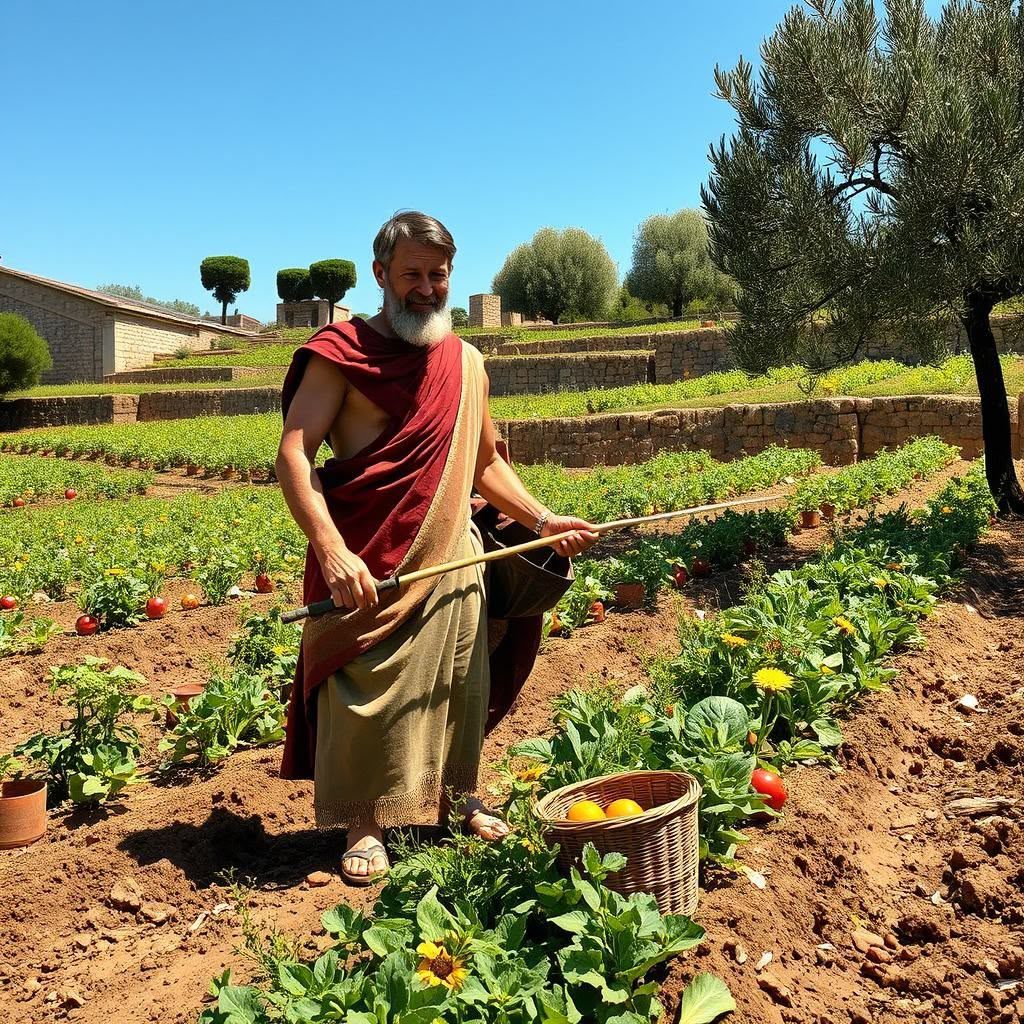
Walk through an ancient Roman garden, and you would find a seemingly chaotic mixture of plants growing together—herbs nestled among vegetables, flowers interplanted with fruits, and aromatic plants scattered throughout. This wasn’t haphazard; it was intentional design based on observations of how certain plants affected others and influenced pest behavior.
Roman agricultural writers documented numerous plant partnerships. They noted that garlic protected roses from aphids, that basil repelled flies and mosquitoes, and that strong-smelling herbs like rosemary and thyme masked the scent of vulnerable crops from pests. They observed that certain flowering plants attracted beneficial insects that preyed on crop pests.
Imagine a Roman field with rows of cabbage interplanted with aromatic herbs like thyme and mint. The strong scents confused cabbage butterflies seeking places to lay eggs, while attracting parasitic wasps that attacked caterpillars. The result was a natural balance that kept pest populations in check without eliminating them entirely—maintaining the ecological balance necessary for long-term stability.
This sophisticated understanding of plant relationships predated our scientific understanding of allelopathy (how plants chemically affect each other) and volatile organic compounds (plant-produced chemicals that can repel pests) by nearly two millennia. Yet modern research continues to validate these ancient practices, showing that companion planting can significantly reduce pest pressure while improving overall crop health.

Natural Repellents: Rome’s Botanical Pesticides
When prevention failed, Roman farmers didn’t reach for synthetic chemicals—they turned to the pharmacy of nature. Ancient texts describe numerous plant-based preparations used to deter or eliminate pests. Cato the Elder recommended spraying plants with a mixture of amurca (the bitter watery residue from olive oil pressing) mixed with water to control certain insects. Pliny the Elder documented using crushed cypress leaves soaked in vinegar as an insect repellent.
What makes these natural formulations particularly interesting is their sophisticated application. Romans understood the importance of timing treatments to vulnerable stages in pest lifecycles. They recognized the difference between beneficial and harmful insects. And perhaps most importantly, they viewed these treatments as part of an integrated system rather than silver-bullet solutions.
The effectiveness of many of these botanical preparations has been validated by modern science. Compounds in plants like neem, pyrethrum, and various essential oils have proven insecticidal or repellent properties. Unlike many synthetic pesticides, these plant-derived substances often break down quickly in the environment, reducing their impact on non-target organisms and preventing long-term accumulation in ecosystems.
Soil Management: The Foundation of Roman Pest Resistance
Perhaps the most profound element of Roman pest management was their understanding of soil health. Roman agricultural writers extensively documented practices for building and maintaining fertile soil, recognizing that plants grown in healthy soil naturally resisted pests and disease.
Varro wrote about the importance of manuring fields, composting plant waste, and using green manures (crops grown specifically to be plowed back into the soil). Columella detailed methods for assessing soil health by observing its structure, smell, and the types of plants that grew naturally upon it. Romans recognized that healthy soil produced healthy plants, and healthy plants had natural resistance to pests and diseases.
This understanding aligns perfectly with modern research into plant immune systems. We now know that plants have complex defense mechanisms against pests and pathogens, but these systems require proper nutrition to function effectively. Plants grown in depleted soils with imbalanced nutrition become attractive targets for pests—they literally become more delicious and nutritious to insects while having fewer resources to produce defensive compounds.
By focusing on soil health first, Roman farmers addressed the root cause of pest vulnerability rather than merely treating symptoms. This approach created resilient agricultural systems that could withstand pest pressure without external inputs—precisely the model that modern sustainable agriculture seeks to recreate.

Merging Ancient Wisdom with Modern Innovation
The brilliance of Roman agricultural techniques wasn’t in their specific methods—it was in their systems-based approach that worked with natural processes rather than against them. The challenge for modern farmers isn’t simply to replicate Roman practices but to understand their principles and adapt them to contemporary contexts.
Today’s farmers have advantages the Romans couldn’t imagine—scientific understanding of soil microbiology, advanced monitoring tools, precision application technology, and global knowledge sharing. By combining Roman ecological wisdom with these modern capabilities, farmers can create agricultural systems that are both highly productive and naturally resistant to pests.
Imagine drone technology used to monitor fields for early signs of pest pressure, allowing precisely timed interventions with botanical preparations. Consider advanced cover crop mixes based on Roman rotation principles but optimized through modern plant breeding. Think about companion planting arrangements designed using artificial intelligence to maximize beneficial interactions while maintaining operational efficiency.
These innovations aren’t futuristic fantasies—they represent the cutting edge of sustainable agriculture today. Forward-thinking farmers are already implementing these hybrid approaches, combining ancient wisdom with modern tools to create resilient, productive farming systems.
The Economic Argument: Why Roman Methods Make Financial Sense
Beyond environmental benefits, there’s a compelling economic case for adopting these ancient-inspired approaches. Chemical pest control represents a significant and growing expense for modern farmers—often consuming 5-10% of operating budgets. As pests develop resistance, these costs increase while effectiveness decreases, creating a financially unsustainable trajectory.
In contrast, ecological approaches like those used by the Romans typically require higher initial investment in knowledge and system design but deliver long-term cost savings. Farmers who successfully implement these methods generally report reduced input costs, improved crop resilience (particularly during extreme weather events), and often access to premium markets for sustainably grown products.
The transition period can be challenging, as depleted soils and disrupted ecosystems require time to rebuild. However, farmers who persevere through this transition typically find themselves with more profitable, stable operations within 3-5 years. Their farms become less vulnerable to input price volatility and more adaptable to changing market conditions—precisely the kind of resilience that characterized successful Roman agricultural enterprises.
Common Objections: Addressing Modern Concerns
When discussing ancient agricultural techniques, skepticism is natural. Modern farmers often raise valid concerns about productivity, labor requirements, and scalability. Let’s address these directly:
“Can these methods produce enough food?”
This concern reflects the assumption that ecological approaches necessarily reduce yields. While yield reductions sometimes occur during transition periods, established ecological farming systems can achieve productivity comparable to conventional methods—particularly when measuring total farm output rather than single-crop yields. Roman techniques emphasize diversity and integration, often producing more total food per acre than monocultures when all crops are considered together.
“Isn’t this more labor-intensive?”
Roman farming was indeed labor-intensive, but modern adaptations need not be. Today’s ecological farmers leverage appropriate technology—from specialized equipment for cover crop management to advanced monitoring systems—to implement these principles efficiently. The labor profile shifts from repetitive tasks (like spraying) to knowledge-based management, often resulting in similar total labor requirements but more engaging, skilled work.
“Can this approach work at scale?”
Scale presents both challenges and opportunities. Large monocultures are inherently vulnerable to pests, requiring increasing chemical intervention to maintain. In contrast, farms designed around ecological principles become more resilient as they scale, with increased biodiversity creating natural balances. Large-scale farms successfully implementing these approaches typically operate as mosaics of integrated systems rather than uniform blocks—an approach that echoes the diverse landscape of Roman agricultural regions.
Starting the Transition: Practical First Steps
For farmers interested in exploring these ancient-inspired approaches, the transition needn’t be abrupt or risky. Consider these practical first steps toward incorporating Roman wisdom into modern operations:
Begin with Observation
Roman farmers were keen observers of their land and its patterns. Before making changes, invest time in understanding your farm’s unique characteristics—where pests first appear, which areas show natural resistance, how wildlife interacts with your crops. This baseline understanding will guide more effective interventions.
Start Small with Cover Crops
Cover crops were fundamental to Roman rotations and offer an excellent entry point for modern farmers. Begin with a small acreage, perhaps 10-20% of your land, implementing strategic cover crops during off-seasons. This builds soil health with minimal disruption to your primary production system.
Experiment with Trap Crops and Borders
The Romans understood that certain plants attracted pests away from valuable crops. Designate small areas for trap crops—plants highly attractive to your primary pests—creating zones where problems concentrate and can be managed more efficiently. Similarly, borders of flowering plants can attract beneficial insects that help control pests naturally.
Reduce Gradually, Don’t Eliminate Immediately
Rather than immediately abandoning conventional pest control, gradually reduce applications while implementing ecological alternatives. This stepped approach manages risk while allowing beneficial populations to recover and natural balances to establish.
Connect with Knowledge Networks
Unlike ancient Romans, today’s farmers can access global knowledge networks. Connect with farmer-led organizations focused on ecological approaches, university extension services with expertise in sustainable methods, and online communities sharing practical experiences. These connections provide both technical support and moral encouragement during the transition.
The Future of Farming Lies in Its Past
As modern agriculture faces mounting challenges—from climate change to resistant pests to rising input costs—looking backward might be our most progressive move. The sophisticated ecological understanding embedded in Roman agricultural practices offers not just techniques but a fundamentally different relationship with the natural systems that sustain us.
By rediscovering and adapting this ancient wisdom, today’s farmers can create operations that are more resilient, more profitable, and more sustainable. They can break free from the chemical treadmill and build agricultural systems that improve with time rather than degrading—just as Roman farms did for centuries.
The farmer standing at the edge of his field need not feel defeated by pests or trapped in an unsustainable system. By looking to the past while embracing the future, he can reimagine his relationship with the land—not as a battle against nature, but as a sophisticated collaboration with it.
This isn’t merely romanticism; it’s practical wisdom validated by both ancient experience and modern science. The most successful farmers of the future may well be those who best understand and apply the principles that sustained Roman agriculture for a millennium—principles of diversity, observation, prevention, and working with natural systems rather than against them.
The question isn’t whether we can afford to adopt these ancient approaches—it’s whether we can afford not to.


