The Rebirth of Forgotten Land
The sun beat down mercilessly on the cracked earth, illuminating the tangle of brambles and weeds that had claimed dominion over what was once productive farmland. This wasn’t just any neglected plot—it was a canvas of possibilities, albeit one that most modern farmers would pass by without a second glance. Where others saw only failure and abandonment, JP Farmer saw potential waiting to be unleashed through wisdom that had sustained civilizations for millennia.
The land told a familiar story seen across rural landscapes: decades of conventional agriculture followed by abandonment when the soil could no longer support intensive monocropping. Nature had begun the slow work of reclamation, but without purpose or direction. It was neither wild nor cultivated—simply forgotten.
This is not a tale of overnight transformation or agricultural miracles. Rather, it’s a testament to the enduring relevance of ancient wisdom in solving contemporary challenges. The Romans—those master engineers and agricultural innovators—developed sustainable farming techniques that helped feed an empire for centuries. These methods didn’t rely on synthetic chemicals or fossil-fuel-powered machinery, but on a deep understanding of natural cycles, soil health, and biodiversity.
What unfolds in the following pages is the methodical resurrection of land through principles established over two thousand years ago. It’s about bridging past and present, proving that sometimes the most innovative solutions are the ones that have already stood the test of time.
A Landscape of Lost Potential
When JP Farmer first walked the perimeter of the abandoned field, the challenges were immediately apparent. The soil, once rich and productive, had been stripped of organic matter through years of intensive farming. Compaction had created an almost impermeable layer beneath the surface, preventing proper water infiltration and root development. Erosion channels carved across the landscape, evidence of topsoil loss during heavy rains.
Testing revealed what the visual assessment suggested: severely depleted soil with minimal microbial activity, high acidity, and nutrient imbalances. The soil structure that had taken nature centuries to build had been compromised in mere decades. Without this foundation, conventional farming methods would require massive inputs of synthetic fertilizers and amendments—a costly and unsustainable approach.
Water presented another significant challenge. The property had no irrigation infrastructure, and periods of drought alternated with flash flooding that further damaged the land. What little water did remain moved quickly across the compacted surface rather than penetrating deeply to nourish plants and replenish groundwater.
The biodiversity was similarly impoverished. Where there should have been a complex ecosystem of plants, insects, birds, and soil organisms, there was a simplified landscape dominated by a few aggressive species. The natural checks and balances that prevent pest outbreaks and disease cycles had been disrupted.
For conventional farmers, these conditions would typically warrant a scorched-earth approach: heavy machinery, chemical soil amendments, and a fresh start with high-input crops. But JP Farmer saw these challenges through a different lens—one focused on regeneration rather than replacement, on working with natural processes rather than against them.

The Ancient Roman Agricultural Mindset
To understand the transformation that followed, we must first understand the Roman approach to agriculture. The Romans weren’t merely farmers; they were students of the land who developed a sophisticated understanding of agricultural systems long before the advent of modern science.
Roman agricultural writers like Cato, Varro, and Columella documented farming practices in remarkable detail. Their works reveal a holistic approach that considered soil health, water management, biodiversity, and sustainable production as interconnected elements of a successful farm. This wasn’t environmentalism in the modern sense—it was practical wisdom born of necessity and observation.
The Romans understood that land was not an infinite resource to be exploited but a precious asset to be carefully managed and improved for future generations. Their approach was fundamentally conservative in the original sense of the word—focused on conservation and enhancement of natural resources rather than depletion.
This mindset represents perhaps the most important aspect of Roman agricultural wisdom applied to the abandoned field project. Before any physical work began, there was a fundamental shift in thinking: from viewing the land as a substrate for production to seeing it as a living system to be nurtured and enhanced.
The Bridge: Implementing Ancient Wisdom with Modern Understanding
The transformation began with observation—not just of the land itself but of its place within the broader landscape. JP Farmer spent months studying the site’s microclimate, water flows, and seasonal patterns. This echoed the Roman practice of careful site selection and analysis before establishing a new agricultural operation.
Water management came first, inspired by the ingenious Roman systems that turned water from a destructive force into a precious resource. Following principles outlined in ancient texts, a series of swales—shallow, level ditches following the land’s contours—were established to slow, spread, and sink rainwater. These passive irrigation features mimicked the Roman approach to water harvesting while addressing modern concerns about groundwater recharge and erosion prevention.
Complementing the swales, a central water feature was established that served multiple functions: irrigation reservoir, aquaculture system, and habitat for beneficial organisms. This reflected the Roman practice of multipurpose water management where ponds and cisterns served both practical and aesthetic purposes within the agricultural landscape.
Soil regeneration followed Roman practices as documented by Columella, who wrote extensively about soil improvement techniques. Rather than importing massive amounts of external inputs, the focus was on cycling organic matter and stimulating biological activity. Composting systems were established using methods remarkably similar to those described in ancient Roman texts, where different types of organic materials were combined in specific ratios to create balanced soil amendments.
Green manures—cover crops planted specifically to improve soil—were used extensively, drawing directly from Roman agricultural practice. Legumes like fava beans, described by Pliny the Elder as soil improvers, were planted to fix atmospheric nitrogen naturally. These were alternated with grains and brassicas in a rotation system that broke pest cycles while building soil structure—a technique the Romans had mastered centuries ago.

The Roman Planting System: Order and Diversity
As soil health improved, the planting system took shape according to principles outlined in Roman agricultural texts. The Romans understood the importance of both order and diversity—creating organized systems that nonetheless incorporated multiple species and functions.
The field was divided into orderly blocks reminiscent of the Roman quincunx planting pattern, where plants are arranged in a grid with one at each corner and one in the center. This geometric precision, characteristic of Roman design sensibilities, created efficient use of space while facilitating maintenance and harvest.
Within this organized framework, diversity flourished. Polycultures replaced monocultures, with multiple crops growing together in mutually beneficial arrangements. These plant communities were designed based on Roman companion planting knowledge, where certain combinations were understood to enhance growth and reduce pest pressure.
Perennial food plants formed the backbone of the system, reflecting the Roman emphasis on stable, long-term production rather than annual tillage. Fruit and nut trees, grape vines, and perennial vegetables created a layered canopy that maximized the capture of sunlight while protecting soil from erosion and desiccation.
Aromatic herbs, valued by Romans for both culinary and medicinal purposes, were integrated throughout the garden. These plants served multiple functions: attracting pollinators, confusing pests with their strong scents, and providing additional harvests for market. Many of these herbs—rosemary, thyme, oregano, and lavender—were the same varieties grown in ancient Roman gardens.
The Productive Hedgerow: Security and Abundance
The Romans understood the importance of boundaries in agricultural systems. Their farms typically featured productive hedgerows that served as windbreaks, privacy screens, and additional sources of food and materials. This practice was revived in the market garden project with the establishment of a diverse hedgerow around the perimeter.
Unlike modern single-species hedges, this boundary planting incorporated dozens of useful species arranged in layers. Taller nut trees provided structural elements while nitrogen-fixing shrubs improved soil fertility. Fruiting bushes, climbing vines, and herbaceous perennials filled the middle and lower layers, creating a productive ecosystem edge that mimicked natural forest margins.
This hedgerow served multiple functions beyond production. It created a microclimate within the garden, moderating wind and temperature extremes. It provided habitat for beneficial insects and birds that controlled pest populations. And it established a clear boundary that defined the space visually and energetically—a characteristic element of Roman landscape design that balanced the natural and cultivated worlds.

Tools and Techniques: Honoring Traditional Methods
The transformation honored Roman agricultural wisdom not just in design but in daily practice. While modern tools were used when appropriate, many operations returned to hand tools and techniques that would have been familiar to Roman farmers.
The Roman spade (pala) and hoe (ligo) became primary cultivation tools, allowing precise work without the soil compaction caused by heavy machinery. These tools, with designs virtually unchanged for two millennia, proved remarkably effective for the scale of operation. Their use connected the work physically and spiritually to the agricultural traditions being revived.
Irrigation followed Roman principles of efficiency and precision. Water was moved primarily by gravity through a system of channels that could be opened and closed to direct flow where needed. This reflected the Roman understanding of water as a precious resource to be used judiciously rather than wastefully.
Pest management drew from Roman practices documented by writers like Columella, who described various botanical preparations and timing strategies to minimize crop damage. Rather than reaching for synthetic pesticides, the garden relied on diversity, healthy soil, and strategic interventions with plant-based preparations when necessary.
The Market Connection: From Field to Table
The Romans understood that agriculture was not merely about production but about connecting people to the land through food. Their markets were vibrant social spaces where producers and consumers interacted directly. This aspect of Roman agricultural culture was revived through the market component of the project.
A small market structure was established at the entrance to the garden, inspired by Roman architectural principles of beauty, function, and proportion. Here, the garden’s bounty was displayed and sold directly to customers, creating a direct connection between production and consumption.
The product selection reflected Roman culinary traditions, with an emphasis on fresh, seasonal vegetables, fruits, herbs, and preserved items. Many of the varieties grown were heritage types with direct lineage to those cultivated in ancient times. This created not just a commercial transaction but a cultural exchange—a taste of history made relevant to contemporary palates.
Educational components were integrated into the market experience, with information about Roman agricultural practices and their modern applications shared alongside the products. This fulfilled another Roman ideal: that agriculture should be not just a practical pursuit but an intellectual one, worthy of study and refinement.
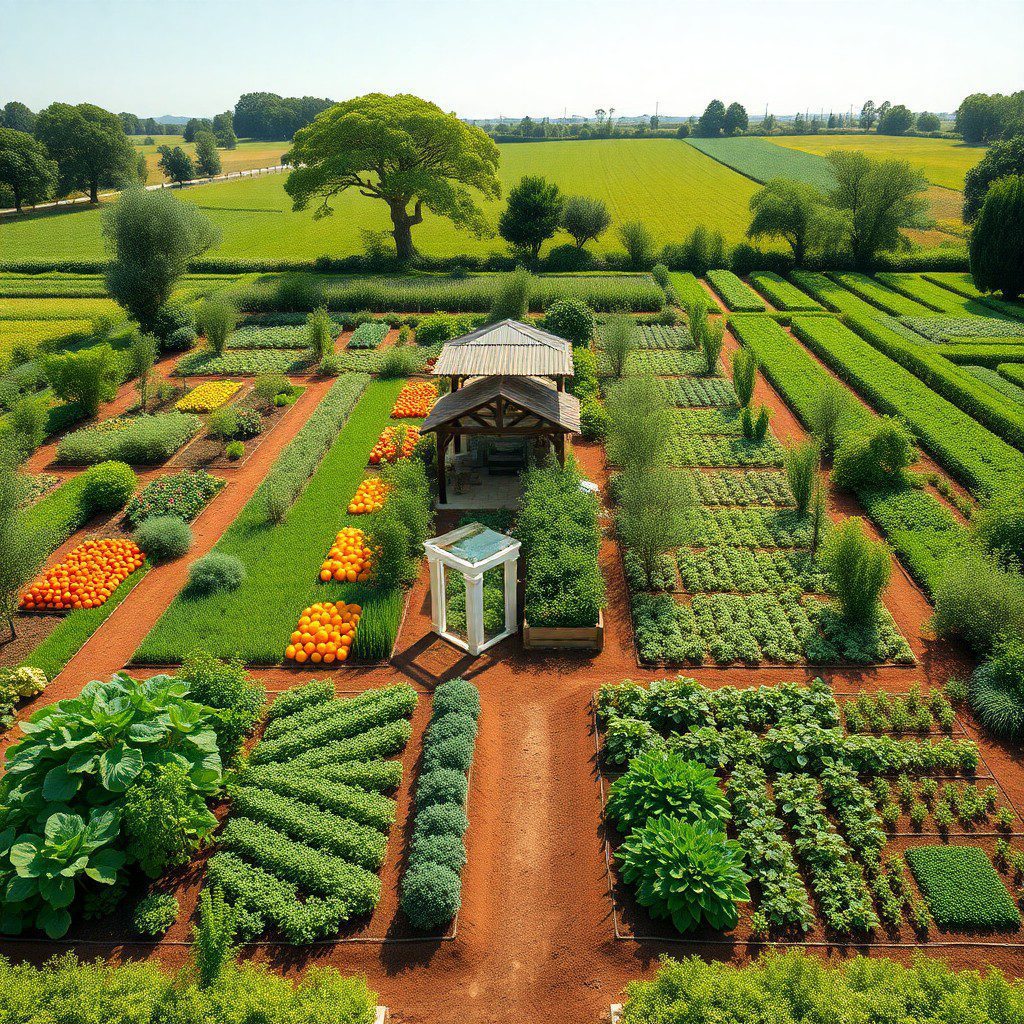
The Harvest: Measuring Success Beyond Yield
The transformation from abandoned field to thriving Roman-inspired market garden yielded results that can be measured in multiple dimensions. While modern agriculture often focuses narrowly on yield metrics, this project took a more holistic approach to assessment, considering ecological, social, and cultural impacts alongside productivity.
From a soil perspective, the improvements were dramatic. Organic matter increased significantly, creating a more resilient growing medium with improved water retention and nutrient cycling. Soil biology flourished, with visible evidence of earthworm activity and fungal networks that had been absent when the project began.
Biodiversity metrics showed equally impressive gains. Insect surveys revealed a dramatic increase in both beneficial species and overall diversity, creating more stable pest-predator relationships. Bird populations responded to the improved habitat, with many species returning to the area after long absences.
Water dynamics transformed from destructive to regenerative. Rainfall that once caused erosion now infiltrated deeply into the soil profile, recharging groundwater and nourishing plants during dry periods. The passive water harvesting systems proved remarkably effective, virtually eliminating the need for supplemental irrigation except during extreme drought.
From a productivity standpoint, the garden achieved impressive results without relying on external inputs. Yields built steadily over time as soil and ecosystems developed, eventually producing substantial harvests from relatively small spaces. The diversity of crops created a risk management strategy, ensuring that even if some crops underperformed due to seasonal conditions, others would compensate.
The Legacy: Ancient Wisdom for Future Challenges
Beyond the physical transformation of the land, this project established something more enduring: a working demonstration that ancient agricultural wisdom remains relevant in addressing contemporary challenges. As modern farmers face increasing pressures from climate change, resource depletion, and economic uncertainty, the Roman-inspired market garden offers valuable lessons.
Perhaps most importantly, it challenges the narrative of progress that assumes newer methods are necessarily better. The Romans developed sophisticated agricultural systems that sustained civilizations for centuries without fossil fuels, synthetic chemicals, or global supply chains. Their methods were inherently regenerative, building soil and ecosystem health rather than depleting it.
This doesn’t mean blindly rejecting all modern innovations, but rather evaluating them against the backdrop of time-tested principles. The project demonstrates how traditional wisdom can be complemented by contemporary understanding of ecology, soil microbiology, and climate dynamics to create systems that are both ancient and cutting-edge.
For visitors to the garden, this integration of past and present creates a powerful experience. They witness not just a productive agricultural operation but a living connection to heritage and history. They taste vegetables grown in soil built using methods described by Columella and Pliny. They see water flowing through channels designed according to principles established two millennia ago.
Conclusion: The Continuous Cycle of Renewal
The transformation of an abandoned field into a thriving Roman-inspired market garden is not a completed project but an ongoing process. Like the Romans themselves, who viewed agriculture as a continuous cycle of renewal and improvement, this landscape continues to evolve and develop.
Each season brings new insights and refinements. Some approaches work better than others, and the system adapts accordingly. This reflects another aspect of Roman agricultural wisdom: the value of careful observation and responsive management rather than rigid adherence to formulas.
For those inspired to undertake similar transformations, the key lesson is perhaps one of patience and perspective. The Romans built agricultural systems meant to last for generations, not just seasons. They invested in soil, water systems, and perennial plantings with the understanding that the full benefits might not be realized in their lifetime.
This long-term thinking represents perhaps the most valuable contribution of Roman agricultural wisdom to our modern context. In an age of quarterly profits and immediate returns, the Roman-inspired market garden stands as a reminder that true sustainability requires a different relationship with time—one that honors the past, works diligently in the present, and plans thoughtfully for the future.
As Cicero wrote, “Serit arbores quae alteri saeculo prosint” (He plants trees for the benefit of another age). The revival of Roman agricultural wisdom in this once-abandoned field plants seeds of knowledge and inspiration that will continue to bear fruit long into the future.


